


The Okan Bato Case: The FETÖ Extortion Scheme, the Judiciary, and the Allegation of a Third Coup
A strategic legal and political analysis of the Okan Bato ruling, FETÖ Bazaar allegations, post–July 15 judiciary practices, and claims of systemic manipulation in Turkey.


By Yusuf İnan
Journalist | Political & Strategic Analyst
Okan Bato Case: FETÖ Bazaar, Judiciary and Third Coup Claims
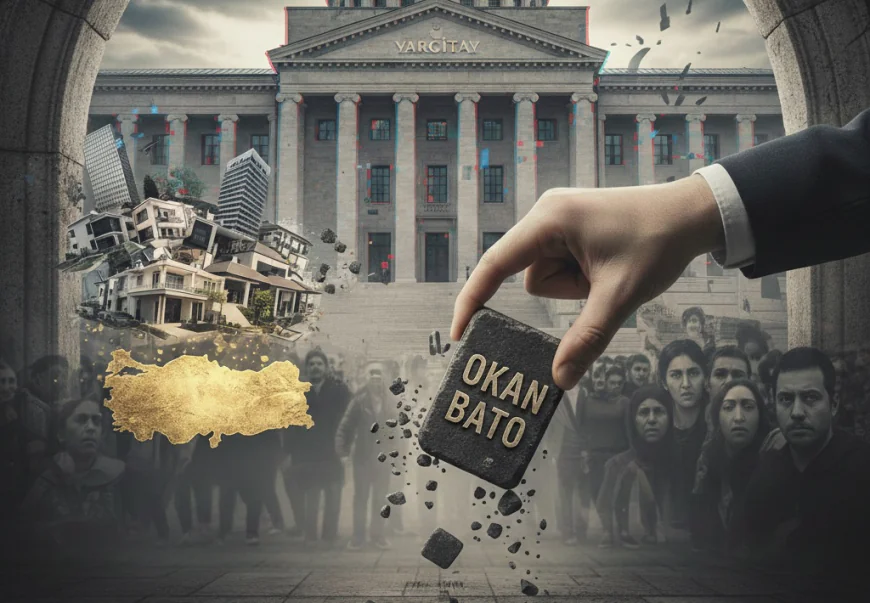
The ruling of Turkey’s Court of Cassation (Yargıtay) regarding Okan Bato has reignited debates on the judiciary, legal proceedings in the aftermath of the July 15 coup attempt, and the controversial mechanism widely referred to as the “FETÖ Bazaar.” Far from being an isolated corruption case, the decision exposes one of the most critical fault lines in Turkey’s recent political and judicial history.
The fundamental question that must be asked is this:
Is this merely a criminal case against Okan Bato, or is Okan Bato merely the visible face of a much larger structure that has long remained concealed?
More Than a Prosecutor: What Was Okan Bato’s Role?
Okan Bato held a key position during the most aggressive and destructive phase of FETÖ-related investigations. He was not merely a prosecutor initiating cases; he was perceived as one of the central figures who determined which files would be opened, which would be closed, who would be targeted, and who would be pushed out of the system.


What is now legally established by the Court of Cassation is clear:


An increase of 8.1 million Turkish Lira in Bato’s assets could not be explained by lawful income. This unexplained enrichment was ruled as illicit gain, and the properties in question were confiscated and transferred to the Treasury.
This is the outcome.
But the real issue lies elsewhere.
The crucial question is through which processes, which decisions, and which investigations was this wealth accumulated?
Who Benefited from the “FETÖ Bazaar”?
The mechanism known in public discourse as the “FETÖ Bazaar” operated on a simple but devastating logic:
-
Who was arrested for FETÖ affiliation?
-
Who never even faced an investigation?
-
Who was prosecuted, and who managed to leave the country freely?
When examined retrospectively, the picture is deeply troubling.
Almost none of FETÖ’s top-level leadership has been seriously prosecuted in Turkey.
Instead:
-
Individuals who had distanced themselves from the organization years earlier,
-
Those who openly criticized or exposed the structure,
-
Businesspeople, academics, journalists, and public figures who had fallen out with the network
were subjected to harsh judicial measures.
Can this truly be explained as coincidence?
The Central Contradiction: Where Are the Real FETÖ Leaders?
The question is straightforward:
Which senior FETÖ leader has stood trial in Turkey?
Which so-called “imam,” which strategic mind, which operational commander was publicly exposed and held accountable?
Many of the names that dominated media headlines were, in reality, marginal figures—people who would not even qualify as gatekeepers within the organization. Certain business groups, select political figures, and visible symbols were placed in the spotlight, while the core structure, repeatedly referenced in intelligence reports, never even entered the case files.
This leads to an unavoidable question:
Were the investigations led by Okan Bato genuinely directed against FETÖ, or did they, intentionally or otherwise, serve the organization’s strategic interests by diverting attention away from its true leadership?
Political and Social Consequences: Who Paid the Price?
Former Deputy Prime Minister Bülent Arınç once revealed a striking figure:
Approximately three million people were subjected to FETÖ-related investigations. Including their families, this process became a nationwide trauma affecting nearly the entire population of Turkey.
What were the consequences?
-
Public trust in the judiciary was severely eroded.
-
A deep fracture emerged within the AK Party’s voter base.
-
An invisible but profound distance formed between President Erdoğan and segments of society.
-
Turkey was increasingly portrayed in Europe as a country “without rule of law.”
-
Meanwhile, FETÖ’s actual leadership abroad consolidated its position, amplifying narratives of victimhood.
Who benefited from this outcome?
What Did Okan Bato Gain—and What Did He Lose?
At this stage, Okan Bato has:
-
Lost his profession,
-
Lost his reputation,
-
Lost his assets,
-
And entered history as a symbolic figure associated with the “FETÖ Bazaar.”
Only one question remains:
Was he truly so naïve as to believe this process would not end this way, or did he assume his role was complete and that he would remain untouchable?
A Third Coup?
December 17–25…
July 15…
And the post–July 16 judicial practices…
When these three periods are examined side by side, a question must now be asked openly:
Was a third, civilian-looking coup carried out through the judiciary?
Was its objective:
-
To weaken the AK Party,
-
To erode the political ground beneath President Erdoğan’s leadership ambitions in the Turkish and Islamic world,
-
To strip Turkey of its claim to leadership in that sphere,
-
And to render the country vulnerable in the face of Europe?
Final Word
The Court of Cassation’s ruling on Okan Bato is important—but it is not sufficient.
It should not be seen as an end, but as a beginning.
Because the issue is not the prosecution of a single prosecutor, but the exposure of an entire era, mindset, and mechanism.
Until these questions are answered, until the real perpetrators and genuine FETÖ leaders are brought before justice, this file cannot be considered closed.
Yusuf İnan
Yusuf İnan is a journalist and author. He serves as Editor-in-Chief of WiseNewsPress.com, SehitlerOlmez.com, and YerelGundem.com, and specializes in strategic and political analysis of Turkish and global affairs.
What's Your Reaction?
 Like
0
Like
0
 Dislike
0
Dislike
0
 Love
0
Love
0
 Funny
0
Funny
0
 Wow
0
Wow
0
 Sad
0
Sad
0
 Angry
0
Angry
0

Editor | Wise News Press — Delivering accurate, timely global news with integrity, insight, and editorial responsibility.



















Comments (0)