



Chubarov warns UN: No peace for Crimea until occupation ends
Crimean Tatar leader Refat Chubarov told the UN that Russia's 12-year occupation and genocidal policies have devastated the region's native population.


By Yusuf İnan | Wise News Press
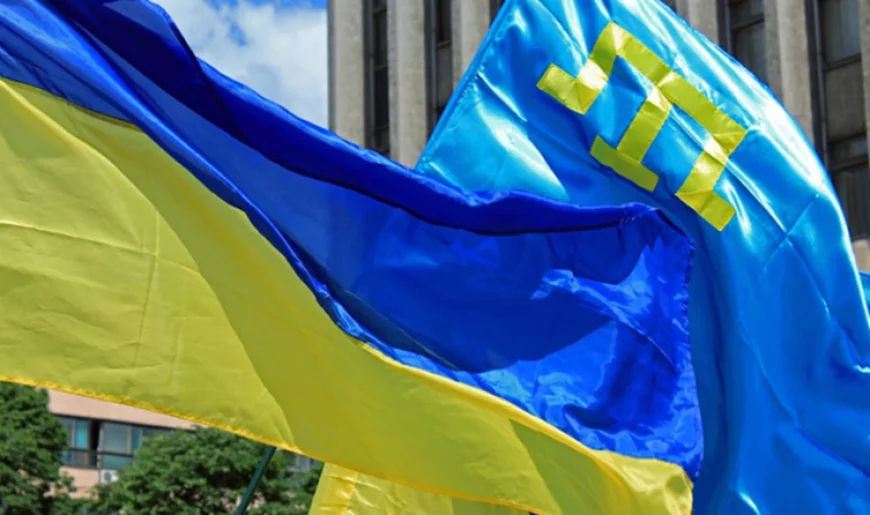
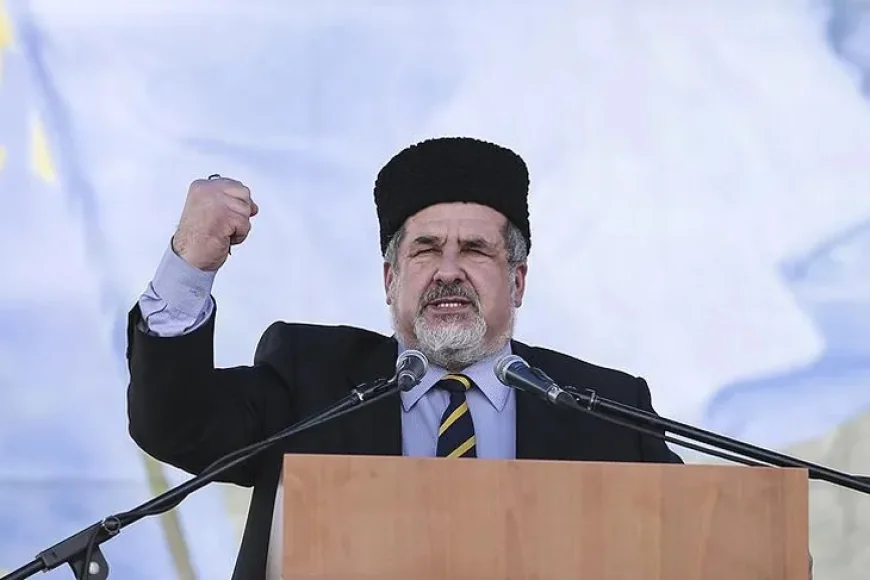
NEW YORK, USA — Mejlis of the Crimean Tatar People (KTMM) Chairman Refat Chubarov addressed the international community at the UN, stating that Russia's 12-year illegal occupation of Crimea has severely damaged the physical and mental health of the indigenous population.
Speaking at the 25th session of the UN Permanent Forum on Indigenous Issues, held under the theme "Protecting the Health of Indigenous Peoples in Times of Conflict," Chubarov exposed Moscow's systemic assimilation policies, forced mobilization, and rapid militarization. He warned that true health and security for Crimean Tatars are impossible until the occupation officially ends, Ukraine's sovereignty is restored, and the indigenous people's rights on their own lands are fully respected.
Historic decree on legitimate representation
Chubarov began his address by sharing a critical legal milestone with the international community. He announced that on April 3, 2026, the Ukrainian government passed a resolution officially solidifying the status of the KTMM as the "sole representative body of the Crimean Tatar people." Chubarov noted that this decision marks a revolutionary turning point in the indigenous population's struggle for rights. The move not only enhances the diplomatic legitimacy of Crimean Tatars on the global stage but also strikes a significant blow against Russia's strategy of establishing fake representative and puppet organizations in the region.
A continuation of imperial genocide policies
Describing Russia's presence in Crimea not merely as a military occupation but as a deeply rooted genocidal state policy, Chubarov stated that the ultimate goal of the occupiers is to completely eradicate the indigenous people from their homeland. Presenting a historical perspective, the chairman noted that the current situation is a modern continuation of the exile and extermination policies carried out during the Russian Empire and the Soviet Union (USSR).
"Russia continues the policy of annihilating Crimean Tatars, which was previously carried out by the Russian Empire and later the USSR. Constant oppression, persecution, and new threats of deportation cause massive psychological trauma among our people."


Warning the international public, Chubarov recorded that these intergenerational traumas have left permanent scars on the mental health of the population, creating a profound sense of societal insecurity.
Ecological destruction and militarization
The transformation of Crimea into a massive military base since 2014 directly threatens both the peninsula's ecology and the physical health of the population. Highlighting the confiscation of land and the conversion of fertile agricultural areas into military training grounds, Chubarov emphasized that the indigenous people's traditional life-support systems are collapsing. He pointed out that the natural resources, water reserves, and forests belonging to the indigenous population are being recklessly plundered to meet the logistical needs of the Russian army. By completely ignoring the right to environmental protection, the biological foundation of the Crimean Tatar people is being shaken, plunging them into "ontological insecurity."


Forced mobilization tears social fabric
Drafting civilians living in occupied territories into the Russian army during its full-scale war against Ukraine constitutes a war crime, the KTMM Chairman reminded the forum. He stated that this forced conscription and associated pressure have triggered a tragic new wave of emigration from Crimea. Forcing Crimean Tatar youth to fight in the ranks of an occupying army against their own country, Ukraine, has caused a deep moral and psychological crisis. Families are being divided, and young people are fleeing abroad to avoid imprisonment or forced conscription, which irretrievably shatters the "social fabric" that forms the basis of the community's mental health.
Russian propaganda and NGOs in Turkey
In addition to his speech at the UN, Chubarov shared comprehensive evaluations regarding Turkey's position and the perception operations targeting the Turkish public in an interview with the "Türkiye Today" news portal. Recalling that the Turkish Republic has never recognized the illegal annexation of Crimea since the war began in February 2014 and continues to support Ukraine's territorial integrity, Chubarov noted this support is also maintained across platforms like the Organization for Security and Co-operation in Europe (OSCE).
However, observing with regret that a significant portion of non-governmental organizations (NGOs) and media in Turkey remain under the influence of Russian propaganda, Chubarov made a striking assessment. He noted that the official stance of the Turkish state has not been effectively reflected in public opinion, leading many NGOs to adopt Russian-centric narratives claiming Ukraine is an obstacle to peace. Emphasizing that strong anti-American sentiment in the Turkish public is cleverly exploited by Russia, Chubarov stated this cannot legitimize an imperialist occupation. "Ukraine cannot accept a peace that requires it to concede its territories. Peace must be just," he added.
Political prisoners and systemic oppression
Revealing the horrifying extent of human rights violations in Crimea with statistics, the KTMM Chairman highlighted how the judiciary is used as a tool of intimidation. According to the shared data, 181 out of 351 political prisoners in Crimea are Crimean Tatars. Despite constituting only 12 percent of the peninsula's population, making up roughly 50 percent of the political prisoners proves the disproportionate oppression and ethnic targeting.
Determined to realize its historical assimilation ambitions, the Russian administration is resorting to severe legal measures to force the indigenous people to leave their homeland. Stating that civilians are widely given prison sentences ranging from 10 to 30 years on baseless terrorism charges, Chubarov underlined that 60 of the current political prisoners are women, and hundreds of Crimean Tatars have been officially barred from residing on the Crimean Peninsula through administrative decisions.
Cultural manipulation and demographic engineering
Providing a striking example of how the thin line between propaganda and cultural diplomacy is exploited by Russia, Chubarov drew attention to the activities of the "Red Army Choir," which holds annual concerts in Turkey. The chairman noted that the dates of these concerts are deliberately set to coincide with the anniversaries of the Crimean Tatar and Circassian deportations and genocides. He further pointed out that even the schedule for the critical NATO Summit to be held in Ankara on July 7-8, 2026, was announced within the choir's concert calendar.
Touching upon the geopolitical importance Crimea holds for Russia, Chubarov emphasized that the region serves purely as a strategic "military base" rather than an economic asset for Moscow, noting the existence of around 225 military settlements across the peninsula. He reminded that NATO has constantly warned about Russia's expansion steps in the Black Sea since the early 2000s.
In the final part of his evaluations, Chubarov highlighted how Crimea's ethnic structure is being altered through conscious engineering. Explaining that approximately 1 million Russian citizens have been illegally settled in Crimea since the 2014 occupation, he declared this process to be a blatant indicator of demographic transformation and "Russification." The 14 Crimean Tatar schools established with great effort have been converted into Russian schools, education in the Crimean Tatar language was abolished, and the weekly Tatar language instruction has been reduced to just one hour—a token amount Russia uses as propaganda to falsely claim it protects indigenous rights.
Concluding his remarks, the KTMM Chairman stated that continuous support for Ukraine is essential, noting that Russia cannot win this war, retreating from Crimea would mean political suicide for Putin, and seeing a fragmented Russia in the near future is not a distant possibility.
What's Your Reaction?
 Like
0
Like
0
 Dislike
0
Dislike
0
 Love
0
Love
0
 Funny
0
Funny
0
 Wow
0
Wow
0
 Sad
0
Sad
0
 Angry
0
Angry
0

Editor | Wise News Press — Delivering accurate, timely global news with integrity, insight, and editorial responsibility.








Comments (0)