



Ozdemir reframes Said Nursi debate through Jung and Islam
Prof. Dr. Ibrahim Ozdemir said criticism of Said Nursi’s references to dreams and inspiration reflects a deeper dispute over knowledge, spirituality and interpretation in Islam.


By Ahmet Taş | My Dream Meaning
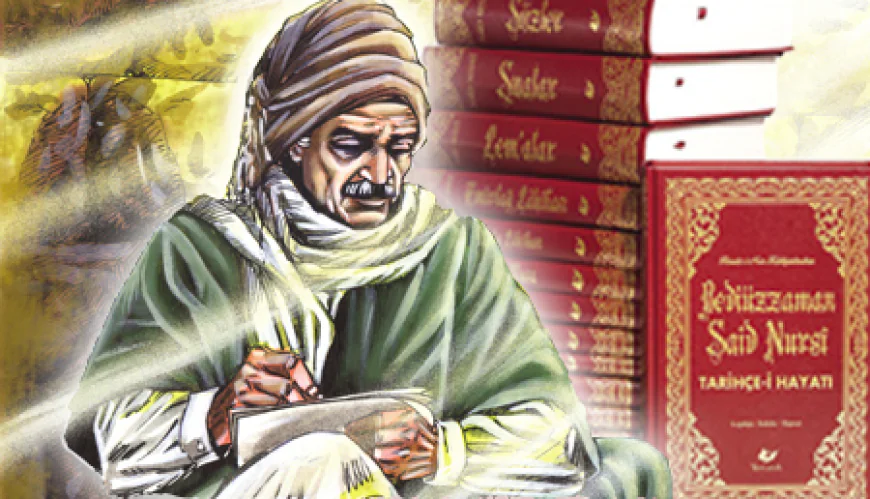
ISTANBUL, TURKEY — Prof. Dr. Ibrahim Ozdemir argued in a commentary published on March 23, 2026, that criticism of Said Nursi’s references to dreams, inspiration and inner certainty should be understood not as an isolated theological dispute, but as part of a much older debate over the nature of knowledge in Islamic thought.
Ozdemir’s central claim is that expressions found in Nursi’s writings — such as “it was made to be written,” “it was inspired into my heart,” or “I saw in a dream” — should not be read as aberrations or proof of irrationality. Instead, he says, they belong to a long-standing intellectual and spiritual vocabulary that has shaped Islamic scholarship, Sufi literature and metaphysical reflection for centuries. In his reading, the controversy around Nursi is ultimately about whether knowledge is confined to reason and empirical observation, or whether the heart, intuition and spiritual experience also carry meaning.
A dispute rooted in Islamic intellectual history
Ozdemir places the current debate within a broader historical framework. He describes Islamic intellectual history as a field shaped not only by orthodoxy and law, but also by disagreement, plurality and debate. From the Abbasid period’s theological arguments to Andalusia’s philosophical exchanges, he says, Muslim thought evolved through encounters between scholars with differing methods and assumptions.
At the same time, Ozdemir notes that this pluralism was not always secure. He points to periods when literalist or politically backed religious approaches sought to marginalize philosophical and mystical currents. In that context, he recalls the cases of figures such as Hallaj, Suhrawardi and Ayn al-Qudat, whose teachings drew harsh reactions and, in some cases, severe punishment.
By placing Nursi in this historical line, Ozdemir suggests that the contemporary criticism aimed at the Turkish Islamic scholar is not entirely new. Rather, he sees it as a continuation of an older tension between textual literalism and broader conceptions of religious knowledge. According to him, debates over Nursi’s language should therefore be viewed not merely as technical objections, but as symptoms of a deeper clash over epistemology.
Nursi’s life and the language of spiritual experience
Ozdemir also situates the discussion within Nursi’s political and intellectual life. He recalls that Nursi, active during the late Ottoman period and the early Turkish Republic, faced surveillance, exile, court cases and imprisonment. Ozdemir says those pressures emerged first in response to his proposals on education and society during the Ottoman era, and later because of his critique of aggressive secularization during the Republican period.
Yet he emphasizes that Nursi’s response was not violent confrontation. Instead, he pursued what Ozdemir presents as a civil and text-centered form of resistance, placing writing, teaching and moral persuasion at the center of his effort. That context matters, Ozdemir argues, because it shaped both the tone and content of Nursi’s works, including the spiritual register through which he described insight and understanding.
For critics, such formulations may appear subjective or unverifiable. But Ozdemir argues that they should be read within the conventions of Islamic piety and Sufi etiquette. In that tradition, he says, a scholar’s refusal to present himself as the absolute author of meaning may express humility before divine will rather than an abandonment of reason.
“The issue seems to be knotted precisely here,” Ozdemir wrote, arguing that the tradition of irfan does not see knowledge only as a product of the mind, but also as an experience of the heart and soul.
Jung as a modern framework for reading dreams and symbols
One of the most distinctive features of Ozdemir’s essay is his use of Carl Gustav Jung as a modern interpretive bridge. Rather than relying only on classical Islamic references, Ozdemir argues that Jungian psychology offers a language through which contemporary readers may better understand why dreams and symbols occupy an important place in religious experience.
According to Ozdemir, Jung did not treat dreams as random mental residue. He regarded them as meaningful expressions emerging from the depths of the psyche, often communicated through symbols. Ozdemir contrasts that approach with a narrower rationalism that tends to dismiss visionary or symbolic language as either pathology or superstition.
That distinction becomes especially important, he says, when evaluating authors such as Ibn Arabi or Said Nursi. If one adopts Jung’s broader framework, then dream narratives and references to inspiration no longer appear as automatically irrational. Instead, they may be understood as attempts to articulate experiences that do not fit neatly within the language of ordinary logic alone.
Ozdemir also invokes the contrast between Freud and Jung to reinforce this point. Where Freud is often associated with a more reductive reading of dreams, Jung allows for symbolic depth and existential meaning. For Ozdemir, that difference matters because it opens a space in which religious language can be studied without immediately being dismissed.
Ibn Arabi, Rumi and the continuity of an older tradition
To strengthen his argument, Ozdemir turns to well-known figures from Islamic intellectual history. He notes that Ibn Arabi associated the writing of Fusus al-Hikam with a visionary encounter in which the Prophet entrusted him with the text. Likewise, Jalal al-Din Rumi’s Masnavi is often described in language that foregrounds inspiration, transmission and a state of inward receptivity rather than simple authorial production.
By invoking these precedents, Ozdemir argues that Nursi’s language is not anomalous. It belongs to a recognizable pattern within the Islamic tradition, one in which knowledge may arrive through study, contemplation, spiritual discipline and symbolic experience all at once. In that framework, phrases such as “Write, my brother,” which Nursi is said to have used while dictating parts of his work to students, indicate a mode of transmission grounded in reflection and inner concentration.
Ozdemir says works such as Rumuzat and other early writings by Nursi should therefore be read through this layered understanding of knowledge. To reduce them to arbitrary subjectivity, he argues, would flatten both the texts and the tradition from which they emerged.
In the closing part of his essay, Ozdemir broadens the discussion to the present. He says debates around the publication and reception of the Risale-i Nur continue to trigger unease among both hardline secular circles and some Muslim academics and commentators. In his view, that unease is not only about Nursi as an individual thinker, but also about the intellectual legitimacy of intuition, symbolism and spiritual testimony.
Taken together, Ozdemir’s argument presents the dispute over Said Nursi as more than a disagreement over terminology. It is, he says, a renewed struggle over what counts as valid knowledge, who gets to define it, and whether Islamic thought can still make room for the language of dreams, inspiration and the heart without surrendering intellectual seriousness.
What's Your Reaction?
 Like
0
 Dislike
0
 Love
0
 Funny
0
 Wow
0
 Sad
0
 Angry
0

Editor | Wise News Press — Delivering accurate, timely global news with integrity, insight, and editorial responsibility.





















Comments (0)