



The Testimony of Conscience: Oppression of Martyrs’ Families, a Platform for Terrorists?
This article examines Turkey’s deepening justice crisis through the unlawful treatment of those the state is meant to protect most: a martyr’s wife, a police officer left 98 percent disabled in the fight against terrorism, and a journalist who has spent decades defending the rights of martyrs’ families.



By Yusuf İnan
Journalist | Political & Strategic Analyst
THE TESTIMONY OF CONSCIENCE:
At the Dark Crossroads Where Terrorists Are Called “Leaders” and Martyrs’ Families Are Treated as “Suspects”
Turkey’s legal and political climate has moved beyond the realm of post-truth and entered something far more alarming: what can only be described as a post-conscience era.
We are witnessing a moment in which a figure responsible for the deaths of more than 50,000 people is discussed in political circles as a “founding leader,” while the true pillars of this nation — martyrs’ families and war veterans — are dragged through court corridors under the shadow of terrorism allegations.
One must ask:
Has there truly not a single public official left whose heart still trembles at the word homeland?


Restrictions on a Fallen Martyr, Judicial Pressure on His Widow
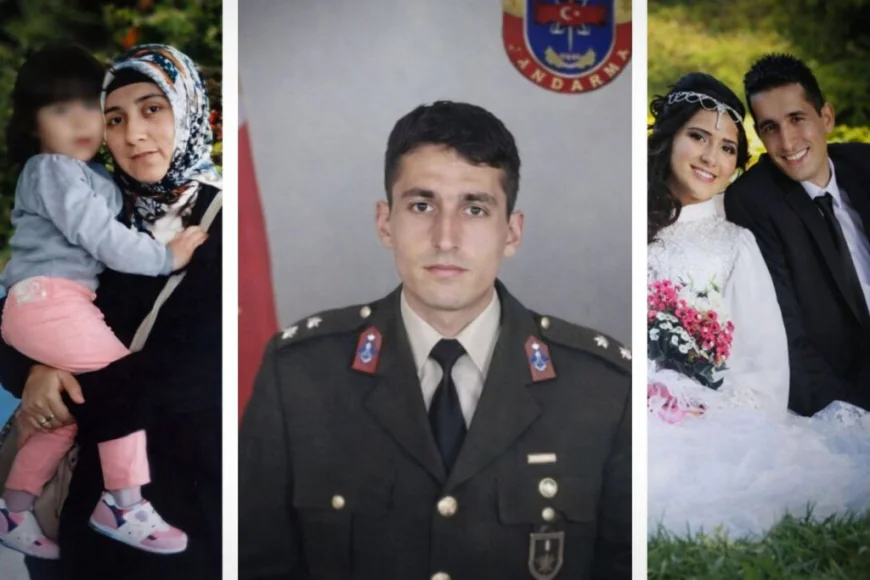
One recent case sparked widespread outrage. Lieutenant Murat Ataş, martyred in the line of duty, was posthumously flagged as a “terrorism suspect” nine years after his burial.
Is his nine-year-old child now expected to prove that her father was not a terrorist in order to obtain a passport?
His wife, Sezen Ataş, was sentenced to six years in prison and placed under a travel ban, effectively suffocating her freedom and dignity.


When prosecutors review the identity of a man who gave his life for his country, why do they see a “suspect” instead of a martyr?
Do the bones of Fethi Sekin — the police officer who shielded civilians with his own body during a terrorist attack at İzmir Courthouse — not tremble at such injustice?
Is a 27-Year Struggle for Martyrs Now a Crime?
Another striking example is Yusuf İnan, founder of SehitlerOlmez.com, who has dedicated 27 years of his life to defending the rights of martyrs’ families and veterans.
Sentenced on charges of “aiding a terrorist organization,” İnan received a prison sentence of 3 years and 6 months and has been subjected to a travel ban for nearly eight years.
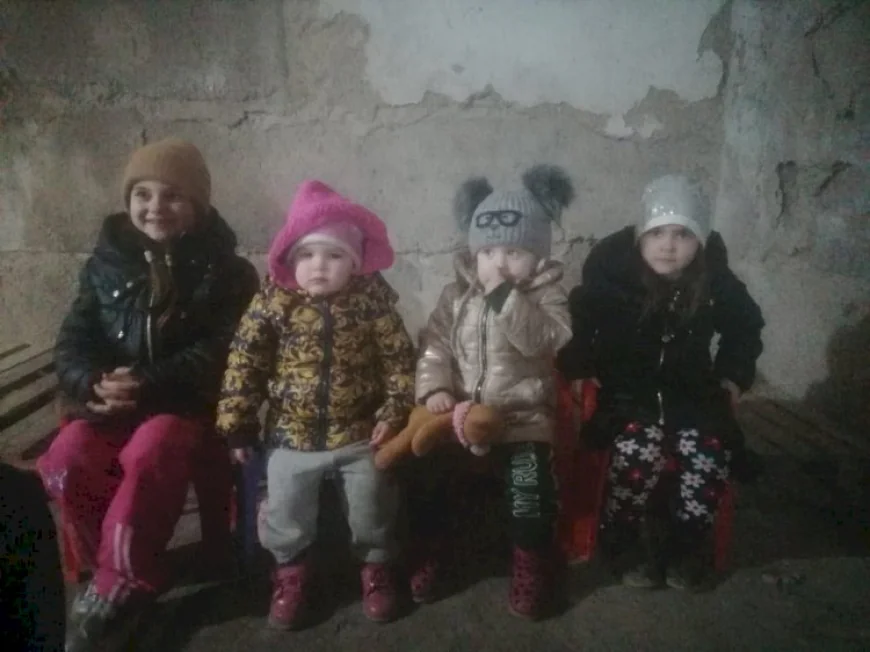
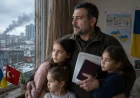
Elif and Ayşe İnan sheltering in Ukraine’s war zone, separated from their father, journalist Yusuf İnan, due to an eight-year travel ban. Their story illustrates how legal measures intended for security have instead become instruments of collective punishment.
This punishment extends beyond him. His daughters, Elif and Ayşe, have spent their childhood in war-torn Ukraine, growing up in bomb shelters — separated from their father by a bureaucratic decree devoid of compassion.
Lawmakers who raise their voices for global causes fall silent when it comes to these two innocent children and their father.
A Disabled War Veteran Behind Bars, His Wife Humiliated
Has injustice ended there? Unfortunately not.
Bilal Konakçı, a police officer who lost his eyesight and limbs while fighting the PKK, now stands accused of terrorism. After 20 months in prison, he was released only through a presidential pardon.

Bilal Konakçı, a police officer left 98 percent disabled while fighting PKK terrorism, was imprisoned for 20 months on terrorism-related charges before being released by a presidential pardon issued by President Recep Tayyip Erdoğan.Few contradictions better expose the moral collapse of justice than imprisoning a man who gave his body to protect the state.
His wife, meanwhile, was detained, subjected to a degrading strip search, prosecuted, and imprisoned.
What kind of justice allows a man to be both a war hero and a terror suspect?
Why the Silence from the Ministry of Justice and the High Council of Judges and Prosecutors?
Do Justice Minister Yılmaz Tunç and the HSK not see that such rulings — issued “on behalf of the Turkish nation” — are eroding public trust in the state, damaging social cohesion, and creating deep moral fractures within society?
How can families who have personally suffered from terrorism be treated as suspects, while organizations politically linked to terror freely appear in parliament?
This contradiction defies reason — and conscience.
A Question to Political Leadership
One must also ask MHP leader Devlet Bahçeli:
While discussions take place about opening parliamentary doors to those associated with terror, why is there silence when martyrs’ families are abandoned, widowed, and left unheard?
If terrorists are treated as patriots while patriots are sent to prison, then what we are facing is not justice — but a profound breakdown of the rule of law.
A Call to the Turkish Nation
This is not merely the issue of Yusuf İnan, Sezen Ataş, or Bilal Konakçı.
This is a matter of the dignity of the Republic of Turkey.
A nation that fails to protect its martyrs’ families and veterans cannot secure its future. A system that humiliates widows, separates fathers from children, and erodes justice must be confronted by a renewed moral and civic will.
History will remember those who turned away — and those who stood up.
The time has come to awaken our collective conscience.
Yusuf İnan
Yusuf İnan is a journalist and author. He serves as Editor-in-Chief of WiseNewsPress.com, SehitlerOlmez.com, and YerelGundem.com, and specializes in strategic and political analysis of Turkish and global affairs.
What's Your Reaction?
 Like
0
Like
0
 Dislike
0
Dislike
0
 Love
0
Love
0
 Funny
0
Funny
0
 Wow
0
Wow
0
 Sad
0
Sad
0
 Angry
0
Angry
0

Editor | Wise News Press — Delivering accurate, timely global news with integrity, insight, and editorial responsibility.












Comments (0)