



Who Might Succeed Erdoğan? | The Economist’s Strategic Signal on Turkey’s Future
The Economist’s analysis on Recep Tayyip Erdoğan’s possible successors reveals more than speculation. This in-depth assessment explores Britain’s strategic expectations, power transitions in Turkey, and why Hakan Fidan stands out as a key figure.




Yusuf İnan
Journalist | Political & Strategic Analyst
Who Might Succeed Recep Tayyip Erdoğan?
What The Economist Is Really Signalling
The Economist’s article titled “Who might succeed Recep Tayyip Erdoğan?” is not a routine profile of Turkish politics. Rather, it is a strategic political reading that reflects how Britain — and more broadly the Western policy community — interprets Turkey’s post-Erdoğan future. The timing, tone and hierarchy of names mentioned in the piece indicate more than simple speculation: they suggest an attempt to frame a “manageable transition” narrative for Turkey.
Not a Succession Story, but a Transition Map
On the surface, the article discusses the manoeuvring inside Turkey’s ruling Justice and Development Party (AK Party) as President Erdoğan approaches the end of his current constitutional term in 2028. However, beneath this layer lies a more consequential message: Erdoğan’s era is being treated as finite, and Western observers are actively assessing who could preserve stability while recalibrating Turkey’s relations with the West.
The very act of openly discussing successors in a country where Erdoğan remains dominant is itself a signal. For The Economist, Erdoğan is no longer portrayed as politically unassailable, but as a leader entering a “managed sunset phase.”
Why Bilal Erdoğan Is Mentioned — and Why He Is Undermined
The article opens with a vivid description of Bilal Erdoğan, the president’s son, speaking at a pro-Gaza rally. This is not accidental. By foregrounding Bilal, The Economist introduces the idea of dynastic succession — only to dismantle it methodically.


Bilal is portrayed as politically visible but institutionally weak: no elected office, no independent power base, and limited legitimacy beyond proximity to his father. The concluding message is clear: a Turkish political dynasty is unlikely to gain popular acceptance, and Western observers do not see Bilal Erdoğan as a viable or desirable leader.
In this sense, Bilal is not being promoted — he is being pre-emptively neutralised.
The Real Signal: Hakan Fidan
Among the four names listed — Selçuk Bayraktar, Süleyman Soylu, Bilal Erdoğan and Hakan Fidan — one stands apart in tone and substance: Hakan Fidan.


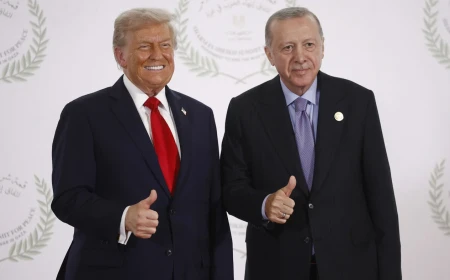
The Economist describes Fidan as the candidate with the strongest résumé: former intelligence chief, current foreign minister, and a figure deeply embedded in both Turkey’s security architecture and international diplomacy. Crucially, the article highlights an episode in which Fidan openly contradicted the optimistic narrative surrounding Erdoğan’s meeting with Donald Trump by revealing US obstruction of Turkey’s fighter jet programme.
This detail is key. It signals that Fidan is seen as:
-
confident enough to challenge presidential messaging,
-
experienced enough to manage complex relations with Washington,
-
and pragmatic enough to be taken seriously by Western capitals.
In short, if the article “signals” anyone, it is not Erdoğan’s family — it is the state bureaucrat turned diplomat.
Britain’s Preferred Scenario: Continuity Without Erdoğan
The Economist does not call for regime change, nor does it advocate opposition victory. Instead, it outlines a preferred Western scenario: continuity of the Turkish state, preservation of NATO alignment, reduced personalism, and a gradual institutional rebalancing — all without Erdoğan himself.
This explains why opposition figures like Ekrem İmamoğlu and Mansur Yavaş are mentioned only briefly and in structural terms, not as favoured alternatives. A sudden opposition-led rupture is portrayed as risky; an AK Party–led transition under a figure like Fidan is framed as “manageable.”
Is This a Targeting Article?
The piece does not “target” Erdoğan in the traditional sense, but it does something more subtle: it places him within historical limits. By focusing on health, age, constitutional constraints and internal succession battles, The Economist treats Erdoğan not as a permanent fixture, but as a leader whose departure must be planned for.
This is not an attack — it is a recalibration.
Conclusion: Reading Between the British Lines
The core message of the article is not who will replace Erdoğan, but who the West believes it can work with after Erdoğan. In that equation, dynastic politics are dismissed, hardline populists are viewed with caution, and technocratic power brokers with international credibility are elevated.
The name that best fits that profile is Hakan Fidan.
Whether Turkey follows this path is another question entirely. But The Economist’s article makes one thing clear: in British strategic thinking, the Erdoğan era is no longer infinite — and the conversation about what comes next has already begun.
Yusuf İnan
Yusuf İnan is a journalist and author. He serves as Editor-in-Chief of WiseNewsPress.com, SehitlerOlmez.com, and Yerelgundem.com, and specializes in strategic and political analysis of Turkish and global affairs.
What's Your Reaction?
 Like
0
Like
0
 Dislike
0
Dislike
0
 Love
0
Love
0
 Funny
0
Funny
0
 Wow
0
Wow
0
 Sad
0
Sad
0
 Angry
0
Angry
0

Editor | Wise News Press — Delivering accurate, timely global news with integrity, insight, and editorial responsibility.




















Comments (0)