



Three Children, Broken Families: Turkey’s Justice Paradox
An opinion analysis on how Turkey’s family policies clash with judicial practices that separate families, restrict press freedom, and violate children’s rights.



By Yusuf İnan
Journalist / Opinion
Wise News Press – İzmir, Türkiye
Three Children, Broken Families:
The Deep Contradiction in Turkey’s Family and Justice Policies
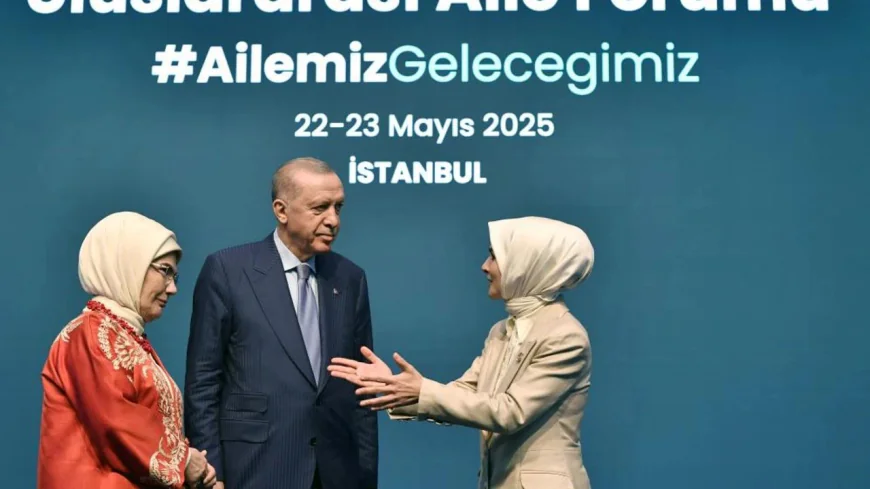
President Recep Tayyip Erdoğan’s long-standing call for “at least three children” is undeniably framed as a strategic vision for Turkey’s future. Likewise, Bilal Erdoğan’s emphasis on raising a “pious and morally grounded generation” remains a central theme within conservative and religious discourse in Turkey.
There is nothing unusual about such strategies in themselves.
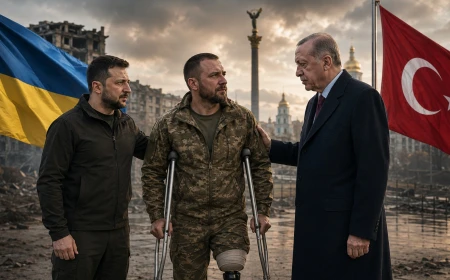
Across Europe, the United States, Russia, Ukraine—even amid war—states invest heavily in family policies. Governments allocate special budgets for children, support mothers financially, protect family unity, and ensure that children can grow, study, and survive with dignity. In many countries, even orphaned or parentless children are guaranteed welfare at a humane standard of living.
Globally, the model is clear:
If you want children, you protect families.
If you want the future, you secure the present.


So why, in Turkey, does President Erdoğan’s three-child strategy face skepticism, resistance, and social disbelief?
The answer lies not in ideology—but in practice.
When the State Breaks What It Preaches
A brief review of judicial practices reveals a troubling reality:
While the executive branch promotes family values, the judicial bureaucracy systematically undermines them.


Families are being separated—not by war, poverty, or choice—but by legal decisions that stretch, distort, or outright ignore the law.
Journalists are prosecuted over opinion pieces written 10 or 15 years ago—texts that fall squarely under freedom of expression in democratic societies. Instead of evaluating the overall context, courts isolate words, construct terrorism narratives, and criminalize thought.
A journalist living abroad can be subjected to an indefinite travel ban in Turkey—despite having a family, spouse, and children in another country. Not for months. Not for a year.
But for eight years—and counting.
This is not justice.
This is slow institutional destruction of the family.
Children Left in War Zones, Fathers Held Hostage by Law
Consider the contradiction:
On one side, the President urges citizens to have more children.
On the other, judicial decisions keep fathers trapped inside Turkey while their children grow up abroad—sometimes in active war zones.
Children with Turkish and Muslim identity are raised without their fathers. Mothers struggle alone. Families disintegrate under psychological pressure. Faith, identity, and belonging erode.
In some cases, children are raised in environments where they are culturally and religiously assimilated—attending churches, being baptized—not by choice, but by forced separation.
This is not a theological debate.
It is a human tragedy.
The Silence of High Courts
Perhaps most alarming is the silence of Turkey’s highest judicial institutions.
Appeals to the Constitutional Court (AYM), including urgent individual applications concerning family unity and children’s rights, remain untouched for years. Four years pass without a single agenda discussion.
At the same time, public speeches emphasize “fear of God,” “conscience,” and “the sanctity of rights.”
Yet children grow up without fathers.
Families remain broken.
Justice remains silent.
The contradiction is not subtle—it is structural.
Three Children in Theory, Broken Families in Reality
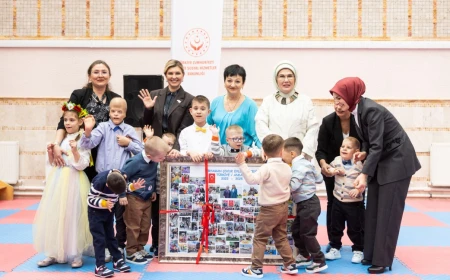
In 2025, Turkey officially declared the “Year of the Family.”
But how can families believe in such declarations when judicial practice systematically destroys them?
How can citizens be expected to raise three children when both parents risk imprisonment, endless trials, or indefinite legal restrictions?
How can trust be built when quintuplets grow up with both parents behind bars, or when children spend their entire childhood waiting for justice that never arrives?
A society does not reject family values because it dislikes children.
It rejects them because it no longer trusts the system meant to protect them.
A Call for Consistency, Not Rhetoric
This is not an attack on President Erdoğan or Bilal Erdoğan’s stated visions.
It is a call for alignment.
If the state truly believes in family, faith, and the future, then judicial practice must reflect those values. Children’s best interests must override bureaucratic rigidity. Freedom of expression must be protected. Family unity must be treated as a constitutional priority—not an inconvenience.
Otherwise, slogans remain slogans.
And families continue to collapse under the weight of contradiction.
Final Question
One must ask—calmly, clearly, and without hostility:
How can a nation ask its people to build the future,
while its institutions quietly dismantle the family in the present?
Yusuf İnan
WiseNewsPress.com
Yusuf İnan is a journalist and writer. He serves as Editor-in-Chief of WiseNewsPress.com, SehitlerOlmez.com, and YerelGundem.com. He specializes in strategic and political analysis on Turkey and global affairs.
What's Your Reaction?
 Like
0
Like
0
 Dislike
0
Dislike
0
 Love
0
Love
0
 Funny
0
Funny
0
 Wow
0
Wow
0
 Sad
0
Sad
0
 Angry
0
Angry
0

Editor | Wise News Press — Delivering accurate, timely global news with integrity, insight, and editorial responsibility.

















Comments (0)