



Leaders or the People? Morality, Society, and the Mirror of Power
Do leaders shape society, or does society produce its leaders? A thought-provoking column on morality, justice, public character, and political leadership in a global age.


By Yusuf İnan
Journalist | Political & Strategic Analyst
Leaders or the People?
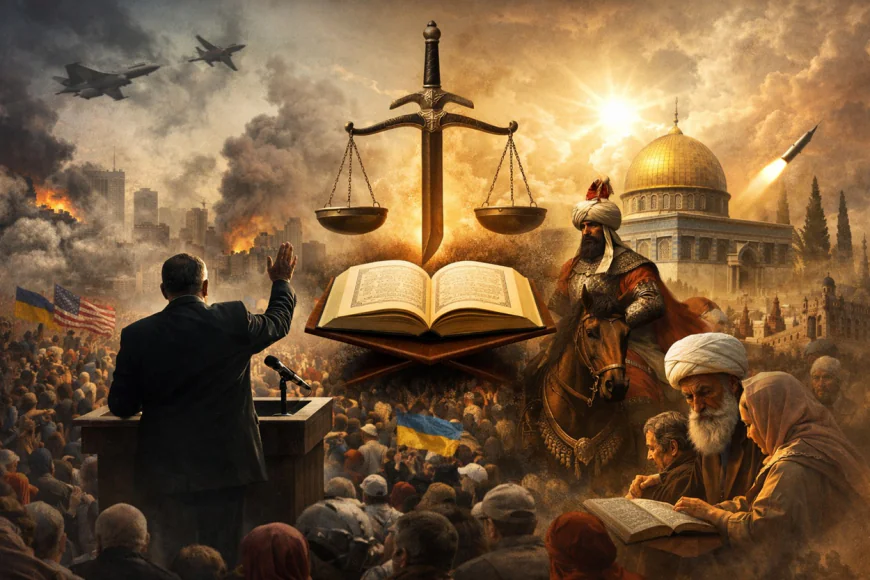
One of the most debated questions in both global and local politics today is leadership. Everywhere, people say the same things: “If that leader had been in power, this would never have happened.” “If that political party had won, everything would be different.” “If only the right leader came, the country would recover.” It is as if all hope has been placed on a single person. Yet there is a deeper truth many people ignore: leaders do not emerge independently of society. They are, more often than not, a reflection of the people.
A society usually produces leaders in its own image. Leadership does not arise in a vacuum. It grows out of a moral climate, a culture, a worldview, and a collective social character. As an old saying suggests, cream rises in a pot of milk, while vinegar forms in a barrel of sourness. What exists within the people eventually appears in the character of their rulers.
Human beings often expect others to become better, fairer, wiser, and more compassionate, but rarely stop to ask whether they themselves live by justice, honesty, and moral discipline. They want honest leaders, yet overlook dishonesty in daily life. They demand justice from the state, yet ignore the rights of neighbors, workers, customers, and the vulnerable. If the moral condition of the people is weak, then blaming leadership alone becomes an incomplete explanation.
A Shared World, A Shared Responsibility
We are living in an age where the world is deeply interconnected. A war in one country, a famine in another, an earthquake, a massacre, a humanitarian disaster, or an economic collapse can be seen, discussed, and felt across the globe within minutes. Borders may still exist on maps, but humanity’s conscience is being tested on a shared global stage.


For that reason, world events must be viewed not only through a local or national lens, but through a wider moral and civilizational lens. The crisis of leadership is not merely political. It is ethical.
The Prophet Muhammad (peace be upon him) said:
“In times of fitnah, the one who walks is better than the one who runs; the one who stands is better than the one who walks; the one who sits is better than the one who stands; the one who lies down is better than the one who sits; and the one who sleeps is better than the one who lies down.”


This hadith reminds us that times of turmoil require caution, restraint, and wisdom. Fitnah is not only open conflict. It is also the confusion of truth and falsehood, the dulling of conscience, the normalization of oppression, and the triumph of self-interest over morality. Much of what humanity is experiencing today can only be properly understood through this lens.
When a People Decays, the Order Above It Also Decays
The Qur’an states a fundamental principle:
“Indeed, Allah does not change the condition of a people until they change what is in themselves.”
(Qur’an, 13:11)
This verse makes one thing clear: decline begins within. When the individual is corrupted, the family weakens. When the family weakens, society decays. When society decays, institutions lose their integrity. And when institutions collapse morally, governance loses justice.
Another verse says:
“And thus We make some wrongdoers allies of others because of what they used to earn.”
(Qur’an, 6:129)
This means that the relationship between rulers and the ruled is not merely political; it is moral. A society that normalizes injustice, ignores the rights of others, loses sensitivity to what is lawful and unlawful, and cares only for personal gain should not be surprised if it is eventually ruled by people who reflect that same condition.
A narration attributed to Ka‘b says: “God sends each era a ruler according to what is in the hearts of its people. If He wills to reform them, He appoints a righteous one; if He wills to punish them, He appoints an evil one.”
The Prophet’s supplication also points in the same direction:
“O Allah, do not place the merciless over us.”
Merciless rulers do not descend upon merciful societies without reason. When compassion disappears from daily life, it often disappears from public life as well.
The Qur’an also warns:
“And fear a trial which will not strike only the wrongdoers among you exclusively.”
(Qur’an, 8:25)
In other words, when corruption spreads, its consequences do not remain limited to the guilty. The silent, the indifferent, and the passive also suffer.
The Moral Lesson of Yavuz Sultan Selim
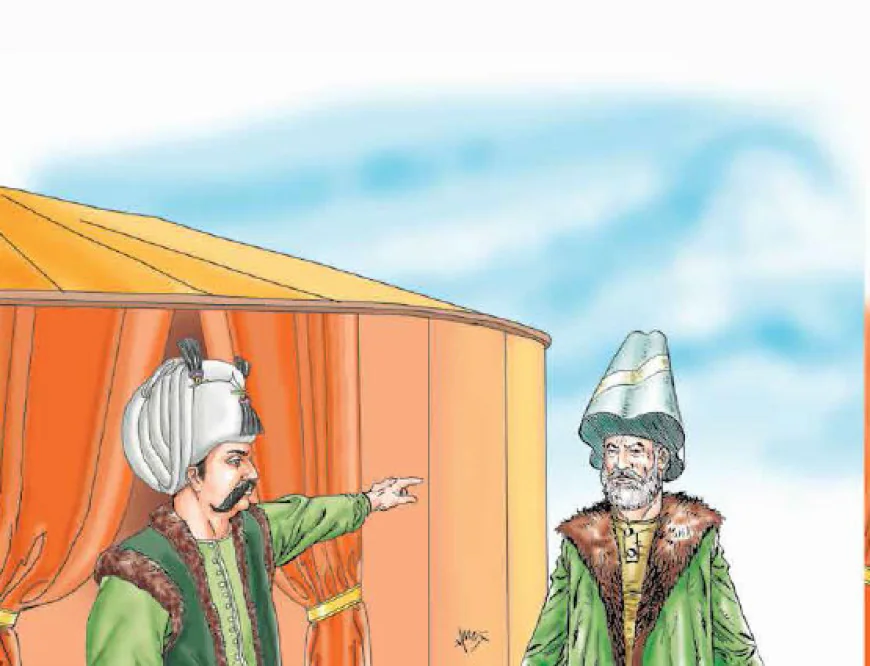
History offers powerful examples of this principle. One of the best-known stories from Ottoman history concerns Sultan Selim I during the Egyptian campaign. It is said that while the Ottoman army was resting in a vineyard region, Sultan Selim wanted to test whether any soldier had taken grapes or fruit without the owner’s permission. He ordered that all bags be searched. After hours of inspection, not a single soldier was found carrying even one unlawfully taken piece of fruit.
Upon hearing this, Sultan Selim reportedly raised his hands and said:
“O my Lord, endless praise and thanks be to You for granting me an army that does not consume what is unlawful. Had even one soldier taken a fruit without permission, I would have abandoned the Egyptian campaign. For with an army that eats the forbidden, the conquest of lands is not possible.”
Whether one reads this as literal history or moral memory, the lesson is unmistakable: victory is not built on military strength alone. It is built on character. A people that disregards the rights of others may possess weapons, strategy, and numbers, but it has already been weakened from within.
From Akhi Ethics to Today’s Crises
The same spirit appears in the moral tradition of the Akhis, who would say: “I have made my first sale today; please buy from my neighbor who has not.”
This is more than commercial courtesy. It is a civilization’s code of conscience.
By contrast, the spirit of our time is often: “Let me profit, and let others suffer if they must.” Let me be full, rich, comfortable, and secure; what happens to others is not my concern. This mentality does not remain personal. It becomes structural. It produces unjust economies, ruthless politics, social cruelty, war, and silence in the face of atrocity.
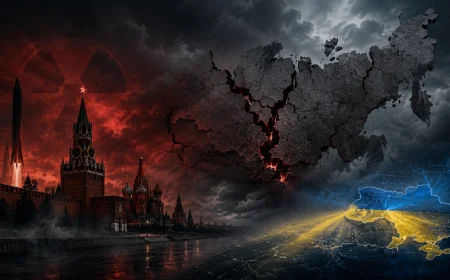
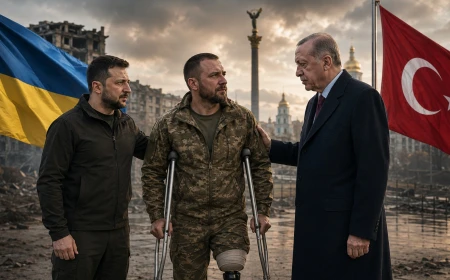
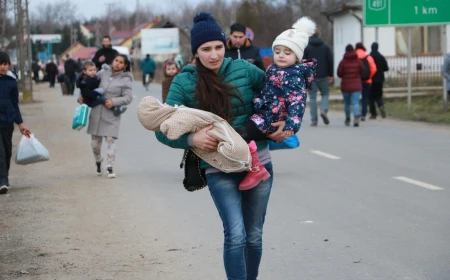
When we look at Ukraine, Gaza, Palestine, or rising tensions elsewhere in the world, we should not read these events only in terms of weapons, alliances, or strategy. Those factors matter, of course. But beneath them lies a deeper human failure: the weakening of moral responsibility. If babies die of hunger, if the elderly perish in despair, if injustice becomes routine and millions remain unmoved, then the problem is not only bad leadership. It is also the numbness of societies.
Conclusion: Before Leaders Change, People Must Change
Leaders matter. Just rulers, compassionate rulers, and wise rulers are a blessing for any nation. But there is something even more fundamental than leadership: the moral condition of the people.
If the people respect the rights of others, avoid what is forbidden, care for their neighbors, feel the suffering of the oppressed, and uphold justice in their own lives, then the kind of leadership that emerges from such a society will also begin to change. A leader is often not the fate of the people, but their mirror.
For that reason, the real solution is not merely to wait for a better leader. The real solution is for individuals, one by one, to reform themselves. If humanity returns to justice, compassion, moral restraint, and respect for the rights of others, then wars will diminish, oppression will weaken, and social peace will have a foundation.
Victories and defeats, rise and decline, strength and collapse all become more understandable when viewed through this moral lens.
So the real question is not simply, “Which leader will save us?”
The deeper question is: “What kind of people must we become so that better leaders may emerge among us?”
Because in the end, leaders are important, but the people are even more important.
Yusuf İnan
www.wisenewspress.com
Yusuf İnan is a journalist and author. He serves as Editor-in-Chief of WiseNewsPress.com, SehitlerOlmez.com, and YerelGundem.com, and specializes in strategic and political analysis of Turkish and global affairs.
What's Your Reaction?
 Like
0
Like
0
 Dislike
0
Dislike
0
 Love
0
Love
0
 Funny
0
Funny
0
 Wow
0
Wow
0
 Sad
0
Sad
0
 Angry
0
Angry
0

Editor | Wise News Press — Delivering accurate, timely global news with integrity, insight, and editorial responsibility.














Comments (0)