



US and YPG in Munich: Legitimization or a Diplomatic Sell-out?
An in-depth analysis of the 62nd Munich Security Conference reveals a complex shift in US-SDF relations, challenging the Turkish narrative that the YPG has been "abandoned" by Washington.


By Ahmet Taş | Wise News Press
ANKARA, TURKEY — The Turkish political landscape and its pro-government media have been dominated this week by a singular, triumphant headline: "The United States has finally sold out the PKK/YPG." According to this narrative, Washington has bowed to Ankara's demands, effectively dissolving the possibility of an "autonomous" region in Northeast Syria and leaving the Syrian Democratic Forces (SDF) to fend for themselves.
However, a closer examination of the 62nd Munich Security Conference (MSC), which concluded yesterday, suggests a far more unsettling reality for Turkish interests. While Ankara celebrates a perceived victory, the diplomatic maneuvers in Munich indicate that rather than being "sold," the SDF—led by Mazlum Kobani—is being systematically integrated into the international diplomatic fold as a legitimate political actor.
The Duhok Prelude: From Camouflage to Suits
The roadmap for the events in Munich was actually laid out three months ago in Iraq. On November 18, 2025, the 6th Middle East Peace and Security Forum was held in Duhok. The "surprise" guest of the forum was Mazlum Kobani, the commander-in-chief of the SDF, who is wanted by Turkey with a red notice.
Kobani appeared not in military fatigue, but in a tailored suit and tie, a symbolic shift orchestrated by the US and facilitated by Nechirvan Barzani. During the forum, Kobani openly called for the international recognition of the "Rojava Kurdish administration" and insisted that they would not allow a return to a centralized Syrian regime. Despite the gravity of a designated terrorist leader appearing at such a high-profile event hosted by a "friendly" neighbor, Ankara's response remained uncharacteristically muted, eventually hosting Mesut Barzani in Cizre just ten days later.
The Munich "Historic Moment"
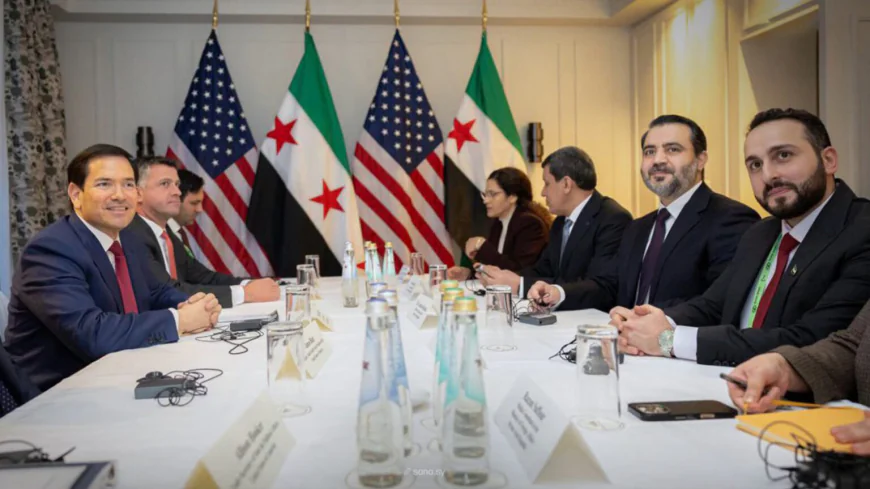
The 62nd Munich Security Conference provided the stage for the next phase of this legitimization. US Secretary of State Marco Rubio held a series of meetings that sent shockwaves through the region. Rubio met with Syrian Foreign Minister Sheybani, who was accompanied by Mazlum Kobani and his deputy, Ilham Ahmed.


Pro-government outlets in Turkey attempted to spin this as a "new beginning for Syria," suggesting that Kobani had "given up" on his autonomy claims. However, the optics told a different story. Wolfgang Ischinger, the President of the MSC, described the participation of Nechirvan Barzani and Mazlum Kobani as a "historic step."
While the US State Department’s official schedule only listed a meeting between Rubio and Sheybani, Kobani’s presence in the delegation suggests he was included at Washington's request. This raises critical questions for Ankara: Did Secretary Rubio inform his Turkish counterpart, Hakan Fidan, of this meeting? If so, what was Turkey's response?
Turkey's Missing Voice in Munich
One of the most perplexing aspects of the conference was the lack of a high-level Turkish diplomatic presence. Foreign Minister Hakan Fidan, a regular and vocal participant in previous years, did not attend. Turkey’s only speaker was Treasury and Finance Minister Mehmet Şimşek, who was initially scheduled to participate in a panel titled "Syria After the Revolution" alongside Syrian FM Sheybani.


However, as the conference progressed, the program was abruptly updated. Şimşek’s name was replaced by Deputy Foreign Minister Zeki Levent Gümrükçü, but when the panel actually began, Turkey had no representative on the stage at all. The moderator offered no explanation for Turkey's withdrawal. This silent retreat from a platform where the future of Syria was being debated has led analysts to wonder if Ankara realized too late that it had been outmaneuvered.
Graham and Barzani: The Legislative Shield
While the executive branches negotiate, the US legislature is moving to solidify the SDF’s status. Senator Lindsey Graham, a long-time power broker in US-Turkey relations, met with Nechirvan Barzani in Munich. Graham has recently introduced a "Kurdish Protection Act" to the US Senate, which seeks both to impose sanctions on the Syrian regime and to grant formal recognition to the SDF.
Following their meeting, it was reported that Graham and Barzani reached a consensus on protecting the status of the Kurdistan region and ensuring that the rights of Kurds are enshrined in any future unified Syrian constitution. Graham has been increasingly critical of Turkey, recently labeling it a "so-called regional ally" and accusing Turkish leadership of "living in a dream world."
"Self-Governance" vs. "Autonomy"
The most significant takeaway from Munich came from Mazlum Kobani himself. In interviews following his meeting with Secretary Rubio, Kobani clarified the "integration" model being discussed. Rather than the SDF dissolving, the goal is "self-governance."
Under this model:
-
The SDF would be integrated into the Syrian Army as a distinct military entity.
-
It would consist of four brigades, including "women fighters."
-
Local military structures in regions like Derik, Qamishli, Kobani, and Hasakah would be preserved.
-
These regions would be organized under an "autonomous administration" (self-management) model within the administrative, military, and security frameworks.
The Final Reckoning
As the dust settles on the 2026 Munich Security Conference, the question remains: Did Washington "sell out" the YPG, or did they just give them a seat at the table?
If the goal of Turkish foreign policy was the total eradication of the YPG's political presence, the Munich conference represents a significant setback. By placing Mazlum Kobani in a suit, in a room with the US Secretary of State and the Syrian Foreign Minister, the international community has effectively moved the goalposts.
The danger for Ankara is no longer just a "terror corridor" on its border, but a legitimate, internationally recognized political entity that shares a seat with the Syrian government. As Müyesser Yıldız sharply concludes, the real test will come when a Syrian delegation arrives in Ankara. If Mazlum Kobani is part of that delegation as an "official representative" of the Syrian Army, how will Turkey respond?
What's Your Reaction?
 Like
0
Like
0
 Dislike
0
Dislike
0
 Love
0
Love
0
 Funny
0
Funny
0
 Wow
0
Wow
0
 Sad
0
Sad
0
 Angry
0
Angry
0

Editor | Wise News Press — Delivering accurate, timely global news with integrity, insight, and editorial responsibility.













Comments (0)