



Trump’s Central Asia Offensive: A 10-Point Analysis of the C5+1 Summit
The U.S. hosted the five Central Asian leaders in Washington for a C5+1 summit, securing massive economic deals and addressing geopolitical rivalry with China and Russia, with Kazakhstan notably joining the Abraham Accords.
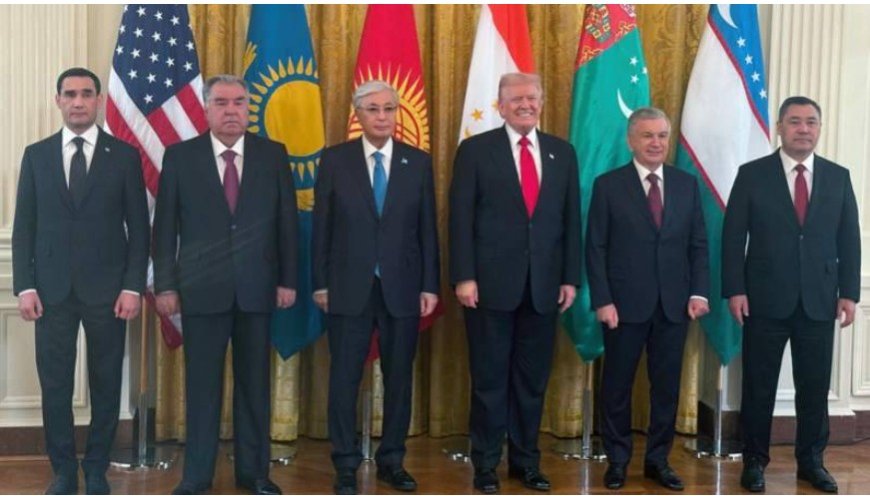


WISE NEWS PRESS / WASHINGTON, U.S. — NOVEMBER 14, 2025
Following intensive meetings between Central Asian leaders and officials from the EU, China, and Russia, U.S. President Donald Trump hosted the five Central Asian nations in Washington for a highly publicized "C5+1" summit on November 6. A series of political and economic decisions were announced, signalling a renewed American focus on the strategically vital region.
The timing of the summit—following meetings with the EU (April), China (June), and Russia (September)—underscores the escalating geopolitical rivalry for influence over the region’s 84 million people and its rich mineral resources.
Here is a 10-point breakdown of the key takeaways from Trump’s Central Asia offensive:
1. Rediscovering Central Asia
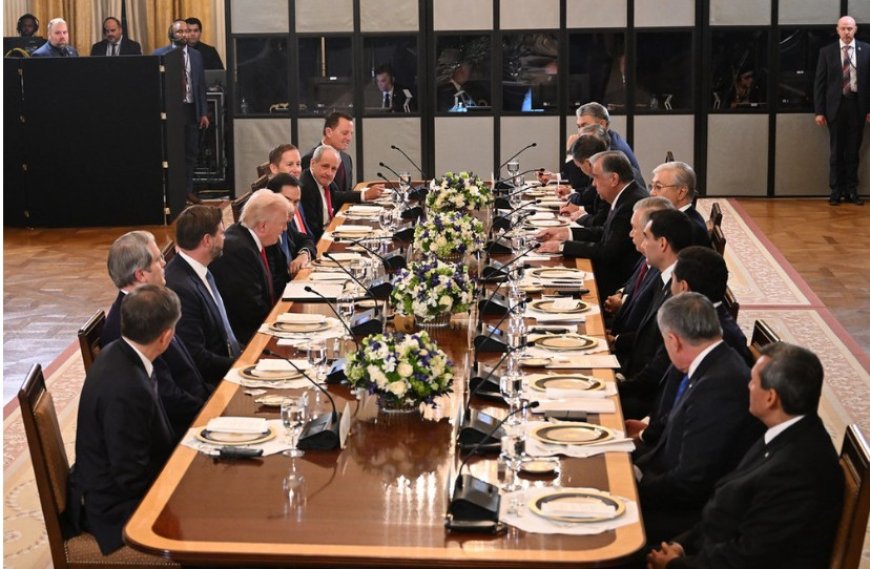


While President Trump claimed to have launched the "5+1" format, meetings between the U.S. and the five Central Asian countries (Kazakhstan, Uzbekistan, Turkmenistan, Tajikistan, and Kyrgyzstan) began over a decade ago, usually at the Foreign Minister level. Former President Biden held a similar meeting with the five leaders in 2023. Trump's engagement could boost U.S. influence, but his notoriously shifting focus may temper expectations.
2. The Lure of Rare Earth Elements


The geopolitical narrative surrounding Central Asia has shifted from primarily "counter-terrorism" and "oil and gas" to rare earth elements. These resources are indispensable for high-tech products like smartphones, electric vehicles, and renewable energy infrastructure, and they are abundant in all five nations. Kazakhstan is the leading source of uranium for the U.S. atomic energy sector, while Uzbekistan's gold reserves and Turkmenistan's natural gas reserves also draw significant Washington interest.
3. Massive Commercial Deals
The November 6 summit produced major commercial agreements, primarily between the U.S. and Uzbekistan and Kazakhstan. Despite the U.S.'s economic advantage, the dynamic saw the Central Asian states promising huge investments into the American economy. Uzbekistan committed to deals worth $35 billion over three years, with another $100 billion planned over the next decade (extraordinary expenditures for a country with a GDP of $115 billion). Kazakhstan pledged $17 billion in commitments. Sectors targeted include aviation (Boeing), agriculture, minerals, and IT.
4. Seeking Legitimacy and Exaggerated Praise
The five Central Asian leaders appeared noticeably pleased in Washington, recognizing that the meeting adds significant "legitimacy" to their regimes. In return, they offered President Trump copious and sometimes exaggerated praise. Uzbek President Mirziyoyev called Trump the "President of world peace," but was outdone by Kazakh President Tokayev, who referred to Trump as "a leader sent to us from the heavens."
5. Country and Leader Hierarchy
Economically, Kazakhstan (population 20 million) leads the region, though Uzbekistan is the most populous (37.5 million). Notably, Kazakhstan’s Kassym-Jomart Tokayev was the only president to speak in English at the Oval Office meeting.
The speaking order was: Tokayev (Kazakhstan), Mirziyoyev (Uzbekistan), Rahmon (Tajikistan), Japarov (Kyrgyzstan), and Berdimuhamedov (Turkmenistan).
6. The Rivalry Against China and Russia
Trump's Central Asia move is a direct challenge to the dominating influence of China and Russia. In 2024, the U.S.’s annual trade with the five nations totalled around $7 billion, compared to Russia's $45 billion and China's nearly $95 billion. The intensifying competition between the three giants is expected to escalate further.
7. Security and Military Bases
While international security and cooperation were mentioned at the summit, there were no public declarations about reviving the U.S. military presence. All U.S. bases established in the early 2000s in Uzbekistan, Tajikistan, and Kyrgyzstan were closed by 2014. Official statements remained tight-lipped on further military cooperation.
8. Democracy and Human Rights Ignored
The tradition of Washington criticizing Central Asian capitals over democratic freedoms and human rights has clearly changed. Turkmenistan’s ranking of 174th out of 180 countries in press freedom did not seem to trouble Trump, and these issues were not raised at the summit. Leaks suggest that some Central Asian leaders expressed pleasure at Trump’s decision to silence the U.S.-funded Radio Free Europe/Radio Liberty (Freedom Radio) broadcasts targeting the region.
9. Azerbaijan: A Potential Sixth Member
Kazakh President Tokayev proposed adding Azerbaijan, the leader of the South Caucasus, to the "5+1" format. Given the strategic importance of trade and transportation routes like the Middle Corridor and the prior August decision to rename the Zangezur Corridor as the "Trump Line," Azerbaijan's inclusion seems plausible if the U.S. approves. Furthermore, Mirziyoyev suggested creating a "secretariat for the C5+1," an important move towards institutionalizing the format, possibly rivaling organizations like the Organization of Turkic States.
10. Kazakhstan Joins Abraham Accords
The biggest surprise of the summit was Kazakhstan’s announcement that it would join the Abraham Accords. Trump personally connected Tokayev with Israeli Prime Minister Benjamin Netanyahu via phone. This development is significant as it signals the expansion of the U.S.-brokered 2020 normalization agreements. This step is notable as it occurs despite being potentially unfavored by Turkey.
Hakan Aksay
As the American foreign policy master Henry Kissinger once said, "It may be dangerous to be America's enemy, but to be America's friend is fatal."
What's Your Reaction?
 Like
0
Like
0
 Dislike
0
Dislike
0
 Love
0
Love
0
 Funny
0
Funny
0
 Wow
0
Wow
0
 Sad
0
Sad
0
 Angry
0
Angry
0

Editor | Wise News Press — Delivering accurate, timely global news with integrity, insight, and editorial responsibility.
















Comments (0)