



US and Israel strike Iran: Strategic goals and unpredictable risks
US and Israeli air strikes on Iran mark a dangerous escalation described by analysts as a "war of choice," raising deep concerns over regional stability.


BY AHMET TAŞ | WISE NEWS PRESS
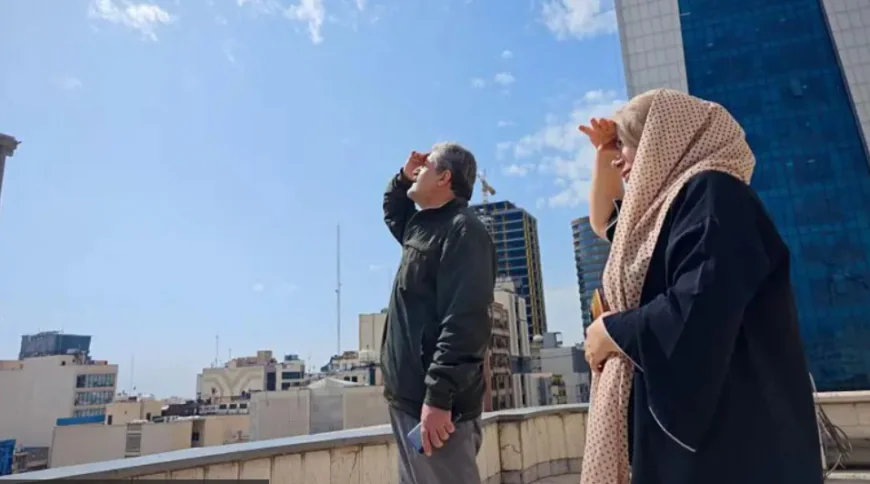
LONDON, UK — The United States and Israel launched a series of coordinated air strikes against Iran on February 28, 2026, a move that analysts warn represents a dangerous "war of choice" with potentially catastrophic and unpredictable consequences.
While Israeli officials have framed the operation as a "preemptive strike" to neutralize an imminent threat, many international observers, including the BBC's Foreign Editor Jeremy Bowen, point out the lack of concrete evidence for an immediate attack. Instead, the offensive appears to be a calculated gamble by Washington and Tel Aviv, betting on the perceived internal fragility of the Islamic Republic following years of economic hardship and civil unrest.
A Calculated "War of Choice"
The justification of "preemption" traditionally requires proof of an absolute and immediate threat. However, the current reality suggests that the US and Israel are seizing what they view as a window of opportunity. The Iranian regime has been significantly weakened by a punishing economic crisis and the aftermath of a brutal crackdown on mass protests at the beginning of the year. Furthermore, Iran's defensive capabilities were reportedly left degraded after a shorter conflict that occurred last summer.
This decision to strike is seen by many legal experts as another blow to the already fragile system of international law. While both US President Donald Trump and Israeli Prime Minister Benjamin Netanyahu have characterized Iran as a "global threat," the vast power disparity between the attacking coalition and Tehran makes it difficult to justify these strikes as a legal act of self-defense.
Political Motivations: Netanyahu and Trump
War is inherently a political act, and for Benjamin Netanyahu, this escalation serves multiple purposes. For decades, he has positioned the Islamic Republic as Israel's existential enemy. With a general election looming in Israel this year, Netanyahu appears to believe that his political standing is most secure when the nation is at war, particularly following the domestic baggage of a two-year conflict with Hamas.


On the American side, Donald Trump’s objectives have been characteristically blunt yet shifting. In early 2025, he promised Iranian protesters that "help is on the way," though military options were limited at the time due to the Navy’s involvement in Venezuela. Following the bombing of Iranian assets last summer, Trump claimed the nuclear program was "entirely destroyed," yet he has continued to use the threat of a nuclear Iran as a primary casus belli. While Iran maintains its nuclear program is for civilian use, its increased uranium enrichment suggests a desire to keep the nuclear option open—a threshold the US and Israel have decided to punish.
The Myth of Regime Change via Air Power
The rhetoric from both leaders has centered on the "liberation" of the Iranian people. Trump declared in a video message that "the time for freedom has come," while Netanyahu suggested the war would provide the opportunity for the public to topple the regime. History, however, suggests a far more complex and bloody outcome.
No modern regime has ever been successfully toppled through air power alone. In 2003, Saddam Hussein was removed by a massive US-led ground invasion. In 2011, Muammar Gaddafi was ousted by armed rebels supported by NATO air forces. In both instances, the state collapsed, leading to prolonged civil wars and the deaths of thousands. Libya remains divided, and Iraq still carries the scars of the subsequent bloodbath. Even if the Islamic Republic were to fall solely due to air strikes, there is no guarantee that a liberal democracy would take its place.


Resilience of the Islamic Republic
The Iranian political system is a complex web of ideology and institutionalized power that has survived for nearly half a century. Unlike the leadership of Hamas in Gaza or Hezbollah in Lebanon, which Israel has targeted for assassination, the Iranian regime is not centered on a single individual. It is a state apparatus supported by the Revolutionary Guard (IRGC), a force that exists independently of the regular army and is focused solely on protecting the system from threats.
Trump’s offer of "pardon" to IRGC members who lay down their arms is viewed by experts as a fundamental misunderstanding of the regime’s ideological core. The concept of martyrdom in Shiism remains a powerful motivator. While Trump views politics through the lens of a transaction, the ideological and religious conviction of the Iranian leadership is a force that is difficult to measure or buy off.
The Road Ahead: Defiance or Collapse?
Signs from Tehran suggest that the political leadership has viewed this war as inevitable for some time. While they engaged in negotiations last summer, they did so with the acute awareness that US and Israeli strikes were being prepared simultaneously. There is a profound lack of trust; they remember Trump’s withdrawal from the 2015 nuclear deal, which was considered a major diplomatic achievement.
While there were indications that Iran might accept a new deal to buy time, the US appears to be demanding absolute concessions on Iran’s missile program and its regional allies. For Tehran, these are unacceptable "capitulations." Giving up their missiles and allies would, in their view, only hasten the regime change they are trying to avoid.
As the conflict intensifies, Iran’s leaders are now focused on survival and managing the fallout. Meanwhile, neighbors led by Saudi Arabia watch with deep anxiety. Given the Middle East's historic capacity to export its problems, this intensified war threatens to deepen instability not just in a volatile region, but across the entire globe.
What's Your Reaction?
 Like
0
Like
0
 Dislike
0
Dislike
0
 Love
0
Love
0
 Funny
0
Funny
0
 Wow
0
Wow
0
 Sad
0
Sad
0
 Angry
0
Angry
0

Editor | Wise News Press — Delivering accurate, timely global news with integrity, insight, and editorial responsibility.
















Comments (0)