



Guardians of the Regime: Who are Iran’s Revolutionary Guard?
The Islamic Revolutionary Guard Corps (IRGC) serves as the ideological backbone and economic powerhouse of the Iranian regime under Supreme Leader Ali Khamenei.


BY AHMET TAŞ | WISE NEWS PRESS
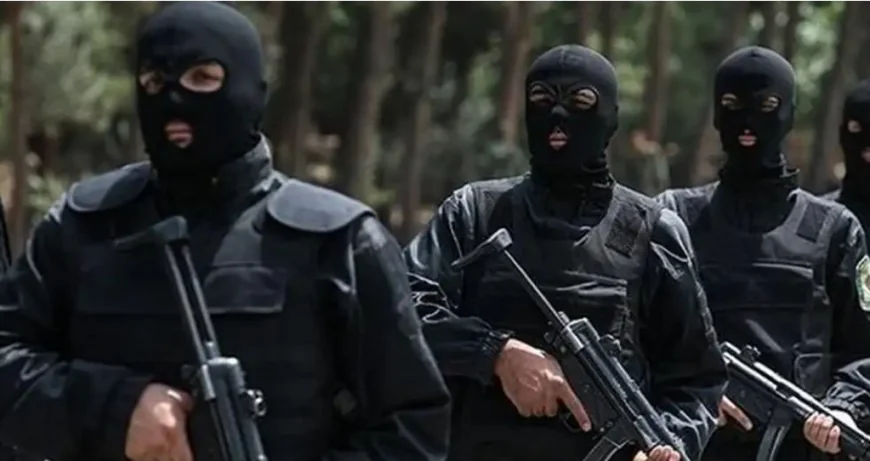
TEHRAN, IRAN — The Islamic Revolutionary Guard Corps (IRGC), established in 1979 as a protective force for the nascent clerical regime, has evolved into Iran’s most powerful military, political, and economic institution, functioning as the primary "state within a state."
Operating under the direct command of Supreme Leader Ali Khamenei, the IRGC is tasked with preventing internal coups and safeguarding the Islamic Republic’s ideological purity. With over 120,000 personnel and a reach that extends from domestic surveillance to multi-billion dollar infrastructure projects, the IRGC remains the ultimate guarantor of the regime's survival.
Origins and the Ideological Mission
The IRGC, officially known as the Islamic Revolutionary Guard Corps, was founded shortly after the 1979 Islamic Revolution by Ayatollah Khomeini. The new clerical leadership, distrustful of the regular military inherited from the Shah, sought to create a loyalist armed body. Its mission was explicitly ideological: to protect the revolution from both internal subversion and external threats.
Today, the IRGC operates alongside the regular army but maintains its own land, air, and sea units. It serves as the primary instrument for enforcing the regime's moral and political doctrines through systematic indoctrination of its members, often recruited from schools and universities.
A State Within a State: The Basij and Intelligence
The power of the IRGC is amplified by its subsidiary, the Basij—a volunteer paramilitary force. Stationed in mosques and local communities, the Basij played a pivotal role in crushing recent anti-government protests. These militia members are armed but often operate in plain clothes, allowing them to infiltrate and monitor the population effectively.


Beyond its ground presence, the IRGC operates an intelligence organization independent of the state’s official services. This includes a sophisticated "Cyber Army" focused on monitoring and combating what the regime defines as "organized cybercrime," effectively silencing digital dissent.
Regional Influence Through the Quds Force
The Quds Force is the elite unit within the IRGC responsible for Iran’s extra-territorial operations. It is the primary tool for exporting the Islamic Revolution’s doctrine across the Middle East, with significant footprints in Iraq and Syria. Through the Quds Force, the IRGC provides critical support to militant Islamic organizations, including Hezbollah in Lebanon and Hamas in Gaza, significantly shaping regional geopolitics.
Economic Dominance: Controlling the National Purse
According to many experts, the IRGC holds the keys to the Iranian economy. Its engineering and economic wing, Khatam al-Anbia, is a massive construction conglomerate that leads billion-dollar investments in oil, gas, and strategic infrastructure.


The company's influence expanded dramatically between 2005 and 2013 during the presidency of Mahmoud Ahmadinejad, himself a former IRGC member. Today, the IRGC manages vast enterprises involved in the production of motor vehicles, highways, railways, and subways. While the exact share of the IRGC’s economic control remains undisclosed, its deep integration into the oil, gas, and mining industries makes it the most significant financial actor in the country.
International Designations and Global Sanctions
The IRGC’s domestic and international activities have led to severe global repercussions. The United States officially designated the IRGC as a terrorist organization in 2019 during Donald Trump’s first term. Canada and Australia followed suit in 2024 and 2025, respectively—the latter decision coming after an attack on a synagogue in Melbourne for which the IRGC was held responsible.
The European Union remains divided on a total designation. While the European Parliament repeatedly called for the IRGC to be added to the EU’s terrorist list as recently as January 2026, some member states, led by France, have resisted the move to maintain diplomatic channels. Despite this, numerous high-ranking IRGC officers and affiliated economic entities remain under strict EU sanctions.
What's Your Reaction?
 Like
0
Like
0
 Dislike
0
Dislike
0
 Love
0
Love
0
 Funny
0
Funny
0
 Wow
0
Wow
0
 Sad
0
Sad
0
 Angry
0
Angry
0

Editor | Wise News Press — Delivering accurate, timely global news with integrity, insight, and editorial responsibility.
















Comments (0)