



COP31 panel highlights cultural and environmental damage in occupied Crimea
A COP31 panel in Antalya examined threats to Crimea’s cultural heritage and environment, alongside pressure on Crimean Tatar identity and independent media.


By Yusuf İnan | Wise News Press
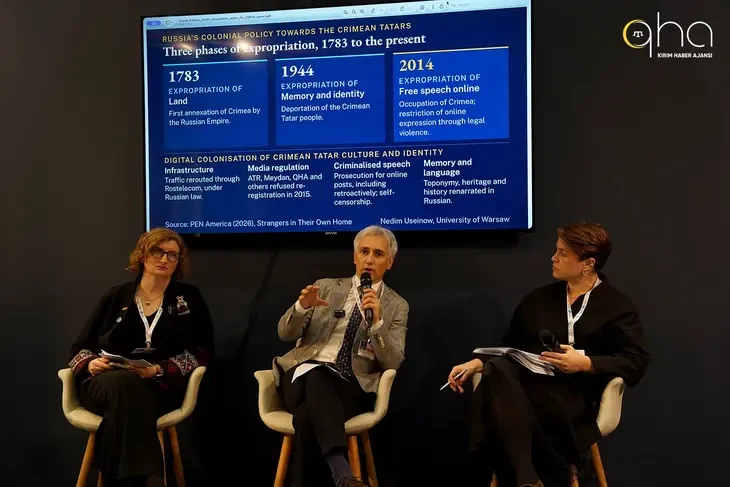
ANTALYA, TÜRKİYE — A panel held at COP31 in Antalya examined the threats facing Crimea’s cultural heritage, natural environment and Crimean Tatar identity under the peninsula’s continuing Russian occupation.
The Culture Under Occupation session addressed environmental damage, endangered historical sites, restrictions on independent media and control over the digital sphere, with speakers calling for stronger international support for documentation and monitoring.
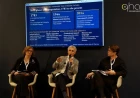
The event took place in the Ukraine Pavilion on November 18 as part of the 31st Conference of the Parties to the United Nations Framework Convention on Climate Change.
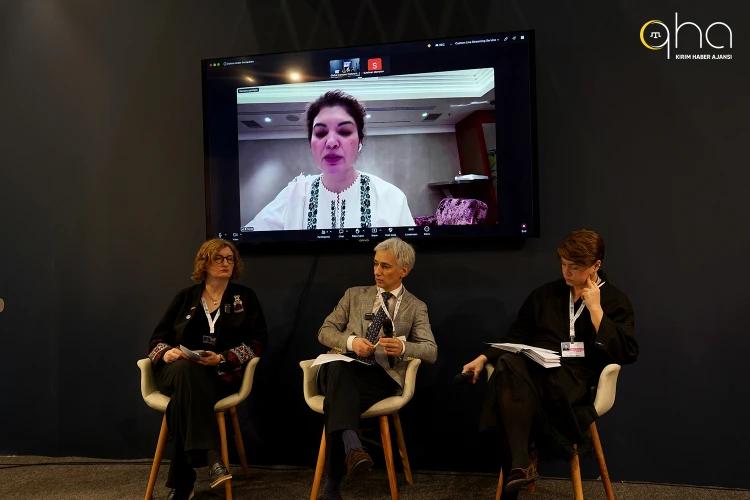
The panel was moderated by Maria Tomak, chair of the board of the Media Initiative for Human Rights. Ukraine’s Ambassador to Türkiye Nariman Dzhelyal was among the Ukrainian and international guests attending the session.
Environmental effects of militarisation
Ukrainian lawmaker Tamila Tasheva said Russia’s transformation of Crimea into a major military base had caused serious damage to the peninsula’s ecosystem.
Tasheva said trenches and military structures had been established along the Crimean coast, including in areas that previously served as natural habitats. She argued that the environmental impact could not be assessed comprehensively because Ukrainian researchers were unable to conduct fieldwork in occupied territory.
The lack of direct access also prevented Ukrainian scientists from studying Crimea’s coastal waters, leaving the full scale of environmental damage unclear.
Tasheva referred to two Russian oil tankers damaged during a storm near Crimea in December 2024. She said satellite images later showed an oil slick extending across waters off Sevastopol.
The Kerch Strait was also discussed as an important migration route for dolphins and other marine species. Military barriers installed in the area were described as a potential threat to animals moving between the Black Sea and the Sea of Azov.
Tasheva also highlighted pressure on Crimea’s freshwater resources. She said the Great Karasu, one of the peninsula’s major rivers, had nearly dried up after the release of water from a reservoir was stopped.
The panel called for expanded satellite monitoring to track changes in coastlines, protected areas, water resources and military construction where direct scientific observation is not currently possible.
Concerns over Chersonese and the Khan’s Palace
The condition of Crimea’s cultural heritage sites formed another central part of the discussion.
Tasheva raised concerns about work undertaken at the Khan’s Palace in Bakhchysarai under Russian administration. She argued that the methods and materials used in the project had damaged the authenticity of the historic complex.
The palace, once the political and cultural centre of the Crimean Khanate, is considered one of the most important sites in Crimean Tatar history.
The panel also discussed the Ancient City of Tauric Chersonese and its Chora, which UNESCO added to the List of World Heritage in Danger in 2026.
The designation followed concerns that Ukrainian authorities could not access the site or guarantee its conservation and management. Satellite monitoring recorded new buildings, extensive archaeological activity and major changes to the surrounding landscape.
Speakers said remote observation should be expanded beyond Chersonese to include Crimea’s coast, protected landscapes and other cultural monuments.
International partners were urged to provide technical and financial assistance for satellite monitoring, archival research and the collection of evidence concerning environmental and cultural damage.
Such documentation was described as important both for present-day accountability and for the eventual restoration of sites after Crimea returns to Ukrainian control.
Control over the digital sphere
Nedim Useinov, a member of the executive committee of the World Congress of Crimean Tatars, placed current pressure on the community within a broader historical framework.
He described three stages in Russian policy toward the Crimean Tatar people. The first began with the Russian annexation of the Crimean Khanate in 1783, the second with the Soviet deportation of Crimean Tatars on May 18, 1944, and the third with Russia’s occupation of Crimea in 2014.
Useinov argued that the community’s land was targeted in the first period, its memory and identity in the second, and its freedom of expression after 2014.
He said contemporary pressure was exercised not only through physical force but also through laws, courts, telecommunications infrastructure and internet regulation.
According to Useinov, Russian-controlled communication networks had replaced Ukrainian infrastructure in Crimea, bringing online activity on the peninsula under Russian law and supervision.
Independent media organisations including the Crimean News Agency, ATR and Radio Meydan were unable to obtain registration under Russian rules and were forced to relocate to Kyiv.
Useinov also said social media posts, live broadcasts and participation in online support networks were regularly cited in cases brought against journalists, activists and religious figures. Some of the material used in proceedings had been published before the 2014 occupation.
Restrictions were not limited to news organisations. Access to Crimean Tatar-language media and educational materials was also reportedly blocked, affecting opportunities to learn and pass the language to future generations.
‘Crimea is our home’
Suleiman Mamutov, deputy permanent representative of the Ukrainian president in the Autonomous Republic of Crimea, described the peninsula as the homeland of Ukraine’s Indigenous peoples.
Mamutov said Russia viewed Crimea primarily as a military stronghold and a platform for operations against Ukraine. He argued that the peninsula’s use during the full-scale invasion demonstrated the consequences of its militarisation.
He also accused Russian authorities of creating two contrasting realities in occupied Crimea.
In one, Crimean Tatars were presented as being able to hold cultural events, organise book fairs and conduct business. In the other, activists, journalists and religious believers faced searches, detention and politically motivated prosecution.
Mamutov said these cultural displays were used to create the impression that minority rights were being protected while independent voices were being restricted.
He also recalled that Russia designated the Mejlis of the Crimean Tatar People an “extremist organisation” and banned its activities in 2016. The Crimean Tatar Qurultay has been unable to function under normal conditions since the occupation.
No representative of the Russian authorities appeared on the panel, and a Russian response to the allegations raised during the event was not presented.
Historical ties between Türkiye and Crimea
Yuliya Biletska, a lecturer in Ukrainian language and literature at Ankara University, addressed the historical relationship between Türkiye, Crimea and the Crimean Tatar people.
Biletska organised her remarks around three themes: people, heritage and principle.
She noted that Türkiye is home to one of the world’s largest Crimean Tatar diasporas. For many families, she said, Crimea is not an abstract foreign policy issue but part of their family history.
Biletska referred to the restoration of the Zıncırlı Madrasa near Bakhchysarai, carried out with support from the Turkish Cooperation and Coordination Agency and Ukrainian partners in 2009.
She contrasted that project with the disputed work conducted at the Khan’s Palace under Russian administration, describing the two cases as different approaches to the treatment of cultural memory.
Türkiye has repeatedly stated that it does not recognise Russia’s annexation of Crimea and supports Ukraine’s territorial integrity. The protection of Crimean Tatar rights also remains an important subject in Turkish-Ukrainian relations.
Biletska referred to the Crimean Tatar intellectual Ismail Bey Gaspıralı, whose Tercüman newspaper was published in Bakhchysarai from 1883 and circulated as far as Istanbul.
The example illustrated the long history of intellectual and cultural exchange between Crimea and Türkiye.
Calls for translation, documentation and education
Biletska said Türkiye had a strong academic tradition concerning Crimea’s Ottoman-era history but that developments since the 2014 occupation were less widely understood outside specialist circles.
She argued that Turkish society remembered the 1944 Crimean Tatar deportation but had more limited information about human rights violations and cultural changes reported during the occupation.
Biletska proposed three priorities: translating relevant human rights reports into Turkish, documenting the current condition of cultural sites and incorporating recent developments into education and academic research.
Historical records held by Turkish historians, architects and restoration specialists could help demonstrate how monuments appeared before the occupation and what they meant to the communities connected to them.
Such information could serve as evidence when assessing damage. It could also become essential if monuments are restored after Crimea returns to effective Ukrainian control.
The panel concluded with calls to monitor environmental and cultural changes through satellite imagery, historical archives, independent reports and academic research.
Speakers emphasised that protecting Crimea’s cultural heritage could not be separated from protecting the people, languages and communities that created and sustained it.
WiseNewsPress.com
What's Your Reaction?
 Like
0
 Dislike
0
 Love
0
 Funny
0
 Wow
0
 Sad
0
 Angry
0
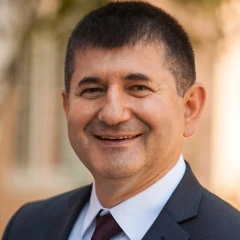
Yusuf İnan is a journalist, columnist, strategic analyst and head of the Wise News Press Media Group. His work focuses on international affairs, geopolitics, security and major social issues. Through his journalism, he promotes peace, dialogue, mutual understanding and responsible reporting while contributing to the development of international media projects.








Comments (0)