



Kerch Bridge strikes disrupt Russian logistics and maritime traffic
Ukraine’s two-night attack on the Kerch Bridge disrupted road and rail traffic while increasing pressure on Russian military supply routes to Crimea.


By Ahmet Taş | Wise News Press
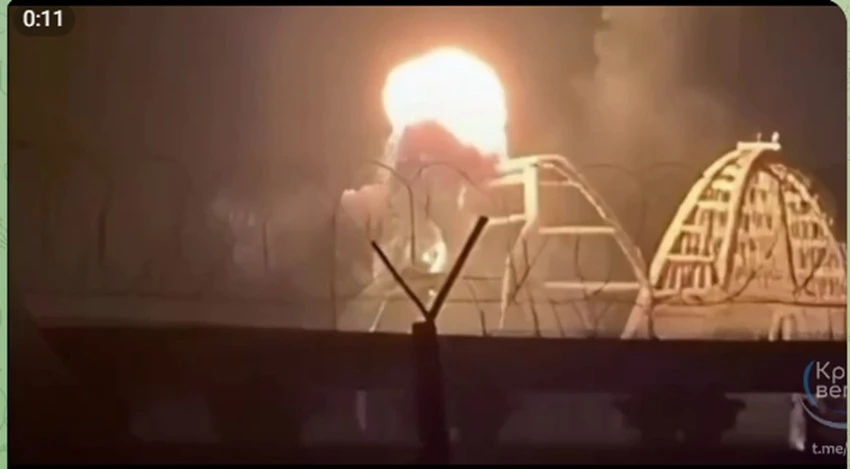
KYIV, UKRAINE — Successive Ukrainian strikes on the Kerch Bridge on November 16 and 17 caused extensive damage to its road section, temporarily halted transport and increased pressure on Russia’s military supply network serving occupied Crimea.
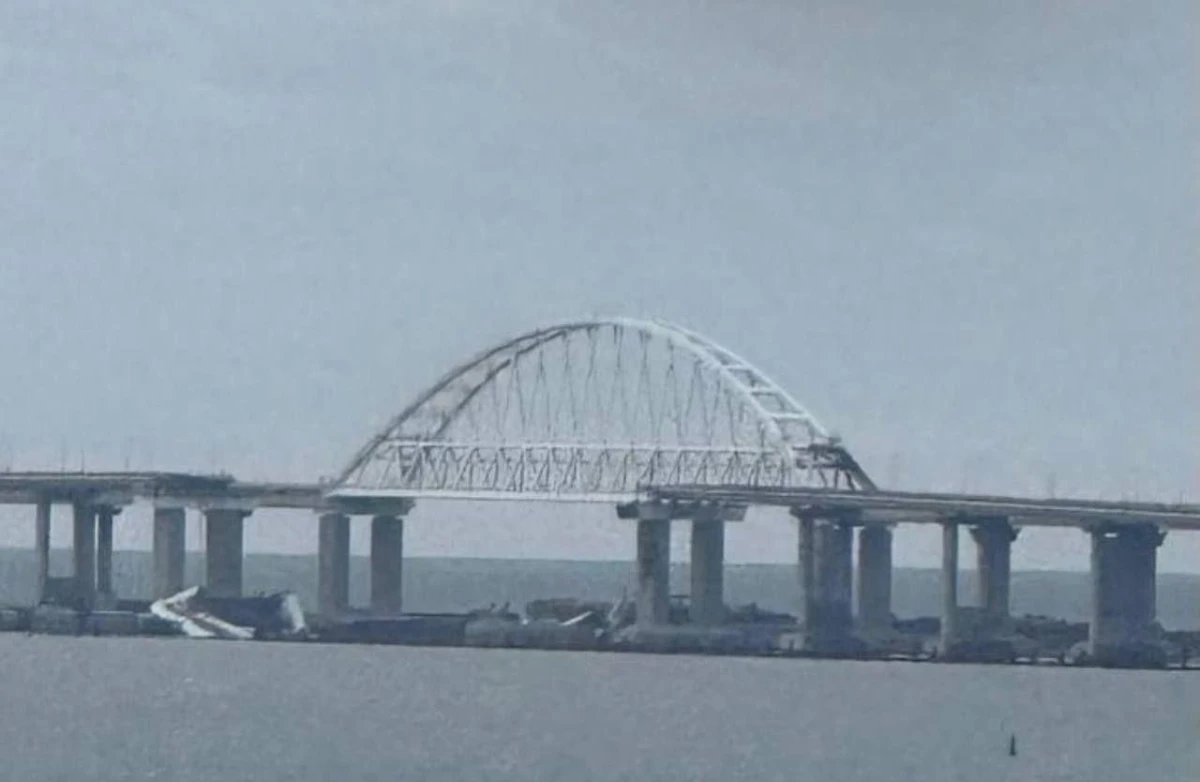
The Security Service of Ukraine, known as the SBU, said one of the bridge’s metal arches and the road span beneath it had been completely destroyed. It also reported preliminary damage to the railway section.
Russia’s Transport Ministry acknowledged structural damage and suspended both road and rail traffic after the second attack. Rail services were later resumed on a single track, while Russian officials said assessments of the damage were continuing.
Beyond the physical destruction, military analysts said the operation could complicate Russia’s movement of fuel, ammunition, equipment and personnel to Crimea and other occupied areas of southern Ukraine. Debris from the bridge may also affect shipping through the Kerch Strait, the maritime connection between the Black Sea and the Sea of Azov.
Two attacks in two nights
The Kerch Bridge, also widely known as the Crimea Bridge, links Russia’s Krasnodar region with the Crimean Peninsula, which Moscow occupied and illegally annexed in 2014. The bridge opened in 2018 and was presented by the Kremlin as both a major infrastructure project and a symbol of Russia’s control over Crimea.
The structure has repeatedly been targeted since Russia launched its full-scale invasion of Ukraine in February 2022.
One of the most significant previous attacks occurred in October 2022, when an explosion involving a truck caused extensive damage to the road section and started a fire on a fuel train. The bridge operated with restricted capacity for several months.
The SBU also announced an operation in June 2025 in which explosives were reportedly used against one of the bridge’s underwater support structures.
The latest series of attacks began on the morning of November 16, 2026. Russian-installed authorities in Crimea suspended road traffic, although rail and bus services initially continued.
Satellite images published later that day appeared to show damage to the road surface and deformation of one of the metal arches. Russian officials said part of the road section was reopened to vehicles under a restricted, alternating traffic system that evening.
A second attack followed during the night of November 17. Sergey Aksyonov, the Russian-installed head of Crimea, acknowledged the renewed strike at 12:58 a.m.
Russia’s Transport Ministry then announced that both road and railway traffic had been temporarily suspended. Rail operations reportedly resumed on a single track later in the day, but some passenger trains experienced delays of several hours.
Russian authorities said no casualties had been reported. The Russian Investigative Committee opened a criminal investigation under terrorism legislation and confirmed that the bridge’s structure had sustained damage.
SBU describes a seven-stage operation
The SBU said the attacks were the culmination of a coordinated operation that lasted approximately one month and consisted of seven stages.
According to the Ukrainian agency, the initial phase focused on systematically weakening Russian air defences protecting the bridge and the surrounding area. Direct attacks on the structure began after air defence positions had been targeted.
The SBU said it carried out some stages independently before other components of Ukraine’s Defence Forces joined the final phase of the operation.
Members of the SBU’s Alpha special operations unit reportedly struck the road section with Ukrainian-made Palianytsia drone missiles. Footage released by the agency showed a series of explosions near the attachment points of the bridge’s metal arches.
The SBU said the strikes caused one road span to collapse into the water. The full extent of the damage to the railway section has not been independently established.
Ukrainian officials listed several domestically produced systems as having been used during different stages of the operation. These reportedly included Dovbush, Vendetta, Da Vinci, Sich, Mich-2000, Ruta, Palianytsia, An-197 and FP-1 drones, along with FP-5 Flamingo and R-360 Neptune missiles.
The precise role played by each weapon has not been independently verified. However, imagery released after the attack showed major damage to one road arch and the span beneath it.
Ukrainian President Volodymyr Zelenskyy thanked the military and security personnel involved. He described the operation as a response to continuing Russian attacks against Ukrainian infrastructure, including bridges in Zaporizhzhia, Dnipro, Kyiv and the Odesa region.
Road and rail capacity remain uncertain
The collapse of a road arch and part of the deck significantly reduced the bridge’s capacity to carry vehicles between Russia and occupied Crimea.
Although Russia later resumed some rail services, the use of a single track and continuing safety inspections suggest that the bridge is not operating at its previous capacity.
Russian railway operators reported delays of up to eight hours on some services. The resumption of limited rail traffic indicates that the structure has not been rendered entirely unusable, but the damage to the arch and associated infrastructure could continue to restrict operations.
The bridge is important not only for civilian travel but also for Russia’s military logistics. It has been used to transport fuel, ammunition, armoured vehicles, other equipment and personnel to bases in Crimea and to Russian forces deployed in occupied southern Ukraine.
Following earlier attacks, Russia transferred part of its military supply traffic to the occupied land corridor running through the Donetsk, Zaporizhzhia and Kherson regions. Those alternative routes have also been subjected to Ukrainian strikes.
The damage therefore places additional pressure on a supply system that has already been forced to use smaller convoys, secondary roads and dispersed transport methods.
Debris may affect shipping through the Kerch Strait
Images circulated after the second attack showed sections of the collapsed arch and road deck in the water. Ukrainian monitoring channels claimed the debris had obstructed the Kerch–Yenikale Canal.
The canal is the principal navigable route through the Kerch Strait for larger vessels travelling between the Black Sea and the Sea of Azov. If the channel is partly or completely blocked, the consequences could extend beyond road and rail transport.
Mykhailo Honchar, an energy and international security expert who heads the Strategy XXI Centre for Global Studies, said the navigable channel is approximately 120 metres wide.
Much of the Kerch Strait is only between 3 and 5 metres deep. Because of these shallow waters, heavier vessels cannot simply divert around an obstruction and use another part of the strait.
Honchar said a prolonged closure could affect river-sea cargo vessels as well as some smaller military ships and patrol boats connected to Russia’s Black Sea and Caspian fleets.
A final technical assessment of the maritime route has not yet been published. The duration of any disruption will depend on the location and size of the debris, the depth of the water and Russia’s ability to conduct clearance operations safely.
Pressure grows on Russian military logistics
Serhiy Zgurets, director of the Ukrainian defence consultancy Defense Express, said the bridge attack should be viewed as part of a broader campaign targeting Russian logistics across the Azov and Black Sea regions.
Ukraine has also conducted strikes along the R-80 highway and other routes passing through occupied parts of the Donetsk, Zaporizhzhia and Kherson regions.
Zgurets said Russia had begun relying more heavily on smaller trucks and parallel routes rather than large, easily identifiable military convoys. That strategy can reduce losses from a single strike, but it increases the number of vehicles required and extends delivery times.
Oleksandr Kovalenko, a military and political analyst with the Information Resistance group, said the occupied land corridor could not fully replace the capacity of the Kerch Bridge.
He noted that Ukrainian strikes near Armyansk and Chonhar had also reduced the flow of supplies along routes connecting Crimea with occupied parts of mainland Ukraine.
Military operations require a continuous supply of fuel, ammunition, replacement equipment, food and personnel. Any significant delay can weaken the ability of frontline formations to conduct offensive operations or maintain defensive positions.
The long-term military effect will depend on how much traffic Russia can continue to send across the damaged bridge, how effectively it can use alternative routes and whether Ukraine conducts further strikes against repair work and supply lines.
Crimean launch sites also depend on supplies
Kovalenko also pointed to the importance of Crimea as a platform for Russian air and missile attacks against Ukrainian cities.
Russian forces have operated drone launch sites and missile systems around areas including Hvardiiske, Cape Chauda and Balaklava. Attacks from the peninsula have targeted Odesa, Mykolaiv, the Ukrainian-controlled part of the Kherson region and locations farther inside the country.
Russia has also deployed Iskander-M ballistic missiles and Oniks and Zircon cruise missiles in Crimea. The weapons, fuel, spare parts and supporting equipment used by those units must be transported to the peninsula.
A reduction in the bridge’s capacity could delay those deliveries. It is not, however, expected to end Russian attacks from Crimea immediately.
Moscow can continue using maritime transport, military aircraft and the occupied land corridor. The attack is therefore more likely to complicate Russian logistics and increase transport costs than to completely isolate the peninsula.
Repair work could take years
Kremlin spokesman Dmitry Peskov said the bridge would be restored and promised that it would eventually be rebuilt to a higher standard. The scale of the destruction and the continuing war make any timetable uncertain.
Andriy Koretskyi, a bridge design engineer and associate professor at Ukraine’s National Transport University, cautioned that a precise assessment could not be made solely from photographs.
He estimated that manufacturing a replacement metal arch could take approximately one year, even if the required bridge-grade steel were immediately available.
The structure would then have to be assembled, transported to the site and installed over the strait. When those additional stages are considered, Koretskyi estimated that full reconstruction could take between 18 months and three years.
He stressed that this was an expert estimate rather than an official schedule. The actual duration would depend on the extent of the damage, access to specialised materials, weather conditions, engineering capacity and security at the site.
The possibility of renewed Ukrainian attacks could further complicate reconstruction. Russia may consequently have to rely on temporary repairs, restricted traffic and alternative supply routes for an extended period.
The bridge also carries major symbolic significance. Russian President Vladimir Putin personally opened the structure, and the Kremlin repeatedly portrayed it as proof that Crimea was permanently connected to Russia.
Ukraine’s ability to damage a strategic site protected by extensive air defence systems is therefore being viewed not only as a logistical achievement but also as a blow to Russia’s security image and one of the Kremlin’s most prominent prestige projects.
WiseNewsPress.com
What's Your Reaction?
 Like
0
 Dislike
0
 Love
0
 Funny
0
 Wow
0
 Sad
0
 Angry
0

Ahmet Taş is a journalist, editor and Turkey Office Manager of the Wise News Press Media Group. He works across news, digital media and international publishing, focusing on accurate, responsible and accessible journalism. He contributes to the development of media projects that bring important political, social and global developments to a wider international audience.


















Comments (0)