



Russia, NATO and the 1997 Order: Can Old Security Survive the AI Era?
Russia’s call for NATO to return to its 1997 posture raises a wider question: Can old security strategies survive the AI age and a changing global order?


By Yusuf İnan | Wise News Press
Journalist and author | Political and strategic analyst
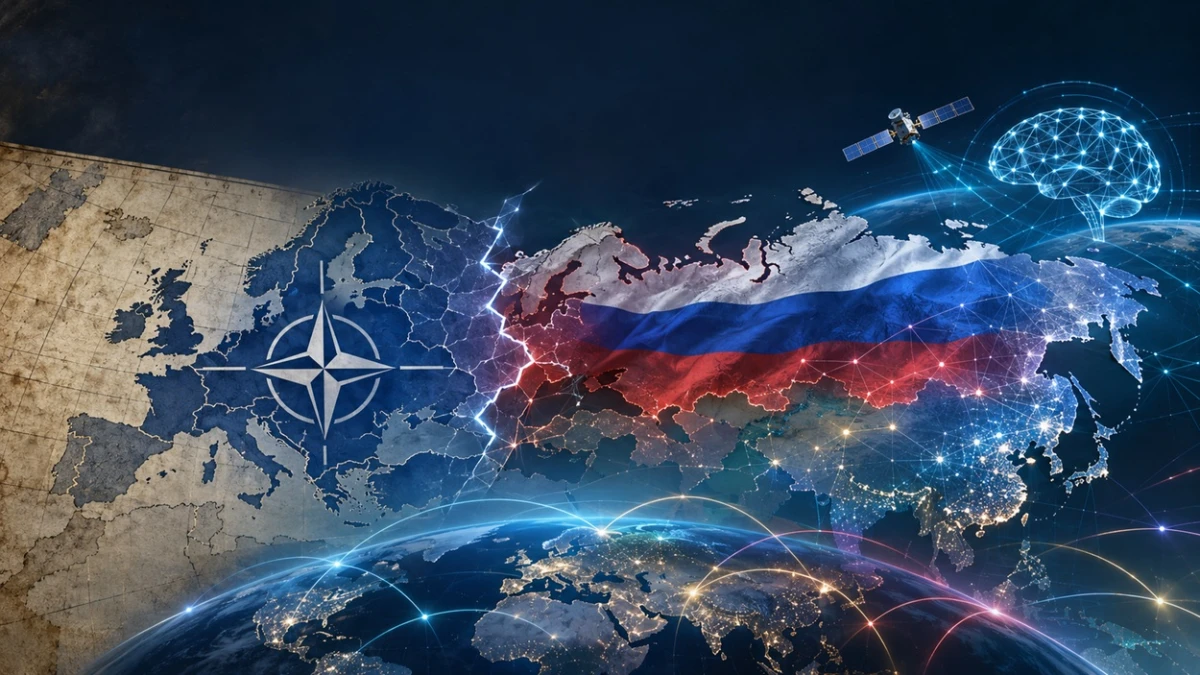
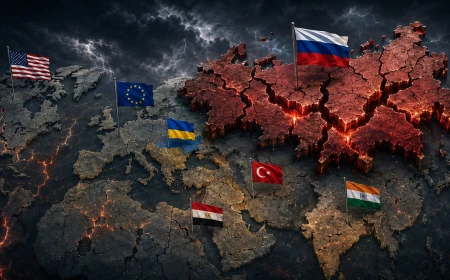
ANKARA, TÜRKİYE — Russia’s reported demand for NATO to return to its 1997 military posture raises a question extending far beyond European security: Can any state restore an earlier geopolitical order after technology, societies and public expectations have fundamentally changed?
The proposal attributed to Moscow is important not only because of what it asks NATO to do, but because of what it reveals about Russia’s strategic outlook. It suggests that the Kremlin continues to view security primarily through territorial depth, military deployments and spheres of influence. Yet the world of artificial intelligence, instant communication, economic interdependence and mobile populations can no longer be governed solely through the strategic assumptions of the twentieth century.
A 1997 military map cannot recreate a 1997 world
According to reports based on a document circulated during negotiations in Abu Dhabi, Russia called for NATO forces to withdraw to positions held before the alliance’s post-1997 enlargement, demanded an end to further expansion and sought restrictions on Western military assistance to Ukraine.
The document reportedly carried neither an official letterhead nor a signature. It should therefore be understood as an opening negotiating position rather than an agreed framework or formal settlement. NATO members have also shown no indication that they are prepared to abandon the security arrangements established with Central and Eastern European states.
The practical problem is larger than the disagreement between Moscow and Brussels. A return to 1997 would not simply require moving soldiers and equipment. It would require sovereign states that joined NATO after 1997 to accept a reduced security status despite their own political decisions, public debates and threat assessments.
Poland, the Baltic states, Romania and Bulgaria do not regard their NATO membership merely as a Western military deployment. They see it as a sovereign choice shaped by historical experience and contemporary security concerns. Any attempt to reverse that choice without their consent would reproduce the very sphere-of-influence politics that many of these countries sought to escape.
History can offer lessons, but it cannot be restored like an archived computer file. Borders may remain in place while societies, economies, military technologies and perceptions of risk change permanently. The security order of 1997 belonged to a period when Russia still hoped to build a partnership with NATO and many European governments expected strategic cooperation with Moscow to deepen. That political environment no longer exists.
The AI generation is changing the meaning of power
Artificial intelligence is transforming more than industry and communication. It is changing how citizens compare governments, evaluate living standards and organize political responses.
A person living in a remote region can now compare wages, education, health care, public services and political freedoms across countries within seconds. Translation technology reduces language barriers. Digital platforms allow local grievances to reach international audiences. Skilled workers can search for employment abroad without leaving their homes, while young people can participate in professional and cultural networks that are not controlled by national borders.
This does not mean that technology automatically produces democracy or political separation. Artificial intelligence can also strengthen surveillance, censorship, propaganda and centralized authority. Governments with extensive data systems may become more capable of monitoring society and anticipating opposition.
However, repression does not remove comparison. It often intensifies the contrast between official narratives and lived experience. A government may control television, but it cannot completely prevent citizens from learning how people elsewhere live, work and participate in public life.
The United Nations Development Programme has warned that unequal access to computing capacity, digital infrastructure, skills and effective regulation could create a new divergence between countries. The same risk exists within countries. Capital cities and technology centres may advance rapidly while distant regions feel economically and politically excluded.
The central strategic question of the AI era is therefore not simply who possesses the most weapons. It is who can offer people a credible future. States that combine security with education, innovation, justice and social mobility will have a stronger foundation than those relying mainly on fear and historical claims.
Why voters are turning against established governments
The pressure for change is not limited to Russia or authoritarian systems. Recent elections have shown that democratic governments also lose public support when citizens believe their living standards are falling or that political institutions no longer hear them.
Pew Research Center described 2024 as a difficult year for incumbents and traditional parties. Inflation, housing costs, public-service problems, inequality and dissatisfaction with political representation affected elections across several continents. The United States’ 2026 midterm elections reinforced the same pattern, with the cost of living and frustration over unfulfilled economic promises influencing voter behaviour.
This does not mean that every election has the same cause. Immigration, security, cultural identity, corruption and leadership also matter. Nevertheless, a common principle is visible: Governments become vulnerable when citizens no longer believe that tomorrow will be better than today.
The OECD’s 2026 trust survey found that only about three in ten respondents believed people like them had a meaningful say in government decisions. The difference in trust between people who felt politically heard and those who did not was exceptionally large.
Prosperity alone is therefore insufficient. Citizens also seek dignity, participation and confidence that institutions treat them fairly. A wealthy but unresponsive system may face discontent; a politically open but economically failing system may face the same result.
The family offers a simple analogy. Children do not necessarily leave home because they reject their parents. They often leave because they want independence, opportunity and a living standard suited to their aspirations. Communities and regions may develop similar expectations when they feel their future is being limited by the centre.
Russia’s internal diversity cannot be reduced to separatism
Russia is not a culturally uniform state. Excluding internationally recognized Ukrainian territories claimed by Moscow, the Russian Federation contains 21 republics associated with distinct national identities: Adygea, Altai, Bashkortostan, Buryatia, Chechnya, Chuvashia, Dagestan, Ingushetia, Kabardino-Balkaria, Kalmykia, Karachay-Cherkessia, Karelia, Khakassia, Komi, Mari El, Mordovia, North Ossetia–Alania, Sakha–Yakutia, Tatarstan, Tuva and Udmurtia.
These republics are not politically or ethnically identical. Altai, Bashkortostan, Chuvashia, Khakassia, Sakha–Yakutia, Tatarstan and Tuva have titular Turkic peoples. Kabardino-Balkaria and Karachay-Cherkessia include Turkic communities alongside North Caucasian peoples. Dagestan contains several ethnic groups, including Turkic-speaking Kumyks and Nogais, but it cannot accurately be described as a single Turkic republic.
Chechens are a Nakh people, not a Turkic community. Kazan is not a separate republic but the capital of Tatarstan. Tajikistan is an independent Central Asian state and is culturally Persian-speaking rather than Turkic. These distinctions matter because geopolitical analysis becomes unreliable when different peoples are placed under one label.
There is currently no credible evidence that all these republics seek independence, NATO membership or participation in the Organization of Turkic States. Nor is there evidence of a coordinated movement preparing the Russian Federation’s dissolution. Constituent republics are not sovereign states capable of joining NATO, while the Organization of Turkic States is an intergovernmental body composed of sovereign countries.
Yet the absence of an immediate separatist demand does not mean that questions of language, identity, resources and regional authority have disappeared. A United Nations assessment noted concerns surrounding the reduced space for minority-language education after Russia’s 2018 language legislation. Memories of deportations, forced population movements, wars and centralized rule also remain part of collective identity in several regions.
Chechnya illustrates the difference between stability and reconciliation. The current political system has delivered control, but it is highly personalized and dependent on the relationship between regional leadership and Moscow. Such an arrangement may continue for years, yet its long-term durability will depend on economic resources, elite succession and public legitimacy.
Belarus requires equally careful analysis. A 2026 national survey found that most respondents preferred stability over immediate change. At the same time, only a smaller segment combined satisfaction with strong trust in state officials, while many respondents supported military non-alignment and greater protection for the Belarusian language. The researchers also warned that self-censorship could affect answers.
It would therefore be misleading either to claim that Belarus is on the verge of revolt or to assume that closer state-level integration with Russia represents the permanent preference of Belarusian society. Public attitudes can remain quiet for long periods and then change rapidly when economic or security conditions shift.
The Ukraine war brought NATO closer to Russia
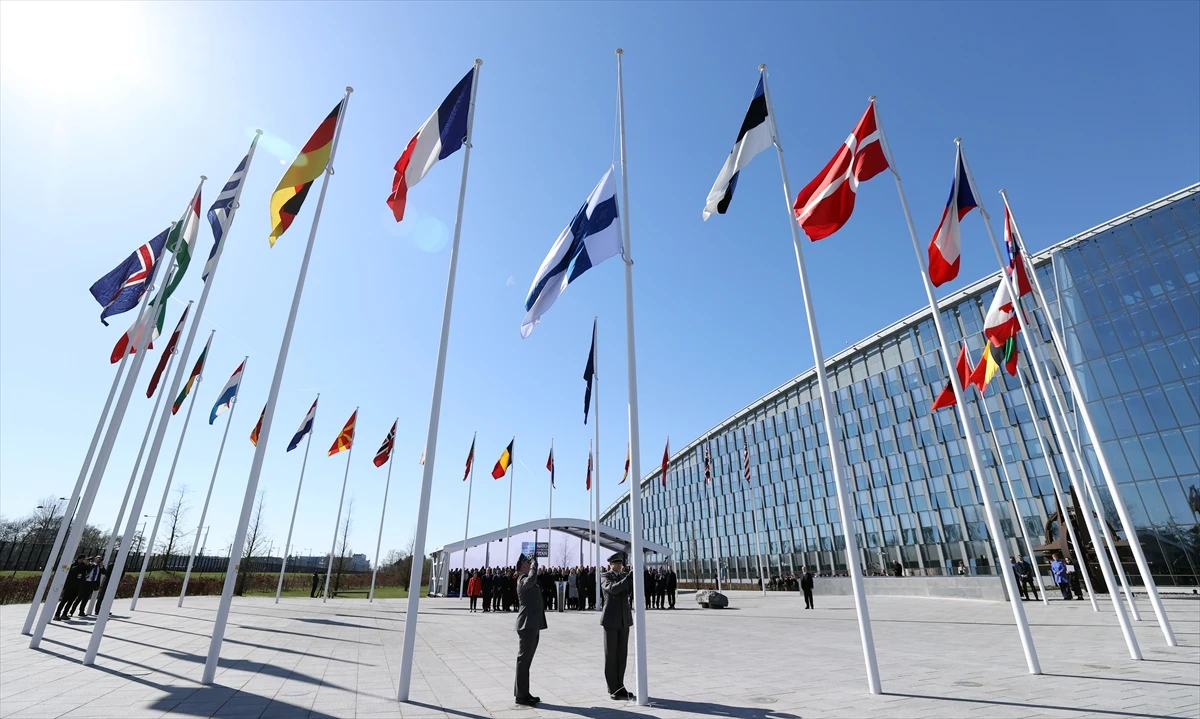
Russia has long argued that NATO expansion threatens its security. Yet the full-scale invasion of Ukraine produced the opposite of Moscow’s stated objective.
Finland and Sweden had maintained military non-alignment for decades. After Russia launched its full-scale invasion in February 2022, both countries applied for NATO membership. Finland joined in April 2023 and Sweden in March 2024. NATO consequently gained two capable members, and the alliance’s direct border with Russia expanded substantially.
This does not prove that every Russian neighbour will seek NATO membership. Geography, domestic politics and alliance rules differ. It does demonstrate, however, that military pressure can persuade neighbouring societies to seek stronger external guarantees.
NATO cannot simply “enter” Russia’s internal republics. Membership is available to sovereign European states and requires unanimous agreement among existing allies. The more realistic risk for Moscow is political rather than institutional: neighbouring countries and communities may increasingly view alternative partnerships as safer or more prosperous.
A similar diversification is visible across Central Asia. Kazakhstan, Kyrgyzstan and other regional states still maintain significant economic, security and social connections with Russia. Remittances from Russia remain especially important to Kyrgyzstan, Tajikistan and Uzbekistan. Russia will therefore continue to be a major regional actor.
At the same time, Central Asian states are expanding relations with China, the European Union, Türkiye and Gulf countries. OECD data show China’s growing share of the region’s trade, while the EU has become an important export destination. This is not necessarily an anti-Russian alignment. It is a strategy of reducing dependence and increasing room for manoeuvre.
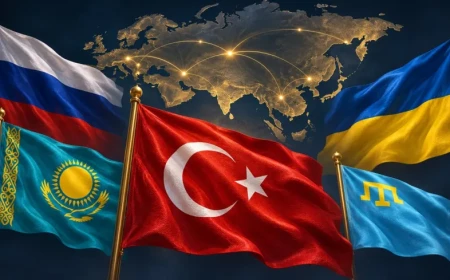
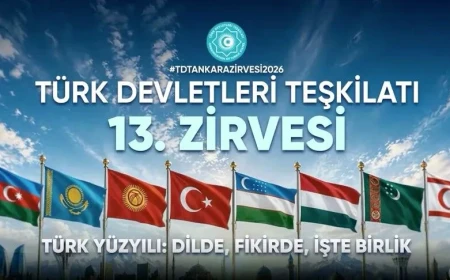
The Organization of Turkic States reflects this wider search for cooperation. Its full members are Azerbaijan, Kazakhstan, Kyrgyzstan, Türkiye and Uzbekistan, while Turkmenistan, Hungary and the Turkish Republic of Northern Cyprus hold observer status. Its agenda increasingly includes transport, trade, investment, digital systems and cultural cooperation.
The organization should not be portrayed as a mechanism designed to dismantle Russia. Its attraction, however, could grow if it creates visible economic opportunities, efficient transport corridors and stronger educational connections. Identity becomes politically influential when it is combined with material benefits.
The Makkah Agreement reflects a search for regional ownership
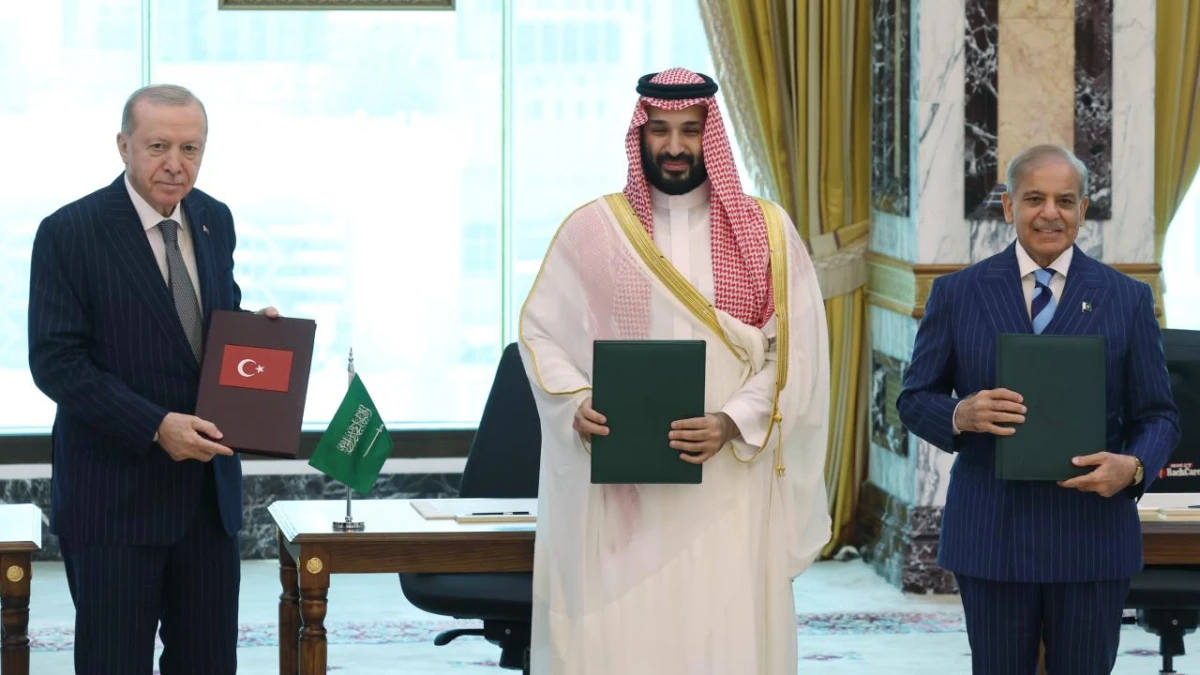
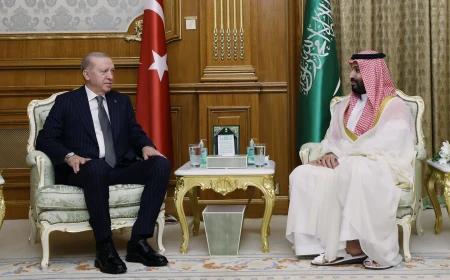
The Makkah Joint Defence Agreement signed by Türkiye, Saudi Arabia and Pakistan in August 2026 is another sign that countries are seeking security arrangements adapted to regional concerns.
The agreement states that an armed attack against one of the three parties will be treated as an attack against all. The members subsequently established a Strategic Political and Defence Committee and announced plans for a secretariat, defence-industry cooperation, joint technology development and stronger operational coordination.
The agreement should not yet be described as a Middle Eastern NATO. It has only three members, its institutions remain under development and its long-term military procedures have not been fully tested. Pakistani officials have said that expansion is not currently on the immediate agenda because the founding members must first consolidate the framework. They have also left open the possibility of later participation by countries with similar threat perceptions.
Egypt is frequently discussed as a potential participant because of its military capacity and relationships with the founding states. Syria and Iraq could also seek closer cooperation if they believe it would strengthen sovereignty and reconstruction. Iran’s possible participation would be more complicated because Tehran’s threat perceptions and regional partnerships differ significantly from those of several Arab states.
No confirmed applications from Egypt, Syria, Iraq or Iran should therefore be presented as fact. The more important point is that continued insecurity will increase demand for regional mechanisms. Whether the Makkah framework expands will depend on whether it can reassure potential members, avoid becoming an instrument against a specific state and provide credible benefits beyond political declarations.
Security, prosperity and belonging will define the new order
Russia may request a return to NATO’s 1997 posture, but neither Russia nor the rest of the world can return to the social, technological and political conditions of that year.
The question facing Moscow is not only how to push NATO farther from its borders. It is how to make citizens and neighbouring societies feel that cooperation with Russia offers security, dignity and opportunity. Military strength can prevent immediate challenges, but it cannot by itself create lasting loyalty.
The same principle applies to NATO, the European Union, the United States, the Organization of Turkic States, the Makkah Agreement and every multinational state. Alliances weaken when members feel unprotected or ignored. States weaken when communities believe that resources are distributed unfairly, cultural identities are suppressed or young people have no future.
Artificial intelligence will accelerate these pressures. It will increase productivity and state capacity, but it will also make inequality, administrative failure and political contradictions more visible. Governments will be compared not with their own past, but with the best-performing systems available anywhere in the world.
The strategic competition of the twenty-first century will therefore be won not only through missiles, borders or military bases. It will be shaped by education, technological access, accountable institutions, cultural respect, social mobility and public trust.
People generally prefer to remain where they feel safe, valued and hopeful. When those conditions disappear, migration increases, political loyalties weaken and alternative identities become more attractive.
Russia cannot compel the world to become 1997 again. NATO cannot guarantee stability through military expansion alone. Regional organizations cannot survive on symbolism without delivering practical value. The durable power of the new era will belong to those able to combine security with prosperity, freedom with responsibility, and national unity with genuine belonging.
Yusuf İnan
WiseNewsPress.com
What's Your Reaction?
 Like
0
 Dislike
0
 Love
0
 Funny
0
 Wow
0
 Sad
0
 Angry
0
Yusuf İnan is a journalist, columnist, strategic analyst and head of the Wise News Press Media Group. His work focuses on international affairs, geopolitics, security and major social issues. Through his journalism, he promotes peace, dialogue, mutual understanding and responsible reporting while contributing to the development of international media projects.











Comments (0)