



Emine Erdoğan’s Zero Waste vision becomes a global model at COP31
Emine Erdoğan’s COP31 meeting with Anacláudia Rossbach highlights how Zero Waste connects climate action, resilient cities, social justice and human dignity.


By Yusuf İnan | Wise News Press
Journalist and author | Political and strategic analyst
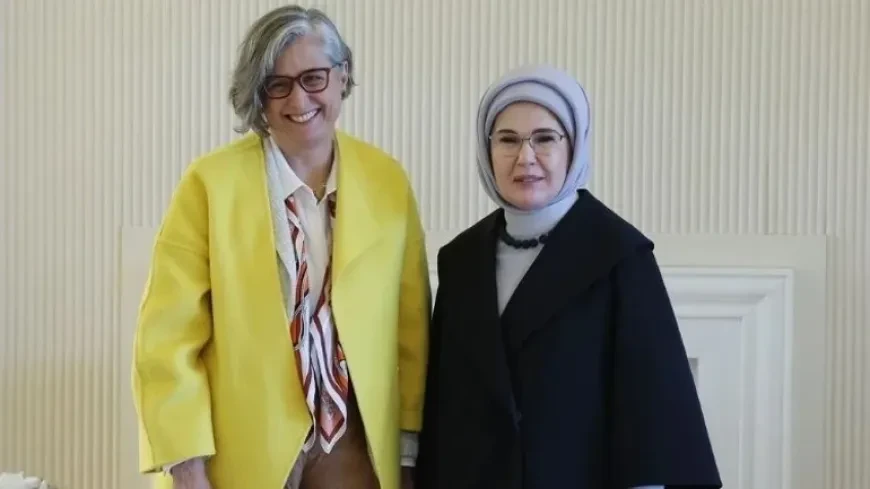
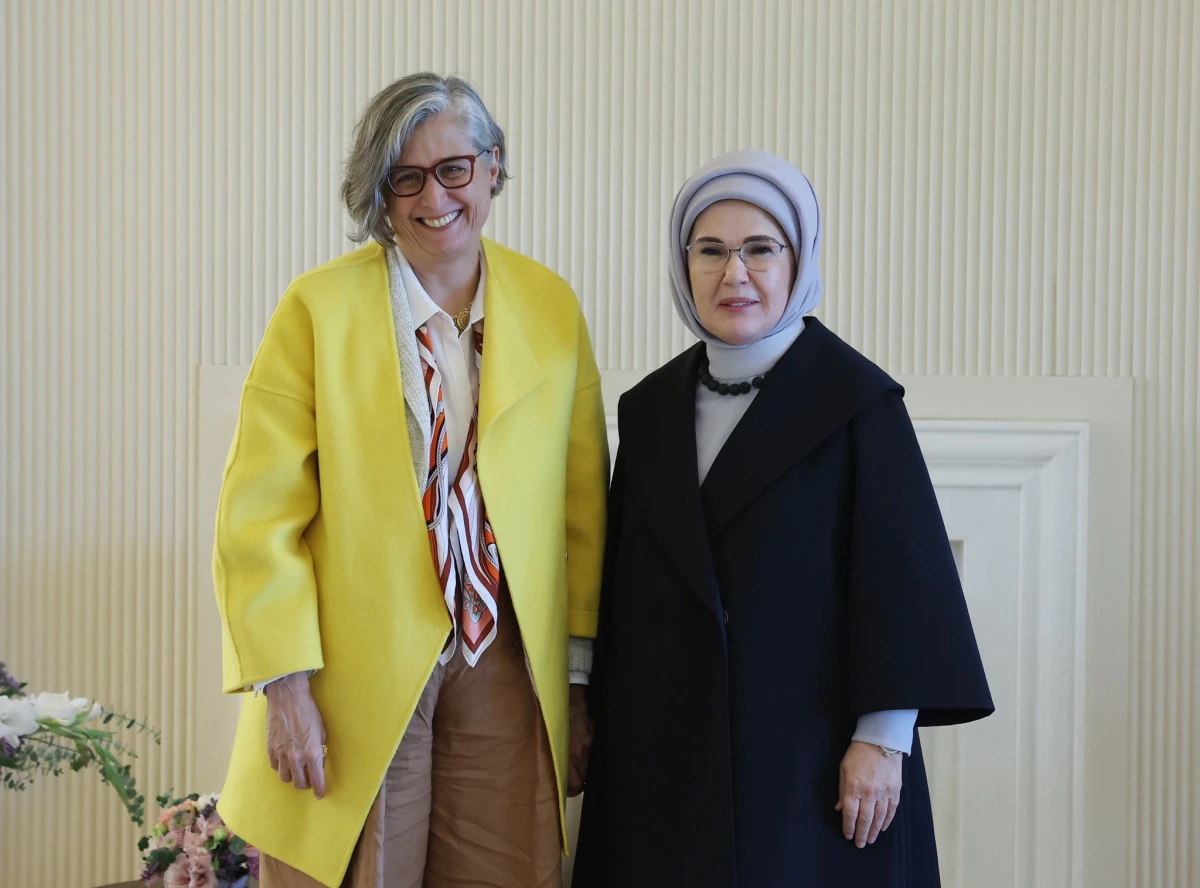
ANTALYA, TÜRKİYE — Emine Erdoğan’s meeting with UN-Habitat Executive Director Anacláudia Rossbach at COP31 showed that Türkiye’s Zero Waste initiative has gained institutional weight within global environmental diplomacy.
The talks also demonstrated how a project initially associated with reducing waste has developed into a broader vision encompassing climate justice, resilient cities, food security, social solidarity and the protection of human dignity.
Why the meeting with Rossbach matters
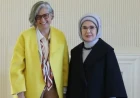
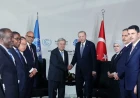
Emine Erdoğan, the wife of Turkish President Recep Tayyip Erdoğan, met Rossbach during the 31st Conference of the Parties to the United Nations Framework Convention on Climate Change in Antalya.
Following the meeting, Erdoğan said they had discussed the importance of COP31 in the search for solutions to the climate crisis and the need to act with a shared sense of responsibility.
Samed Ağırbaş, president of the Zero Waste Foundation and a COP31 High-Level Climate Champion, also attended the talks. His participation indicated that the meeting went beyond diplomatic goodwill and addressed a potential field of cooperation involving international institutions, civil society and projects developed under the COP31 agenda.
As the UN agency responsible for sustainable urban development, housing and resilient human settlements, UN-Habitat occupies a strategic position in global climate policy. Its involvement can help connect Zero Waste practices with urban planning, housing, municipal services and the quality of life in rapidly growing cities.
The Erdoğan–Rossbach meeting should therefore be understood as part of a wider effort to make responsible consumption, circularity and waste prevention central elements of future urban development.
Türkiye moves from following the agenda to shaping it
The evolution of Zero Waste suggests that Türkiye is no longer merely following international environmental discussions. It is increasingly contributing ideas, practices and institutional models to the global agenda.
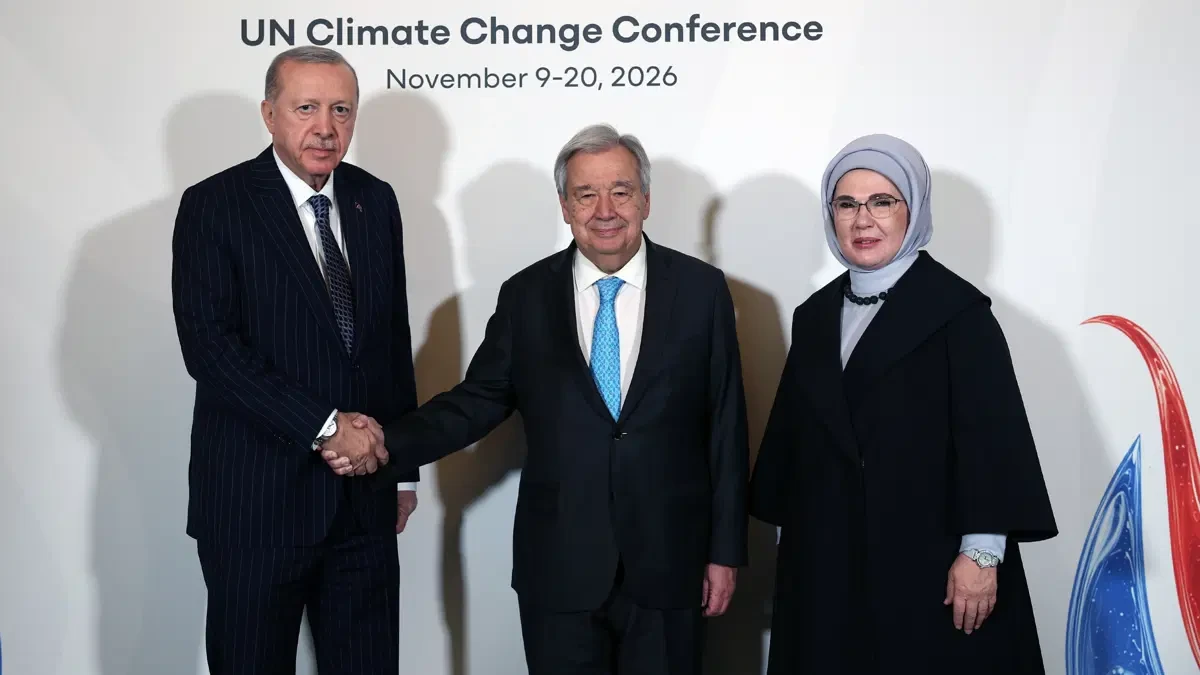
UN Secretary-General António Guterres has publicly commended the leadership demonstrated by Türkiye and Emine Erdoğan in advancing the Zero Waste movement. He has also said that other countries could draw inspiration from Türkiye’s experience.
Emine Erdoğan’s appointment as chair of the UN Secretary-General’s Advisory Board of Eminent Persons on Zero Waste gave that international recognition an institutional form. UN-Habitat and the UN Environment Programme jointly support the board’s work.
The structure provides a platform through which experience gained in Türkiye can be shared with governments, cities, international organisations and civil society groups. It also allows successful local initiatives to be discussed as possible components of wider global policy.
Through this process, Emine Erdoğan has helped transform a social and environmental campaign into an instrument of diplomacy. Her leadership has brought environmental responsibility together with a moral vocabulary centred on fairness, compassion and respect for future generations.
Zero Waste is about more than managing rubbish
Zero Waste is often understood simply as recycling, separating household rubbish or reducing the use of plastic. Those measures are important, but they represent only one part of the broader vision.
The initiative also concerns how resources are extracted, manufactured, consumed and eventually discarded. It encourages societies to prevent waste before it is created, use resources efficiently, repair or reuse products and return valuable materials to the economy.
Circular production, the reduction of food loss, the protection of water resources and the conversion of organic waste into compost or energy all form part of this approach.
UN data show that more than one billion tonnes of food are wasted worldwide while hundreds of millions of people continue to face hunger and food insecurity. Households alone discard the equivalent of more than one billion meals every day.
These figures make waste not only a technical or economic problem but also a question of conscience. Every wasted meal represents land, water, energy, labour and time that have been consumed without fulfilling their intended purpose.
The distinguishing feature of Emine Erdoğan’s vision is its effort to place people and ethical responsibility at the centre of environmental policy. It asks not only how waste should be processed, but also why societies produce so much waste while others struggle to meet their most basic needs.
From the rejection of waste to the protection of human dignity
The Zero Waste vision has a clear affinity with principles deeply rooted in Islamic civilisation: moderation, compassion, sharing and the understanding that the Earth is a trust to be protected rather than a possession to be exhausted.
In Islamic thought, economy is not limited to finance or trade. It also carries the meaning of balance, restraint and responsible conduct. Resources should be used carefully, excess should be avoided and the rights of others should be respected.
Emine Erdoğan’s approach translates these values into an inclusive environmental language that addresses humanity without distinction based on religion, ethnicity, nationality or social status.
Zero Waste also extends moral responsibility beyond human beings. Protecting soil, water, animals, plants and future generations turns environmental action into an expression of compassion toward all life.
In this respect, the initiative offers a contemporary meeting point between Türkiye’s cultural heritage and the urgent requirements of the modern world. It demonstrates that traditional values of stewardship and generosity can contribute meaningfully to present-day environmental policy.
Connections with hunger, migration and the wounds of war
It would not be realistic to claim that Zero Waste alone can end war, hunger or forced migration. It can, however, contribute to addressing several underlying conditions that deepen these problems, including resource inequality, food waste, environmental degradation and poverty.
Climate change reduces agricultural productivity, places water supplies under pressure and destroys livelihoods. When communities can no longer obtain food, water or employment, migration may become a matter of survival rather than choice.
A system in which food is not wasted, natural resources are distributed more fairly and local economies become resilient can help people remain in their homelands with dignity.
The connection between Zero Waste and migration should therefore not be reduced to the simplistic claim that recycling can stop people from leaving their countries. The deeper relationship lies in confronting food insecurity, environmental collapse, urban inequality and the loss of viable living conditions.
Zero Waste also offers a relevant perspective for societies affected by conflict. Wars destroy homes and infrastructure while consuming enormous quantities of energy, food, money and human potential. Rebuilding with circularity, efficiency and social justice in mind can reduce future vulnerabilities and strengthen communities.
In that sense, preventing waste also means preventing the loss of opportunity, knowledge, labour and human life.
Emine Erdoğan’s place in environmental diplomacy
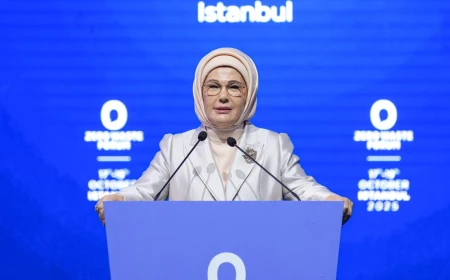
Emine Erdoğan has worked to ensure that the Zero Waste movement does not remain confined within Türkiye’s borders. She has consistently carried its message to UN platforms, climate conferences and meetings with the spouses of world leaders.
That continuity has made her one of the most visible women shaping Türkiye’s environmental diplomacy. Her leadership is significant not only because she has promoted an idea, but because she has worked to support it through international boards, foundations, partnerships and practical initiatives.
The meeting with Rossbach represents another stage in that process. Combining UN-Habitat’s urban expertise with Türkiye’s Zero Waste experience could support new work in fields ranging from municipal waste systems and food policy to resilient neighbourhoods and climate-conscious urban planning.
The long-term value of this vision will ultimately depend on measurable results, transparent implementation, strong local institutions and the meaningful participation of citizens. Lasting environmental leadership requires policies that reach homes, schools, municipalities, businesses and communities.
Nevertheless, the framework promoted by Emine Erdoğan carries a clear message to the world: Humanity must change direction before natural resources are irreversibly depleted.
At the heart of that message is a choice between consuming more and sharing more fairly; between treating nature as an unlimited source of raw materials and protecting it as a common home entrusted to present generations.
The most powerful contribution of Zero Waste may therefore be its insistence that protecting the environment is not merely a technical obligation. It is also a responsibility to defend human dignity, social peace and the right of future generations to inherit a habitable world.
Yusuf İnan
WiseNewsPress.com
What's Your Reaction?
 Like
0
 Dislike
0
 Love
0
 Funny
0
 Wow
0
 Sad
0
 Angry
0
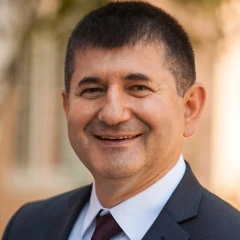
Yusuf İnan is a journalist, columnist, strategic analyst and head of the Wise News Press Media Group. His work focuses on international affairs, geopolitics, security and major social issues. Through his journalism, he promotes peace, dialogue, mutual understanding and responsible reporting while contributing to the development of international media projects.






Comments (0)