



Zelensky says US raised NATO membership in return for Donbas pullback
Zelensky said US negotiators raised NATO membership in return for a Donbas withdrawal, adding that any comprehensive deal would go to Ukrainians.


By Ahmet Taş | Wise News Press
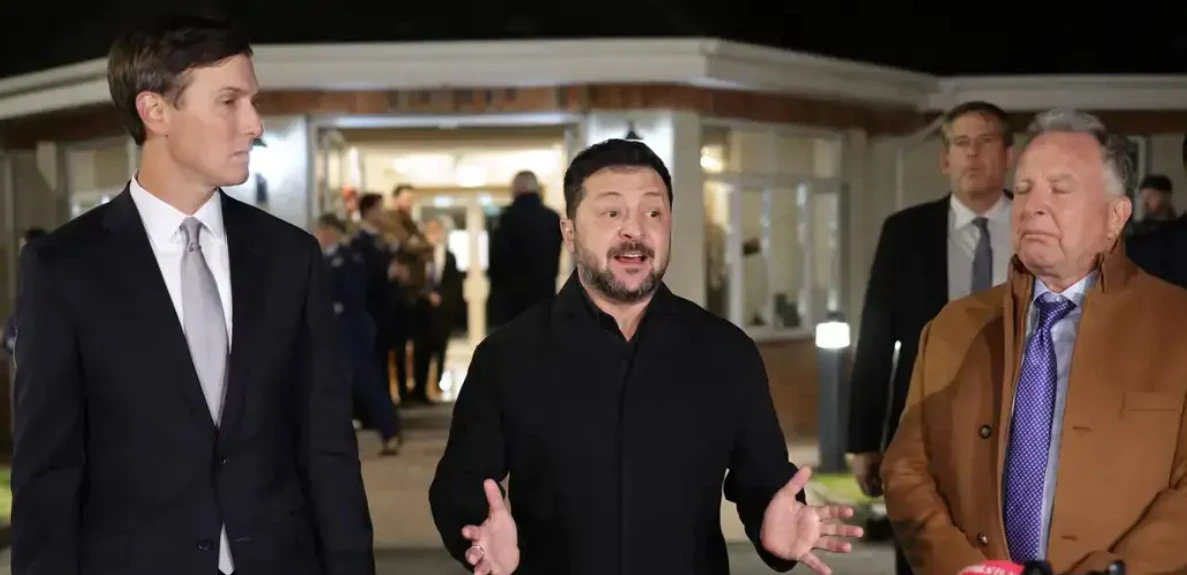
KYIV, UKRAINE — Ukrainian President Volodymyr Zelensky said US negotiators had raised, for the first time, the possibility of NATO membership in return for Ukraine withdrawing from areas it controls in Donbas.
Zelensky stressed that no detailed or finalized offer was currently on the table. He said any comprehensive agreement involving territory, NATO and European Union security guarantees would have to be presented to Ukrainian society rather than decided by the president alone.
US negotiators raised a new question
According to Zelensky, American negotiators asked whether Ukraine would withdraw from the remaining parts of Donbas under Kyiv’s control if the country were admitted to NATO.
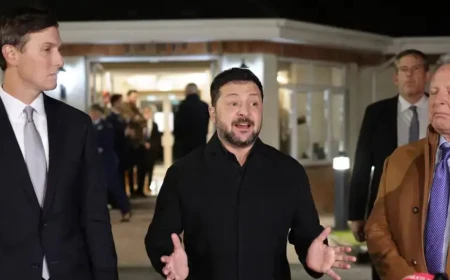
Zelensky told reporters that the Americans had posed the question:
“What if Ukraine joins NATO? Would Ukraine withdraw from Donbas?”
He said this was the first time NATO membership had been directly linked to a possible Ukrainian withdrawal from Donbas during the peace process.
His remarks followed two days of US-mediated negotiations between Ukraine and Russia in Abu Dhabi. US envoy Steve Witkoff and Jared Kushner, President Donald Trump’s son-in-law and adviser, participated in the talks before meeting Russian President Vladimir Putin in Moscow and Zelensky in Dublin.
The Abu Dhabi negotiations did not produce a comprehensive breakthrough. However, the parties reportedly reached an agreement in principle on a large prisoner exchange. Major disagreements remained over territory, a ceasefire and the security arrangements that would follow an end to the fighting.
Zelensky says Ukrainians must decide
Zelensky said Ukraine would not recognize occupied Ukrainian territory as Russian and would not formally surrender its territorial claims.
He nevertheless indicated that a comprehensive security package could be discussed openly with the Ukrainian public if the United States and other NATO members provided specific and enforceable guarantees.
The proposed package would need to include more than a political promise of future protection, according to Zelensky. It would also require a strong Ukrainian military, adequate troop levels, weapons, long-term financial assistance and a clearly funded reconstruction plan.
Zelensky said he could not make such a far-reaching decision on his own. The Ukrainian people would have the final say if a concrete agreement emerged from the negotiations.
He added that Kyiv still lacked the details necessary to evaluate the idea. The link between NATO membership and a withdrawal from Donbas therefore remained a subject of discussion rather than an agreed peace formula.
Kyiv seeks NATO and EU guarantees
Zelensky described NATO and the European Union as the foundations of genuine European security. He argued that Ukraine needed binding guarantees capable of preventing Russia from launching another attack after a ceasefire or peace agreement.
Kyiv has repeatedly warned that political assurances without military enforcement mechanisms would not provide lasting security. Ukrainian officials want an arrangement combining military support, economic assistance and long-term diplomatic commitments.
Ukraine has also sought guarantees resembling NATO’s collective-defence commitments. Zelensky said Washington had discussed bilateral protections and guarantees similar to elements of NATO’s Articles 4 and 5, although the precise terms remained unsettled.
Moscow has long opposed Ukrainian membership in NATO. Putin has cited the prospect of Ukraine joining the alliance as a threat to Russian security, while Kyiv and its Western partners reject Russia’s claim that this justifies the invasion.
Donbas comprises the eastern Ukrainian regions of Donetsk and Luhansk. Russia controls much of the area and claims the entire region, while Ukrainian forces continue to hold strategically important territory in Donetsk.
Putin warns against Western troops
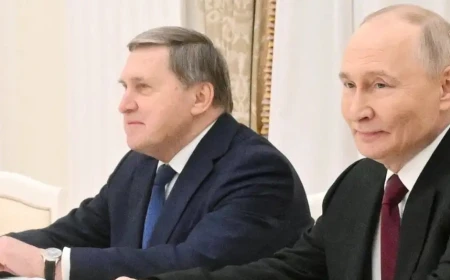
Putin showed no indication during his meeting with Witkoff and Kushner that Moscow was prepared to abandon its territorial demands.
The Russian president also rejected the deployment of European or NATO troops in Ukraine as part of a postwar security arrangement. Moscow argues that a Western military presence would represent a direct security threat.
Putin said foreign troops deployed in Ukraine would be regarded by Russia as legitimate military targets. He warned that such a deployment could immediately restart the war.
Russia has also opposed proposals for a demilitarized zone monitored or protected by Western forces. Several European governments have considered contributing troops to a postwar reassurance or peace-enforcement mission if an agreement is reached.
Zelensky described Moscow’s wider demands for changes to Europe’s security architecture as dangerous. He warned that allowing Russia to dictate borders and security arrangements could encourage future wars and further escalation.
Europe selects its negotiating team
European leaders agreed at an informal summit in Dublin on the structure of the team that would represent Europe in future Ukraine peace negotiations.
European Council President António Costa said the team would include representatives of the European Union institutions and the E5 group: France, Germany, the United Kingdom, Italy and Poland.
The five countries are prominent members of the coalition supporting Ukraine and have played central roles in discussions about security guarantees, military assistance and possible postwar arrangements.
European leaders maintain that no lasting settlement affecting Ukraine and the continent’s security can be negotiated without the direct participation of both Ukrainians and Europeans.
Kushner was also reported to have said that an agreement between Russia and Ukraine would not be possible without Europeans at the table.
Zelensky welcomed Europe’s planned participation. He said European governments should be part of the negotiating team rather than operating separately or being consulted only after decisions had been drafted.
Trump, Putin and Xi prepare to meet
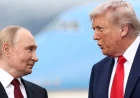
Trump, Putin and Chinese President Xi Jinping are scheduled to hold a three-way meeting in Shenzhen, China, on November 19, on the sidelines of the Asia-Pacific Economic Cooperation summit.
US officials said the war in Ukraine was not expected to appear on the meeting’s formal agenda. The gathering is nevertheless being closely watched in Kyiv and European capitals because it brings together the leaders of the United States, Russia and China without Ukrainian or European representation.
Ukrainian and European officials are concerned that discussions among the three leaders could influence future diplomacy, even if Ukraine is not formally listed as an agenda item.
European leaders have therefore emphasized that decisions affecting Ukraine’s sovereignty, borders and future security cannot be made without Kyiv’s participation.
Core disagreements remain unresolved
The latest diplomatic activity has placed NATO membership and Western security guarantees back at the centre of discussions about ending the war.
However, fundamental differences remain. Ukraine rejects legal recognition of Russia’s territorial claims and wants binding security guarantees. Russia demands control over occupied territory, opposes Ukraine’s NATO membership and rejects the presence of Western troops.
The United States is exploring potential compromises, but the question raised about NATO membership and Donbas has not yet become a detailed or mutually accepted proposal.
Any agreement would need to address territory, military forces, reconstruction, sanctions, long-term security guarantees and the risk of renewed Russian aggression.
Zelensky said that if a concrete package were eventually confirmed by the United States and other NATO members, Ukrainian society would be asked to decide whether it should be accepted.
WiseNewsPress.com
What's Your Reaction?
 Like
0
 Dislike
0
 Love
0
 Funny
0
 Wow
0
 Sad
0
 Angry
0
Ahmet Taş is a journalist, editor and Turkey Office Manager of the Wise News Press Media Group. He works across news, digital media and international publishing, focusing on accurate, responsible and accessible journalism. He contributes to the development of media projects that bring important political, social and global developments to a wider international audience.






Comments (0)