



Sayburç's 11,000-year-old carvings draw attention near Göbekli Tepe
Excavations at Sayburç near Göbekli Tepe have uncovered Neolithic homes and a five-figure relief that researchers interpret as an early narrative scene.


By Ahmet Taş | Wise News Press
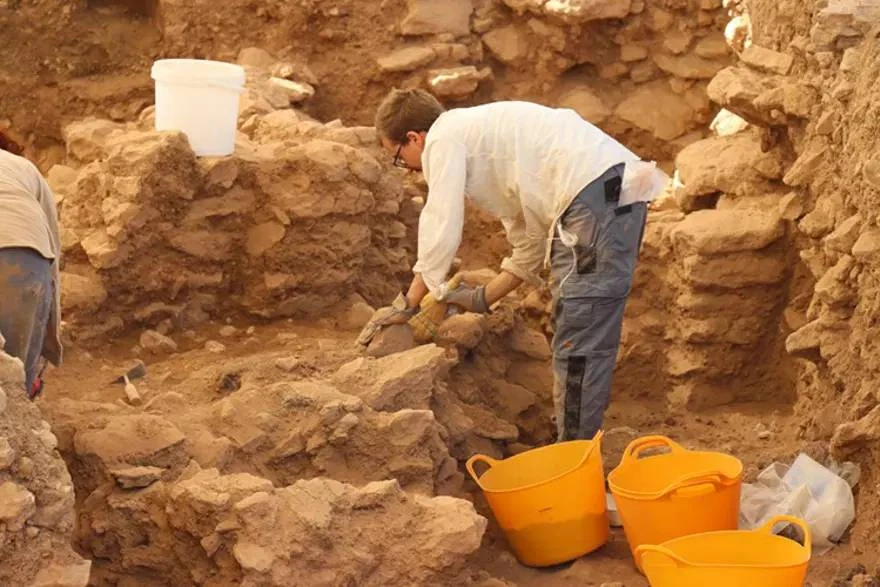
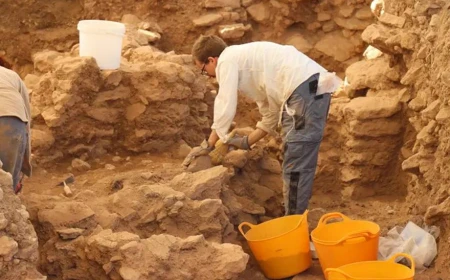
ŞANLIURFA, TÜRKİYE — Renewed international attention on Sayburç is highlighting an approximately 11,000-year-old settlement near Göbekli Tepe, where excavations have revealed homes, communal buildings and a striking scene carved with human and animal figures.
The site offers archaeologists a view of more than monumental stonework. Buildings associated with everyday life stand alongside spaces that may have hosted communal gatherings. Its best-known relief, discovered during excavations that began in 2021, has been interpreted as one of the earliest known examples of a scene in which figures appear to form a connected narrative. What that scene meant to its makers remains unknown.
How a village wall led to an excavation
The investigation began with stones incorporated into garden walls in the modern village of Sayburç, southwest of Şanlıurfa. During a visit in May 2021, specialists from the Şanlıurfa Archaeological Museum and the archaeological project noticed pillars among the reused stones. Further examination identified evidence of a much older Neolithic settlement beneath and around the village.
The location had already been recognised for remains from the Roman period. The pillars prompted a closer investigation of its prehistoric layers. Research has continued since 2021 as part of Taş Tepeler, a wider programme studying early settlements in the Şanlıurfa region.
Sayburç was therefore not discovered for the first time in 2026. Recent coverage has brought fresh attention to excavations that have been under way for several years and to findings previously presented by the research team.


The modern village makes the work unusually complex. Houses and other later structures were built above parts of the ancient settlement. Archaeologists must document those overlapping layers as they investigate what survives below, rather than treating the area as an empty excavation field.
A scene carved into stone
The discovery that drew particular attention is a relief carved into a stone bench inside a building interpreted as a communal space. Archaeologist Eylem Özdoğan of Istanbul University described the find in a study published in Antiquity in 2022.
The carved panel depicts five figures: two humans, two leopards and a bull. One human figure appears between the leopards; the other faces the bull. Their positions and gestures led Özdoğan to interpret the carvings as two related parts of a scene, rather than five separate images placed together.


That interpretation makes the relief significant for the study of prehistoric visual expression. The arrangement suggests that its makers may have been depicting an event or a sequence with connected characters. It does not, however, provide a readable account of the story. There is no accompanying text, and researchers cannot establish whether the figures represented an encounter, a ritual, a remembered event or something else.
The relief dates to the ninth millennium BCE. Describing it as approximately 11,000 years old conveys its broad age, but the phrase should not be mistaken for an exact date assigned to every figure or structure at Sayburç.
Homes and gathering spaces side by side
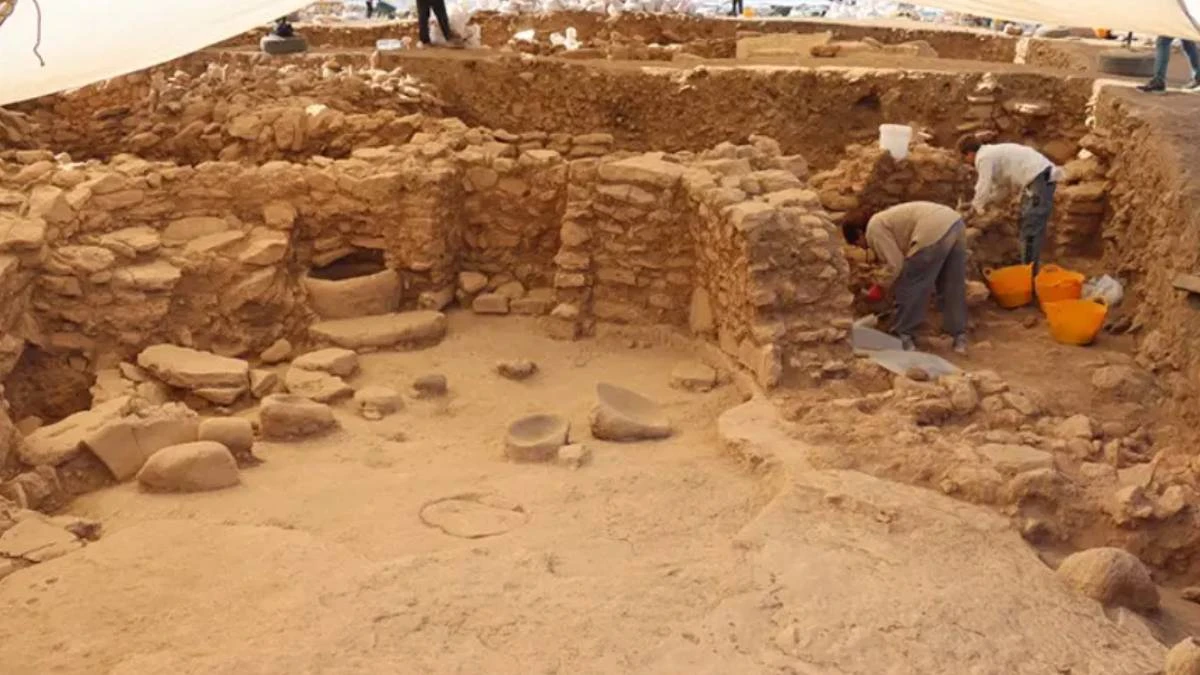
Excavations have identified two areas of Neolithic occupation. The northern area includes the building with the relief and other structures thought to have had special or communal uses. Residential buildings have been found farther south.
This combination is one reason Sayburç matters beyond its carvings. The excavation team can examine buildings associated with collective activity alongside the spaces where people lived. Their layout may help researchers understand how a community organised shared activities and domestic life during the development of more settled ways of living.
The architecture includes floors cut into limestone, stone walls and benches. Some buildings contain T-shaped pillars, a form also familiar from other prehistoric sites in the region. Researchers are studying differences between the structures to determine how they were used and whether changes in their layout reflect different periods of occupation.
Those questions cannot be settled by a carved scene alone. Objects and remains recovered from residential areas, including stone tools and material linked to food preparation, offer another kind of evidence. Studied in context, they can help archaeologists investigate daily practices as well as the imagery displayed in communal spaces.
What has been uncovered so far
In August 2026, Türkiye’s Ministry of Culture and Tourism said excavations had exposed approximately 70 residential and special-purpose structures across 2,700 square metres at Sayburç. The ministry also reported reliefs, human sculptures, monumental T-shaped pillars and bases bearing human faces.
The figure of 70 refers to structures uncovered across the excavation area; it is not a count of carvings in the well-known bench relief. Nor does it mean that the entire ancient settlement has been excavated. Work continues, and each newly investigated area may change researchers’ understanding of the site’s extent and development.
The ministry says the buildings show architectural changes, including a shift between rounded and rectangular plans. Establishing when and why those forms changed requires careful comparison of the structures and their archaeological layers. Sayburç provides an opportunity to examine that process within a settlement containing both homes and spaces used for other activities.
Sayburç within the Taş Tepeler region
Sayburç belongs to the same broad prehistoric landscape as Göbekli Tepe and Karahantepe. The sites share elements of a regional stoneworking tradition, including pillars and images of humans or animals. Each site nevertheless has its own layout, finds and excavation history.
Comparing them can help archaeologists test how widespread particular building practices and forms of imagery were. At Sayburç, the presence of residential buildings is especially useful because it places the carved figures within the wider setting of a community. It encourages questions about who used the shared structures and how those places related to the homes nearby.
The comparison does not establish that Sayburç was built by the same people as Göbekli Tepe or that its relief has a single agreed meaning. Archaeologists use the similarities as evidence to investigate, while differences between sites remain just as relevant.
What comes next for the site
The Ministry of Culture and Tourism has announced plans to develop the excavated area as an open-air museum and restore selected traditional village buildings as part of a village museum. Those are plans, and the ministry’s announcement does not mean the proposed facilities have been completed.
For the research team, excavation and conservation remain linked. Later occupation and modern construction sit above parts of the Neolithic remains, while newly exposed stone surfaces require protection and documentation. Further work may clarify how the buildings changed over time and reveal more about the people who used them.
The questions raised by the five carved figures are likely to remain open. Their importance lies partly in that uncertainty: the relief preserves evidence that people at Sayburç arranged humans and animals into a connected scene, even though the account they intended to convey has not survived.
WiseNewsPress.com
What's Your Reaction?
 Like
0
 Dislike
0
 Love
0
 Funny
0
 Wow
0
 Sad
0
 Angry
0

Ahmet Taş is a journalist, editor and Turkey Office Manager of the Wise News Press Media Group. He works across news, digital media and international publishing, focusing on accurate, responsible and accessible journalism. He contributes to the development of media projects that bring important political, social and global developments to a wider international audience.

















Comments (0)