



Sait Yılmaz: Europe and Turkic world face growing Russian pressure
Prof. Sait Yılmaz assesses Russia’s goals in Ukraine and their potential impact on European security, the Turkic world, NATO and Türkiye.
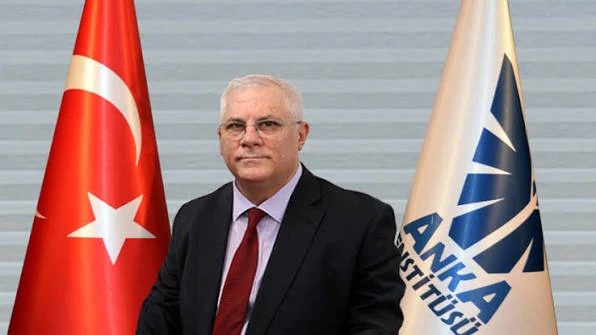


By Ahmet Taş | Wise News Press
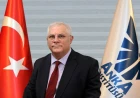
ANKARA, TÜRKİYE — Professor Sait Yılmaz argues that Russia’s demands in Ukraine form part of a broader strategy that could reshape European security and pressure Türkiye and the wider Turkic world.
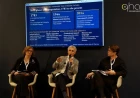
Speaking on the Kırmızı Klasör programme, Yılmaz assessed recent talks involving Ukrainian, Russian and US representatives in Abu Dhabi. He said the negotiations were not limited to ending the war but also concerned the future security architecture of Europe.
According to Yılmaz, Moscow is seeking territorial and political concessions from Ukraine while calling for restrictions on NATO’s military presence in Eastern Europe. He warned that similar pressure could eventually be directed toward the Caucasus, Central Asia and Türkiye.
Claims raised during the programme about alleged secret agreements, future military operations or a possible division of influence among major powers have not been independently verified. They should be understood as Yılmaz’s geopolitical interpretations and forecasts rather than established facts.
Security at the centre of the Abu Dhabi talks
Representatives of Ukraine, Russia and the United States met in Abu Dhabi on 10–11 November to discuss possible steps toward ending the war. Postwar security arrangements, de-escalation, humanitarian measures and the future of negotiations were among the principal subjects.
Yılmaz said the talks had not resolved the fundamental dispute between Ukraine’s demand for credible security guarantees and Russia’s territorial and neutrality conditions.
Moscow, he argued, is demanding more than recognition of the areas currently under Russian control. According to his assessment, Russia wants Ukrainian forces to withdraw from additional territory and seeks constitutional restrictions preventing Ukraine from joining NATO.
Ukraine, by contrast, is demanding security guarantees comparable to those provided by NATO membership. Yılmaz noted that Moscow opposes the deployment of foreign troops in Ukraine, creating a major obstacle to any enforceable postwar security arrangement.
He maintained that Russia was taking a maximalist position and attempting to obtain through negotiations what it had been unable to achieve militarily. Europe’s growing determination to participate in the process, he said, reflects the reality that the outcome will affect the security of the continent as a whole.
The debate over NATO’s post-1997 position
Yılmaz linked Moscow’s current approach to the draft security agreements Russia presented to NATO and the United States in December 2021, shortly before the full-scale invasion of Ukraine.
Those proposals demanded an end to NATO’s further eastward enlargement and restrictions on the deployment of troops and weapons in countries that joined the alliance after 1997.
Such demands would directly affect Poland, the Czech Republic, Hungary, Bulgaria, Romania, Slovakia, the Baltic states and other countries admitted during subsequent rounds of NATO enlargement.
Yılmaz argued that Moscow’s practical objective was not necessarily the formal removal of these countries from NATO. Instead, he said, Russia wanted to weaken the alliance’s military infrastructure and deterrence capabilities on its eastern flank.
The withdrawal of allied forces, weapons and defence systems built up over the past three decades could, in his view, create a security vacuum and leave Eastern European states more vulnerable to political or military pressure.
Yılmaz described this as part of a broader effort by Moscow to regain influence across the former Soviet sphere and limit neighbouring countries’ freedom to determine their own security policies.
A sovereignty warning for the Turkic world
Yılmaz said Russia’s security doctrine could affect not only Eastern Europe but also the Turkic states of the Caucasus and Central Asia.
He argued that Moscow views the expanding defence, energy and economic relationships between these states and Western countries with suspicion. Their independent foreign policy choices could consequently face increasing Russian pressure, he said.
Yılmaz emphasised that Kazakhstan, Azerbaijan and other Turkic states must retain the right to establish international partnerships, determine their defence policies and cooperate with whichever countries they choose.
He claimed that Russia had attempted to influence governments in the region through political pressure, economic instruments and special diplomatic missions. Such methods, he argued, risk undermining national sovereignty without requiring a direct military intervention.
“The right of states to determine their own future must not depend on the Kremlin’s permission.”
Yılmaz said security could not legitimately be achieved by controlling other countries’ territories or limiting their foreign policy choices. Ukraine, the Caucasus and Central Asia, he added, should not become bargaining chips in negotiations among larger powers.
Referring to the historical expansion of the Russian Empire into Turkestan and the Caucasus, he suggested that present-day pressure should be viewed in the context of a longer struggle over political influence and regional identity.
The Black Sea and Türkiye’s security
The Black Sea occupies a central place in the risks confronting Türkiye, according to Yılmaz. He said control of Crimea and the strategic port of Sevastopol was a major factor behind Russia’s 2014 annexation of the peninsula.
Control of Crimea expanded Moscow’s military reach in the Black Sea and altered the regional balance of power. Continuing pressure on Ukraine, Yılmaz argued, makes maritime security increasingly important for Türkiye.
Ankara has developed defence relations with Kyiv while maintaining close contacts with Moscow in the energy, trade and security sectors. Yılmaz described this as a delicate balance but warned that cooperation with Russia did not guarantee that Türkiye would remain unaffected by Moscow’s regional ambitions.
He suggested that Russia could eventually increase pressure on Türkiye over its NATO membership, support for Ukraine and expanding relations with Azerbaijan and Central Asian states.
Türkiye, he said, should not treat the Black Sea, the Caucasus and Turkestan as unrelated policy areas. Developments in each region have direct consequences for the others, particularly in defence, energy corridors, maritime access and relations with the Turkic states.
The risk of a ‘new Yalta’
Yılmaz used the expression “new Yalta” when discussing meetings among the leaders of the United States, China and Russia on the sidelines of the APEC summit.
At the 1945 Yalta Conference, the major Allied powers made decisions that shaped the postwar order and divided influence across Europe. Yılmaz warned that smaller and medium-sized states could once again be excluded from negotiations affecting their security and sovereignty.
He criticised the Trump administration’s pressure on Ukraine and argued that Washington’s desire to secure a rapid agreement could weaken Kyiv’s negotiating position.
Yılmaz also suggested that China benefits strategically and economically from Russia’s continued concentration on the war in Ukraine. Moscow’s isolation from Western markets has increased its dependence on Beijing and given China access to Russian energy under more favourable conditions, he argued.
His “new Yalta” comparison is not based on any officially announced agreement dividing the world into spheres of influence. It represents his prediction that the United States, China and Russia could attempt to settle major international disputes without the full participation of the smaller states most directly affected.
Yılmaz said such a process would carry serious risks for Ukraine, Taiwan, Eastern Europe, the Caucasus and Central Asia.
Europe’s search for deterrence
Yılmaz said European countries were struggling to establish a unified security policy toward Russia. States geographically closer to Russia tend to prioritise military deterrence, while some countries farther west or south may seek to restore economic relations.
He said Britain, France and Germany were trying to increase their influence in negotiations concerning Ukraine. In his view, European Union institutions must participate with a common position rather than allowing separate national initiatives to weaken the continent’s negotiating power.
Europe should continue supporting Ukraine, expand defence production and strengthen its deterrence posture, Yılmaz argued. He also identified the debate over using frozen Russian assets for Ukraine’s defence and reconstruction as one of the options available to European governments.
Yılmaz warned that a direct confrontation between Russia and NATO could become more likely if hybrid operations, military deployments and political tensions continue to spread. This warning is a risk assessment based on current developments, not confirmation that such a war is imminent or inevitable.
He concluded that Türkiye needs a long-term strategy bringing together its NATO membership, Black Sea security interests and relations with the Turkic states.
According to Yılmaz, sustainable regional security must be based on sovereignty, credible deterrence and respect for each state’s freedom to choose its alliances—not on spheres of influence imposed by larger powers.
WiseNewsPress.com
What's Your Reaction?
 Like
0
 Dislike
0
 Love
0
 Funny
0
 Wow
0
 Sad
0
 Angry
0

Ahmet Taş is a journalist, editor and Turkey Office Manager of the Wise News Press Media Group. He works across news, digital media and international publishing, focusing on accurate, responsible and accessible journalism. He contributes to the development of media projects that bring important political, social and global developments to a wider international audience.













Comments (0)