



Crimea Bridge damage: Experts assess major symbolic blow to Putin
German and Austrian experts say the Crimea Bridge damage carries symbolic consequences for Putin while complicating Russian logistics and regional shipping.


By Ahmet Taş | Wise News Press
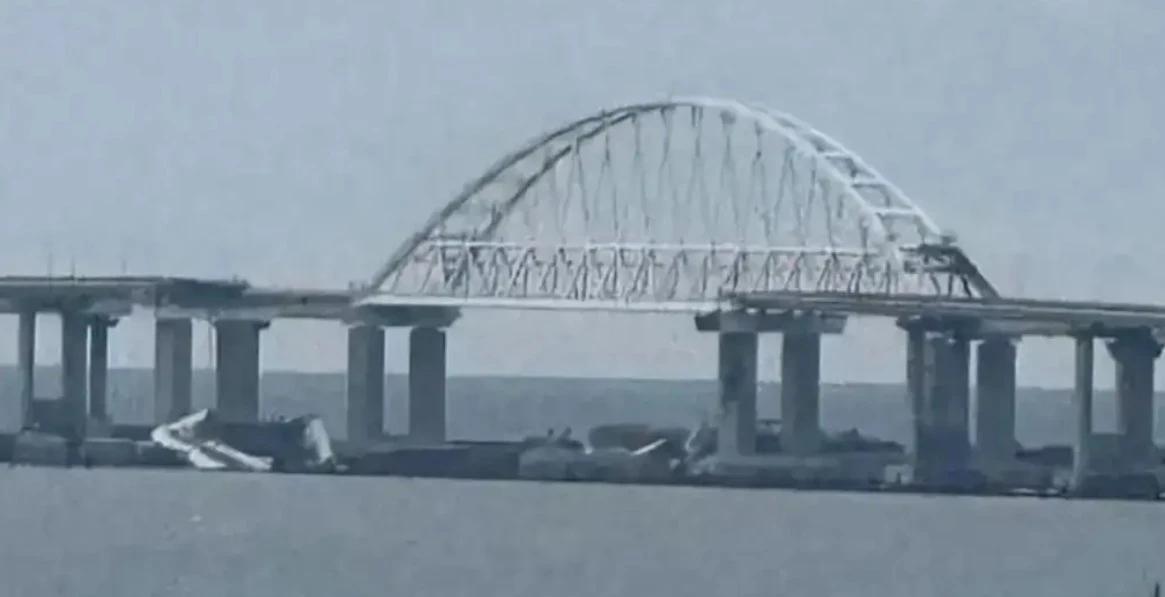
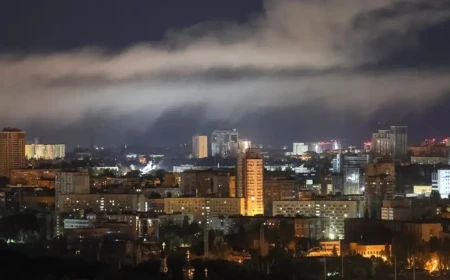
BERLIN, GERMANY — The collapse of a road section of the Crimea Bridge following strikes on November 17 has renewed debate over the crossing’s military value and its symbolic importance to Vladimir Putin.
The bridge links Russia with Russian-occupied Crimea, which Moscow annexed in 2014 in a move that remains internationally unrecognized. German broadcaster DW reported that German and Austrian experts viewed the latest damage as both a logistical disruption and a serious challenge to the image surrounding one of Putin’s most prominent infrastructure projects.
The road arch over the Kerch Strait reportedly collapsed into the water, bringing road traffic to a halt. Rail services were suspended temporarily before partially resuming, while concerns were also raised about the passage of commercial vessels between the Black Sea and the Sea of Azov.
Bridge carries major political symbolism
Roderich Kiesewetter, a member of the German Bundestag and foreign policy expert for the Christian Democratic Union, said Crimea and the bridge hold enormous symbolic importance for Putin.
According to Kiesewetter, attacks on the crossing increase political pressure on the Kremlin because the structure represents more than a transport route. It has also served as a visible symbol of Moscow’s attempt to bind the occupied peninsula to Russia.
Putin personally opened the bridge in 2018. Russian authorities presented the project as evidence that Crimea had been permanently integrated into the Russian Federation.
Janis Kluge, an economist at the Berlin-based German Institute for International and Security Affairs, similarly described the bridge as a symbol of Russia’s annexation of Crimea. Damage to such a prominent structure therefore carries political and public-relations consequences beyond its immediate physical impact.
Experts differ over its current military value
Kiesewetter argued that the destruction of part of the bridge would disrupt Russian supply routes through Crimea. The suspension of road traffic forces vehicles and cargo to use alternative routes, increasing pressure on other transport corridors.
Austrian military historian Colonel Markus Reisner offered a more cautious assessment of the military consequences. He said the bridge had already lost much of its former importance for Russian military logistics, although its symbolic value remained substantial.
Russian forces increasingly rely on the land corridor running through occupied areas of eastern and southern Ukraine. This route gives Moscow an alternative connection to Crimea and reduces its dependence on the Kerch crossing.
The competing assessments indicate that the attack’s effects must be considered on two levels. The collapse created an immediate transport disruption, but its longer-term military impact will depend on the capacity of alternative roads, railways and ferry services.
The condition of the bridge’s railway section will also be important. If rail traffic continues at reduced capacity, Russian authorities may be able to move some supplies despite the loss of the road arch.
Shipping through the Kerch Strait could be affected
Joachim Weber, a security expert at the University of Bonn, said debris falling into the water had obstructed the Kerch-Yenikale shipping channel.
The channel is the principal navigable passage between the Black Sea and the Sea of Azov. Any prolonged obstruction could affect commercial vessels and access to ports along the Sea of Azov, including those in Russian-controlled territory.
The full impact on shipping remains uncertain. Authorities have yet to provide a definitive timetable for clearing the debris, inspecting the channel and restoring safe passage.
Engineering teams would need to assess the stability of the remaining structures before large-scale recovery work could begin. The duration of the disruption will depend on the extent of the underwater damage and the equipment required to remove collapsed sections.
Weber also predicted that Moscow could respond with more intensive strikes. His statement was an expert forecast rather than confirmation of a decision by the Russian government.
A public-relations setback for Moscow
Austrian military analyst Gustav Gressel said the damage not only complicated Russian logistics but also represented a blow to Putin’s prestige.
Gressel noted that Putin’s personal involvement in opening the bridge reinforced its political significance. The project was intended to demonstrate that Crimea would remain under Russian control and that Moscow could protect the infrastructure connecting it to the peninsula.
Gerhard Mangott, a professor at the University of Innsbruck and an expert on Russia, also described the bridge as a status symbol for Putin and the Russian state.
Mangott said the attack represented a significant public-relations setback for Moscow and an information-policy success for Ukraine. The visible collapse offered Kyiv an opportunity to show that it remained capable of striking a heavily protected strategic structure.
Reisner made a similar distinction between military and symbolic consequences. He said Ukraine had demonstrated an ability to respond after weeks in which Russian strategic air strikes had dominated international reporting about the war.
Moscow says the bridge will be repaired
Reuters reported that Kremlin spokesman Dmitry Peskov said a repair plan would be prepared and that the bridge would be rebuilt. Russian-installed Crimean authorities suspended road traffic following the attack.
The crossing has been targeted several times since Russia launched its full-scale invasion of Ukraine in February 2022. Earlier attacks damaged its road and rail sections, but Russian authorities carried out repairs and restored traffic.
The latest collapse may present a more difficult engineering challenge. The amount of debris in the water, the condition of the remaining arches and the risk of further attacks could all affect the repair schedule.
Russian authorities are also expected to rely more heavily on ferry services and the occupied land corridor while the road crossing remains unavailable.
Long-term consequences remain uncertain
The bridge’s physical condition, the capacity of alternative transport routes and the duration of any shipping restrictions will determine the practical impact of the attack.
Experts have not reached a common conclusion about how seriously the damage will affect Russian military operations. Some expect a significant disruption to supplies, while others point to the reduced logistical importance of the crossing.
There is broader agreement, however, that the bridge retains considerable symbolic value. Its association with Putin, Russia’s annexation of Crimea and Moscow’s claim of permanent control over the peninsula gives the damage a political significance that extends beyond transport and military calculations.
The speed and scale of the repairs, together with developments in Russian logistics, will show whether the attack produces a prolonged operational problem or remains primarily a powerful symbolic setback for the Kremlin.
WiseNewsPress.com
What's Your Reaction?
 Like
0
 Dislike
0
 Love
0
 Funny
0
 Wow
0
 Sad
0
 Angry
0

Ahmet Taş is a journalist, editor and Turkey Office Manager of the Wise News Press Media Group. He works across news, digital media and international publishing, focusing on accurate, responsible and accessible journalism. He contributes to the development of media projects that bring important political, social and global developments to a wider international audience.
















Comments (0)