



Mecca Alliance passes Turkish parliament: What changes for Ankara?
Turkey approved the Mecca defence pact with Saudi Arabia and Pakistan, raising questions about collective defence, troop deployments and NATO ties.


By Ahmet Taş | Wise News Press
ANKARA, TURKEY — Turkey’s parliament approved the joint defence agreement with Saudi Arabia and Pakistan, bringing the three countries closer to activating a regional collective-security mechanism outside the NATO framework.
The pact treats an externally launched armed attack against one member as an attack against all three. Approval of the agreement, however, does not automatically place Turkey at war or authorize the deployment of Turkish troops abroad.
When will the agreement enter into force?
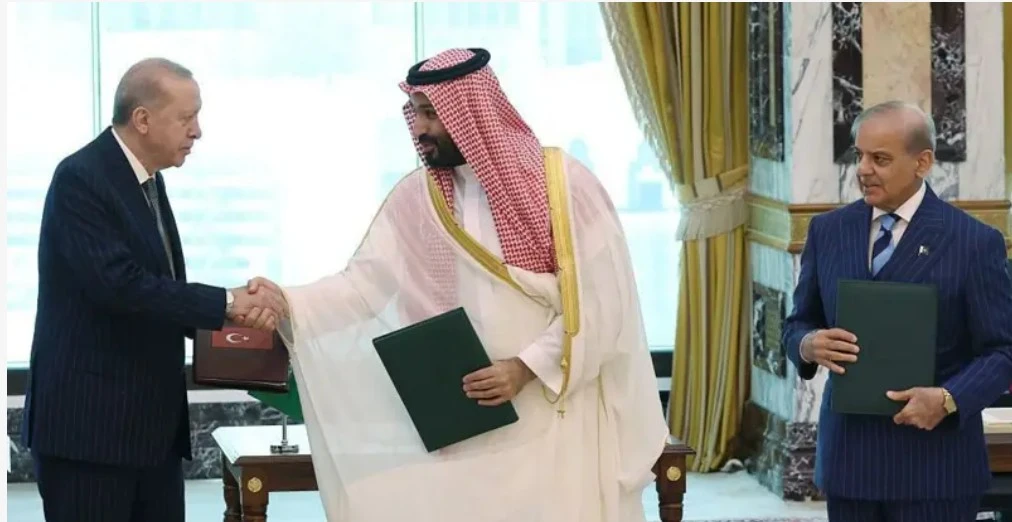
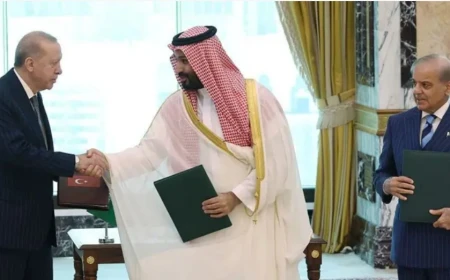
President Recep Tayyip Erdoğan, Saudi Crown Prince and Prime Minister Mohammed bin Salman, and Pakistani Prime Minister Shehbaz Sharif signed the Makkah Agreement for Joint Defence on August 7, 2026.
Saudi Arabia and Pakistan completed their domestic approval procedures before Turkey. The Turkish process continued after the proposal was approved by parliament’s Foreign Affairs Committee and sent to the General Assembly.
According to BBC Turkish, the proposal approving the agreement was subsequently adopted by the Turkish parliament. Turkey must complete the remaining domestic legal procedures and deliver its approval documents to the Strategic Political and Defence Committee.
The agreement will enter into force after all three countries formally submit the necessary documents. It will remain in effect indefinitely, but none of the founding members may withdraw during its first 10 years.
After that period, a member may leave the pact by providing written notification at least three months in advance.
How will collective defence operate?
The 16-article agreement’s most consequential provision states that an externally launched armed attack against one of the parties will be considered an attack against all of them.
The provision has been compared with Article 5 of the North Atlantic Treaty. However, the Makkah Agreement does not establish an entirely automatic military response.
Statements made during the Turkish parliament’s Foreign Affairs Committee proceedings indicate that consultations and a joint threat assessment must first take place. Subsequent action will depend on consensus among the three governments and each country’s constitutional requirements, national legislation and authorized institutions.
The agreement covers military training, joint exercises, personnel exchanges and measures designed to improve interoperability among the three armed forces.
It also provides for logistical assistance and deeper defence-industry cooperation, including potential joint production and technology sharing. Cooperation against terrorism is included, although decisions about shared threats will depend on consultations and agreement among the parties.
How will the alliance be governed?
The Strategic Political and Defence Committee will serve as the alliance’s principal decision-making body. It brings together the foreign and defence ministers and chiefs of general staff of the three founding countries.
A permanent secretariat will be established in Saudi Arabia to support the committee and coordinate the agreement’s implementation. The first secretary-general will be appointed by Pakistan for a three-year term.
Other countries may apply to join the alliance. Membership decisions will require the approval of Turkey, Saudi Arabia and Pakistan, giving each founding party a role in controlling the pact’s expansion.
The founding governments say the mechanism does not target a particular country. They describe it as open to regional states that respect international law, national sovereignty, territorial integrity and non-interference in domestic affairs.
Officials have indicated that the three members will initially concentrate on completing the alliance’s institutional structure. Requests from prospective members are expected to be considered at a later stage.
Why did Turkey join the alliance?
Ankara presents the agreement as an extension of its policy of “regional ownership,” under which regional security problems should primarily be addressed by countries directly affected by them.
Deputy Foreign Minister Levent Gümrükçü told the parliamentary Foreign Affairs Committee that the three governments had decided to assume responsibility instead of waiting for solutions to be imposed from outside the region.
He described the agreement as the legal foundation for a new security architecture based on cooperation, collective deterrence and defence.
Turkey’s longer-term objectives include expanding defence-industry exports, strengthening military relations with Gulf states and taking a more influential position in regional security mechanisms.
The war involving Iran, disruption around the Strait of Hormuz and the Red Sea, and increased Houthi attacks against Saudi Arabia have added urgency to discussions about regional defence.
Air defence, electronic warfare, intelligence sharing, military training and the protection of critical trade routes are among the areas in which Turkey could make a significant contribution.
The government says the pact is not intended to replace NATO or eliminate obligations arising from Turkey’s existing international agreements. Instead, Ankara describes it as a complementary regional mechanism.
Will Turkey send troops to Saudi Arabia?
Parliamentary approval of the agreement does not automatically authorize the Turkish Armed Forces to deploy personnel to Saudi Arabia.
A deployment would require an assessment of Saudi requests, consultations among the three countries and a separate constitutional procedure in Turkey.
Article 92 of the Turkish Constitution gives parliament the authority to permit the deployment of Turkish forces abroad or the presence of foreign armed forces in Turkey. A separate parliamentary mandate would therefore be required for any military deployment.
Statements from Ankara indicate that possible assistance would initially be defensive. Air-defence systems, electronic-warfare capabilities, intelligence, logistics and technical expertise are considered the most likely areas of support.
Turkish forces are not currently expected to participate in ground operations or offensive combat against the Houthis. The final scope of assistance would depend on operational requirements, Saudi requests and a joint decision by the alliance members.
Technical personnel could potentially be deployed to install, maintain or operate defensive systems if the Turkish parliament issued the necessary authorization.
What do the government and opposition say?
The Justice and Development Party, the Nationalist Movement Party and the Republican People’s Party supported the agreement in parliament.
The New Party, İYİ Party, New Welfare Party, DEM Party and Felicity Party opposed it, according to the parliamentary positions reported by BBC Turkish.
The government argues that the alliance will strengthen regional stability, collective deterrence and the right of self-defence recognized under Article 51 of the United Nations Charter.
Officials have repeatedly said the agreement is defensive, does not target another state and remains open to friendly countries that share its stated principles.
Opposition objections have focused on the lack of clarity surrounding Turkey’s potential military and financial responsibilities. Critics argue that Ankara could become involved in conflicts affecting Saudi Arabia or Pakistan even when Turkey’s own territory is not directly threatened.
Other concerns include the absence of a single definition of terrorism, differences among the three countries’ threat assessments and the establishment of alliance institutions before the Turkish parliamentary process had been completed.
Opposition parties have also requested clearer safeguards concerning the possibility of Turkish forces becoming involved in Yemen, emerging risks to Turkey’s military presence in Somalia and the cost of defending another country’s critical infrastructure.
Could the pact affect Turkey’s NATO relations?
The agreement states that it does not invalidate rights or responsibilities arising from international treaties previously signed by its members. Turkey’s obligations within NATO will therefore formally remain in place.
The government describes the Makkah Alliance as complementary to NATO rather than a competing military bloc. Officials argue that greater stability in the Middle East could also contribute to Euro-Atlantic security.
Opposition representatives have questioned what would happen if a crisis involving a Makkah Alliance member created obligations that conflicted with Turkey’s NATO priorities.
The practical answer will depend on how collective-defence decisions are interpreted, whether all three founding members agree on a particular threat and what action Turkey’s parliament authorizes.
The pact is therefore significant not only because of its collective-defence clause, but also because it places Turkey at the centre of a developing regional security structure.
Its long-term effect will depend on the first test of its defence provisions, the extent of Turkey’s military assistance to Saudi Arabia and whether other countries are admitted.
Possible troop deployments, new memberships and the definition of shared threats are likely to remain at the centre of parliamentary and public debate after the alliance formally enters into force.
WiseNewsPress.com
What's Your Reaction?
 Like
0
 Dislike
0
 Love
0
 Funny
0
 Wow
0
 Sad
0
 Angry
0

Ahmet Taş is a journalist, editor and Turkey Office Manager of the Wise News Press Media Group. He works across news, digital media and international publishing, focusing on accurate, responsible and accessible journalism. He contributes to the development of media projects that bring important political, social and global developments to a wider international audience.














Comments (0)