



Is Trump’s Defeat a Warning to Putin? Can War Cost Him an Election?
Vance blamed the Iran war for the GOP defeat. Could the costs of Russia’s invasion of Ukraine expose Vladimir Putin to a similar electoral backlash?


By Yusuf İnan | Wise News Press
WASHINGTON, United States —
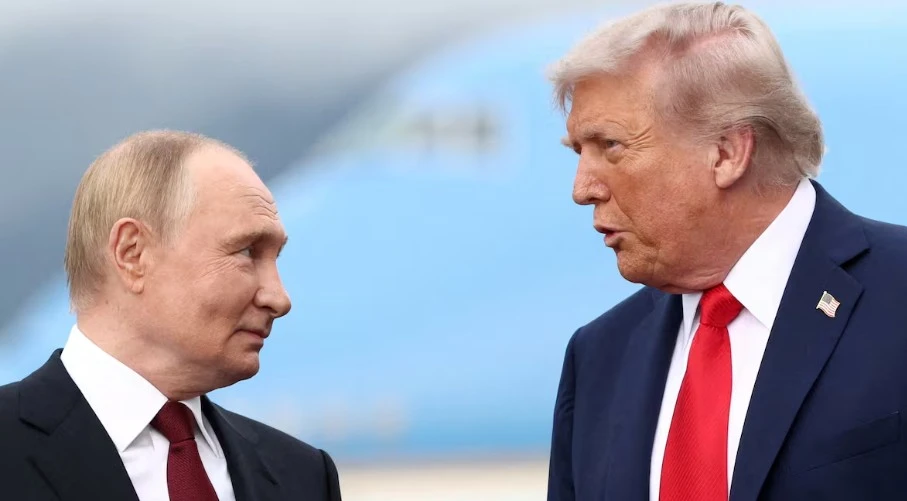
U.S. Vice President JD Vance’s claim that Republicans lost the midterm elections because of the Iran war has renewed a broader question: Can the political cost of war eventually threaten Vladimir Putin’s rule?
The comparison, however, has clear limits. American voters can punish the governing party through competitive elections, while Russia’s media, opposition and electoral institutions remain under tight Kremlin control. Even if the economic and human costs of invading Ukraine continue to rise, a Trump-style electoral defeat for Putin appears unlikely under Russia’s current political system.
Vance directly blamed the Iran war
Vice President JD Vance offered an unusually blunt explanation after Republicans lost control of Congress in the November 3, 2026, midterm elections.
“The reason we lost is the war,” Vance wrote on X, arguing that the central problem was not simply a failure to mobilize Republican voters. According to his assessment, many people who supported the Trump-Vance ticket in 2024 voted for Democratic candidates two years later.
Vance said Republicans would need to end the Iran war, focus on inflation and the cost of living, return to an “America First” approach and change Washington’s relationship with Israel to win those voters back.
His comments require an important distinction. Vance directly identified the Iran war as the reason for the Republican defeat. He did not explicitly say that the Gaza war alone cost the party the election. Instead, he presented U.S. relations with Israel as one of the policies Republicans would need to reconsider.
The Gaza war, U.S. support for Israel, the conflict with Iran and rising household costs therefore appear to have formed different parts of a wider voter backlash rather than a single, independently measurable cause.
President Donald Trump said Vance’s assessment was “largely right.” He acknowledged that the Iran conflict had temporarily raised gasoline prices but added that he would make the same decision again.
Foreign policy reached the kitchen table
The U.S. result demonstrated that voters do not assess a war only through its military or moral arguments. They also respond to its effect on household finances.
Exit polling reported by Reuters found that nearly nine in 10 voters considered the cost of living an important factor in their decision. Two-thirds blamed Trump for high prices, while approximately 70% wanted Congress to impose stronger checks on the president.
The Iran war drove up energy prices, and higher energy costs affected transportation, food production and consumer goods. Trump’s tariffs also increased the cost of some imported products and industrial inputs.
Foreign policy consequently stopped being a distant national security debate. Its effects became visible at fuel stations, grocery stores and in household budgets.
The Republican defeat offers a clear political lesson: A government may believe it has justified a military operation, but it cannot easily prevent voters from responding to the resulting economic burden.
Russia faces a longer and more expensive war
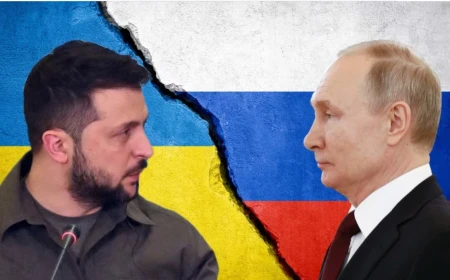
Russia’s full-scale invasion of Ukraine, launched in February 2022, has lasted far longer than the Iran conflict and transformed a much larger share of the Russian economy.
During the first years of the invasion, military production, state spending and higher wages in defence-related industries created the appearance of strong economic growth. By 2026, however, evidence suggested that the wartime stimulus was losing momentum.
The Bank of Russia lowered its 2026 growth forecast to between zero and 1%. It raised its inflation projection to between 6% and 7% and maintained its key interest rate at 14%.
High interest rates are restricting corporate investment, household borrowing and economic growth. The central bank also reported that petroleum product prices had become an important source of renewed inflation.
Reuters reported in November 2026 that Russian utility bills had increased by more than 50% since the beginning of the invasion. Charges rose by more than 13% in 2026 alone, placing further pressure on household budgets.
Military spending, sanctions, labour shortages, uncertainty over oil revenues and Ukrainian attacks on Russian energy infrastructure are adding to these pressures.
The mechanism resembles the one that hurt Trump politically: War becomes dangerous for a government when citizens experience it not only through battlefield reports but also through prices, taxes, shortages and declining economic opportunities.
Russians want negotiations, but support for Putin has not collapsed
Polling by the independent Levada Center presents a seemingly contradictory picture of Russian attitudes toward the war.
In September 2026, 70% of respondents said they supported the activities of the Russian military in Ukraine. At the same time, 64% favoured beginning peace negotiations, while only about 27% wanted military operations to continue.
A record 81% said they would support Putin if he decided to end the conflict that same week. Support dropped sharply, however, when respondents were asked about an agreement that would require Russia to return occupied Ukrainian territories.
These results suggest that stated support for the military does not necessarily mean that Russians want the conflict to continue indefinitely. Many respondents simultaneously express loyalty to the armed forces and a desire for Putin to end the war.
Public attention to the conflict has also fallen. Only about 42% of respondents said they were following developments closely in September, the lowest level measured since the full-scale invasion began.
Nevertheless, Putin’s approval ratings remain high. Russian opinion polling must also be interpreted carefully because repression and fear of consequences may discourage respondents from openly criticizing the president or the war.
Why Putin is unlikely to suffer Trump’s kind of defeat
The main difference between Trump and Putin lies not in the wars they pursued but in the political systems in which they operate.
In the United States, opposition parties can contest elections, raise money, criticize the government and gain access to large media audiences. When the governing party loses, the opposition can take control of Congress and restrict the president’s agenda.
Russia does not offer comparable political competition. Potentially credible opposition candidates can be excluded from elections, while prominent critics face prosecution, imprisonment or exile. Independent media outlets have been closed, blocked or forced to operate from abroad.
Public opposition to the Ukraine invasion can lead to criminal prosecution. Laws concerning “foreign agents,” false information about the military and alleged extremism have further restricted political participation.
The Organization for Security and Co-operation in Europe said Russia did not invite its observers to the 2024 presidential election or the 2026 parliamentary vote. The OSCE also cited restrictions on candidates, independent election observers, journalists and civil society organisations.
Putin was officially credited with 87.3% of the vote in 2024. Such a result cannot be directly compared with an election in a competitive democracy when strong opponents cannot campaign freely and the state dominates the media environment.
Could Putin lose a genuinely free election?
In a genuinely free and fair election, the Ukraine war could expose Putin to serious political risk. Existing evidence, however, cannot establish that he would inevitably suffer a defeat as severe as the one experienced by Trump’s party.
A renewed mobilization, rising military losses, prolonged stagnation, declining oil revenues and further increases in household costs would all weaken Putin’s position. A split among political and business elites could make him more vulnerable.
The Kremlin nevertheless retains several advantages. It presents the invasion as a defensive struggle against the West, uses state media to shape public perceptions and portrays military setbacks as evidence that Russia is under external threat.
Some voters may blame sanctions and Western governments rather than the Kremlin for their economic difficulties. Others may continue supporting Putin because they fear instability or do not see a credible alternative.
A free election would also require more than an accurate vote count. Opposition candidates would need to campaign safely, access national media and offer voters a believable post-Putin future.
Putin remains constitutionally eligible to run again in 2030. If he wins another six-year term, he could stay in office until 2036. When Reuters asked him about that possibility in June 2026, Putin said it was too early to discuss another candidacy.
Trump’s defeat is a warning, not a forecast
The U.S. result demonstrates that wars can damage governments even when leaders insist that military action was necessary. Voters may punish an administration for fuel, food and housing costs without making a detailed judgment about battlefield strategy.
For Putin, the greatest political danger may not begin with a mass anti-war movement. It may develop gradually as the invasion makes ordinary life more expensive, uncertain and restrictive.
Strong Russian support for negotiations indicates that the Kremlin cannot entirely disregard war fatigue. Yet under the existing system, a transparent electoral defeat comparable to the Republican collapse in the United States remains improbable.
If Russia were to hold a genuinely competitive election—with independent media, credible opposition candidates and impartial monitoring—the economic and human costs of the Ukraine invasion could become a major liability for Putin.
Trump’s defeat does not prove that Putin would also lose. It does show, however, that once the cost of war enters everyday life, even governments that appear politically dominant can begin losing public support.
WiseNewsPress.com
What's Your Reaction?
 Like
0
 Dislike
0
 Love
0
 Funny
0
 Wow
0
 Sad
0
 Angry
0
Yusuf İnan is a journalist, columnist, strategic analyst and head of the Wise News Press Media Group. His work focuses on international affairs, geopolitics, security and major social issues. Through his journalism, he promotes peace, dialogue, mutual understanding and responsible reporting while contributing to the development of international media projects.












Comments (0)