



İbrahim Kalın’s Heidegger book explores being and modern alienation
İbrahim Kalın’s book uses Heidegger’s Todtnauberg hut to examine being, modern alienation, rootedness and Eastern-Western philosophical dialogue.



By Yusuf Inan | Wise News Press
Journalist and Author | Political and Strategic Analyst
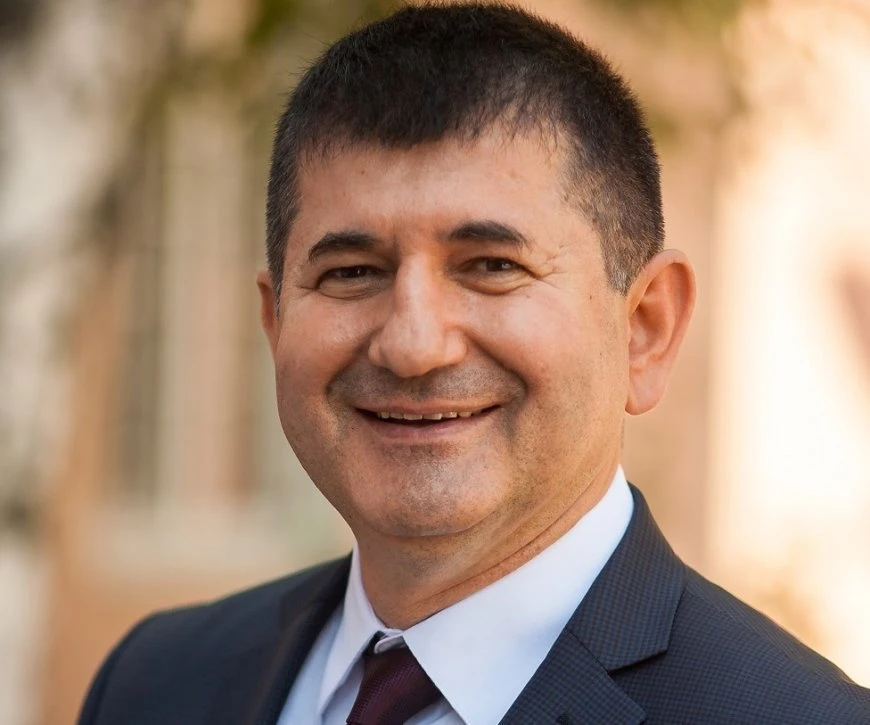
ANKARA, TÜRKİYE — İbrahim Kalın, head of Türkiye’s National Intelligence Organization, examines the philosophy of being, modern alienation and humanity’s search for rootedness in a book inspired by his visit to Martin Heidegger’s secluded hut.
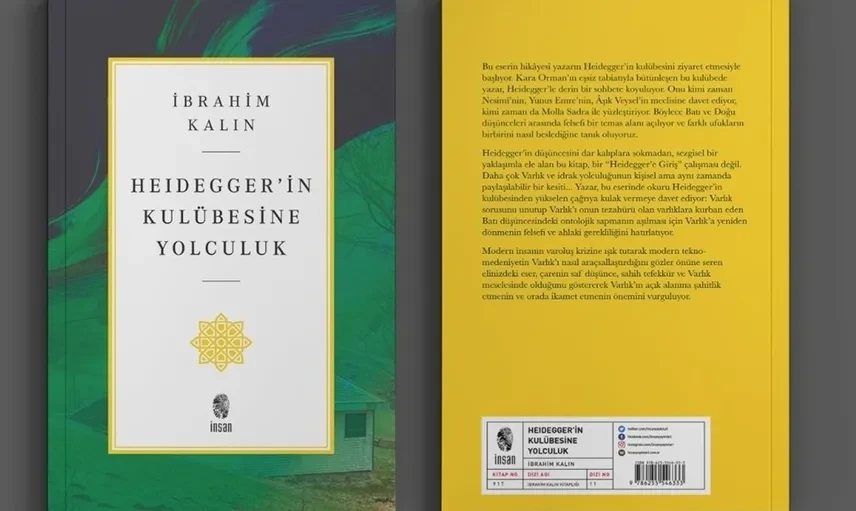
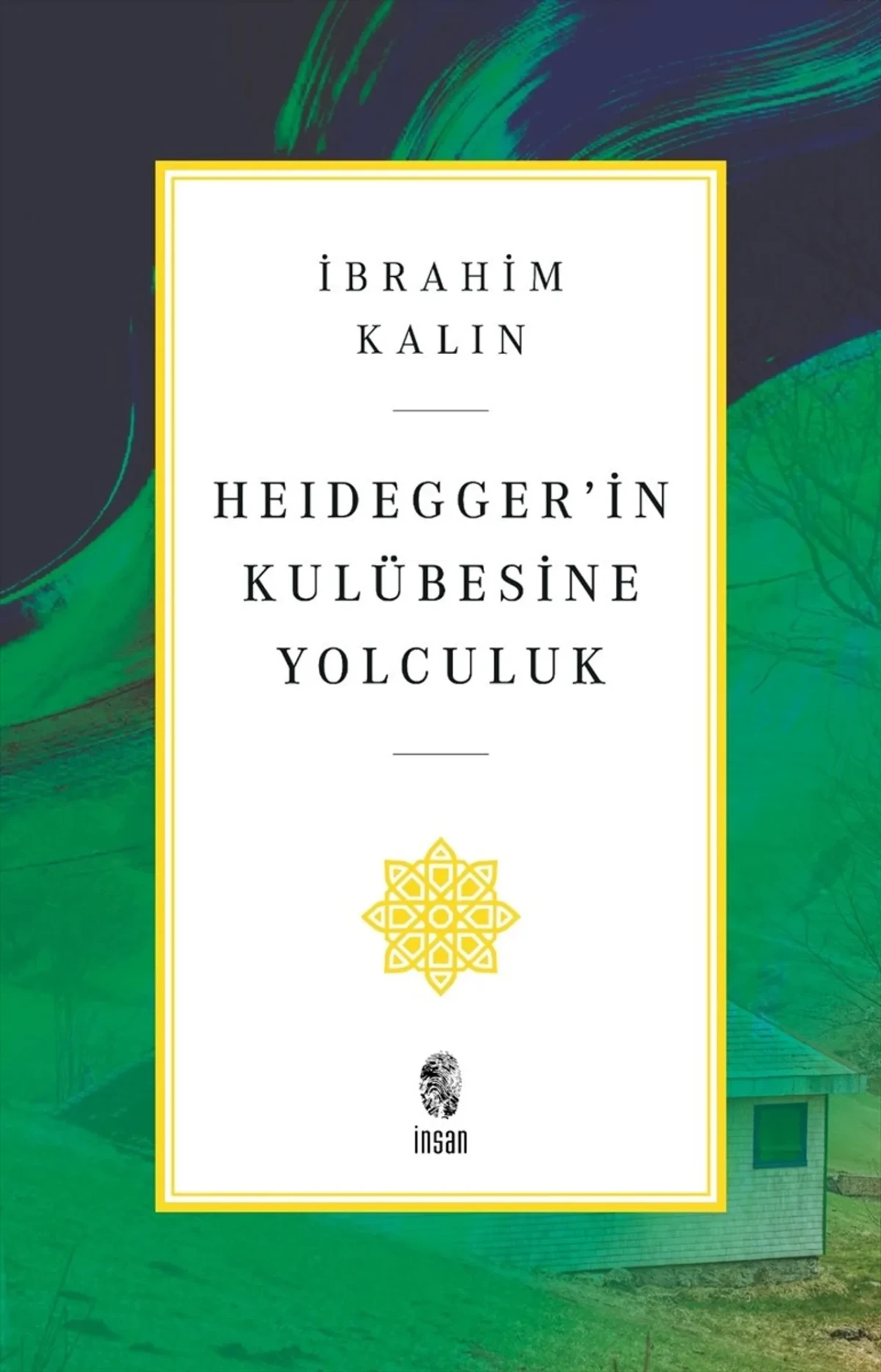
Published in 2025 by İnsan Yayınları, Heidegger’in Kulübesine Yolculuk, which may be rendered in English as Journey to Heidegger’s Hut, begins with Kalın’s 2019 trip to Todtnauberg in Germany’s Black Forest. Rather than presenting a conventional introduction to Heidegger, the book develops a personal philosophical reflection on existence, perception, modern life and humanity’s relationship with the world.
A philosophical journey begins in Todtnauberg
The book’s intellectual starting point is the wooden hut where German philosopher Martin Heidegger spent long periods reading, writing and reflecting away from university life.
Located near Todtnauberg in the Black Forest, the modest building became closely associated with Heidegger’s ideas about dwelling, place, rootedness and the relationship between thought and the natural environment. Kalın visited the site in 2019 and used that experience as the basis for a broader journey into questions of existence and meaning.


In Kalın’s account, the hut is more than a biographical location connected to a major European philosopher. It becomes a symbolic setting in which the pace, noise and instrumental logic of modern society can be temporarily set aside.
The surrounding forest, mountains and silence provide a framework for examining whether human beings can recover a more attentive relationship with themselves, nature and the reality around them.
The journey therefore operates on two levels. It is a physical visit to a place associated with Heidegger, but it is also an inward journey shaped by questions about what it means to exist, understand and belong.


The question of being returns to the centre
A central theme of the book is Heidegger’s argument that Western philosophy gradually lost sight of the fundamental question of being.
Human beings routinely describe, measure and categorise individual things, but they rarely ask what it means for anything to exist in the first place. Kalın uses this distinction to examine how modern thought increasingly treats reality as an object to be controlled, calculated and consumed.
The book does not reject science or technological development. Instead, it questions what happens when technical and economic reasoning becomes the dominant way through which people understand themselves and the world.
Under such conditions, forests become resources, time becomes productivity, knowledge becomes data and human relationships risk being assessed according to usefulness. Kalın links this objectifying mentality to the modern individual’s growing sense of disconnection and meaninglessness.
Being is consequently presented not merely as an abstract subject for professional philosophers. It concerns how people live, how they encounter others, how they respond to nature and how they understand their own mortality.
Modern humanity’s crisis of homelessness
Kalın also considers what may be described as the modern person’s condition of homelessness or rootlessness.
This does not refer only to losing a physical home. It includes the weakening of ties to tradition, place, community, nature and the moral frameworks that once helped individuals understand their lives.
Modern people may possess greater mobility, access to information and technological power while still feeling uncertain about where they belong or what gives their existence lasting meaning.
The book explores whether constant movement, consumption and digital communication can compensate for the loss of deeper forms of belonging. It suggests that the modern crisis cannot be addressed only through greater material production or faster technology.
Kalın’s proposed return to roots is not presented as a simple rejection of modernity or an attempt to recreate the past unchanged. It instead involves recovering contemplation, moral attention and the capacity to recognise dimensions of reality that cannot be reduced to economic or technical value.
The work consequently connects philosophy with everyday conduct. Questions about being lead to questions about responsibility, beauty, justice, nature and the ways in which people share a world.
Heidegger meets Eastern and Anatolian thought
One of the book’s distinctive features is its effort to bring Heidegger into conversation with figures from Islamic, Eastern and Anatolian intellectual traditions.
Kalın draws connections between Heidegger’s philosophical concerns and the writings or poetic visions of Yunus Emre, Nesimî and Âşık Veysel. He also considers questions of existence through comparisons involving the Persian Islamic philosopher Mulla Sadra.
The purpose is not to claim that these thinkers developed identical philosophical systems. Their historical settings, languages and religious assumptions differ substantially.
Instead, the book identifies areas in which their reflections may speak to one another: being, truth, mortality, nature, love, language and the human search for meaning.
Yunus Emre’s focus on the human being and divine truth, Nesimî’s poetry of existence and Âşık Veysel’s relationship with the earth provide alternative perspectives from which modern alienation can be examined.
Mulla Sadra’s metaphysics also opens a path toward comparing Islamic discussions of existence with Western ontological traditions. Through these encounters, Kalın presents Eastern and Western thought not as sealed and incompatible worlds, but as traditions capable of meaningful philosophical dialogue.
Philosophy, literature and art overlap
The book moves across the boundaries separating philosophy, literature, poetry, ethics and aesthetics.
Kalın does not treat philosophical reflection as an activity restricted to universities or specialists. Poems, landscapes, personal experiences and works of art can also reveal aspects of reality that purely analytical language may overlook.
This approach is particularly relevant to Heidegger, who repeatedly turned to poetry and language when addressing questions that he believed could not be resolved through conventional conceptual systems alone.
Kalın similarly uses literary and cultural references to broaden the discussion beyond Heidegger’s technical terminology. The reader is invited to consider not only what particular philosophical concepts mean, but also how a person might experience the world differently.
The book’s presentation therefore describes it as a personal yet shareable journey of being and understanding rather than a standard introductory textbook on Heidegger. Anadolu Agency and TRT reported that the work aims to create a new field of discussion for readers interested in philosophy, literature and art.
Not a conventional introduction to Heidegger
Readers looking for a systematic explanation of Heidegger’s complete philosophy may not find a traditional academic guide.
The book does not appear to be organised primarily around definitions of every major Heideggerian concept or a chronological account of the philosopher’s works. Its structure instead follows Kalın’s own reflections, intellectual associations and encounters.
This personal quality allows the book to address readers who may not have extensive academic training in philosophy but are interested in questions about modernity, belonging, technology and meaning.
Available bibliographic records identify İnsan Yayınları as the publisher and list the work as a Turkish-language book issued in 2025 under ISBN 9786255546333. Some catalogues list the volume at 264 pages.
Kalın is currently the head of Türkiye’s National Intelligence Organization. According to his official MİT biography, he studied history and completed graduate work in Islamic philosophy before holding academic, diplomatic and senior government positions. His research and publications have included Islamic thought, relations between Islam and the West, philosophy and foreign policy.
A reflection on existence and belonging
Heidegger’in Kulübesine Yolculuk ultimately uses a visit to a small Black Forest hut to raise questions extending far beyond Heidegger’s personal life.
The book asks how people might recover a sense of meaning in a world increasingly shaped by speed, abstraction and technological control. It also considers whether philosophical traditions from different civilisations can help modern individuals rethink their relationship with existence.
Kalın’s journey links a physical place with a wider intellectual landscape encompassing German philosophy, Islamic metaphysics, Anatolian poetry, nature, ethics and art.
Rather than offering a definitive solution to the modern crisis, the work encourages readers to pause and reconsider how they understand themselves, the world they inhabit and the realities that cannot be reduced to objects of use.
Yusuf İnan
WiseNewsPress.com
Yusuf İnan is a journalist, author, and political and strategic analyst. He serves as editor-in-chief of UAPresa.com, WiseNewsPress.com, SehitlerOlmez.com and YerelGundem.com. His work focuses on strategic and political analysis concerning developments in Türkiye and around the world.
What's Your Reaction?
 Like
0
Like
0
 Dislike
0
Dislike
0
 Love
0
Love
0
 Funny
0
Funny
0
 Wow
0
Wow
0
 Sad
0
Sad
0
 Angry
0
Angry
0

Editor | Wise News Press — Delivering accurate, timely global news with integrity, insight, and editorial responsibility.





















Comments (0)