



Turkey moves closer to NATO as geopolitical risks reshape Ankara
Turkey’s renewed interest in NATO reflects rising risks from Iran, Russia, the Black Sea, Syria and Europe’s growing need for Ankara’s military weight.


By Ahmet Taş | Wise News Press
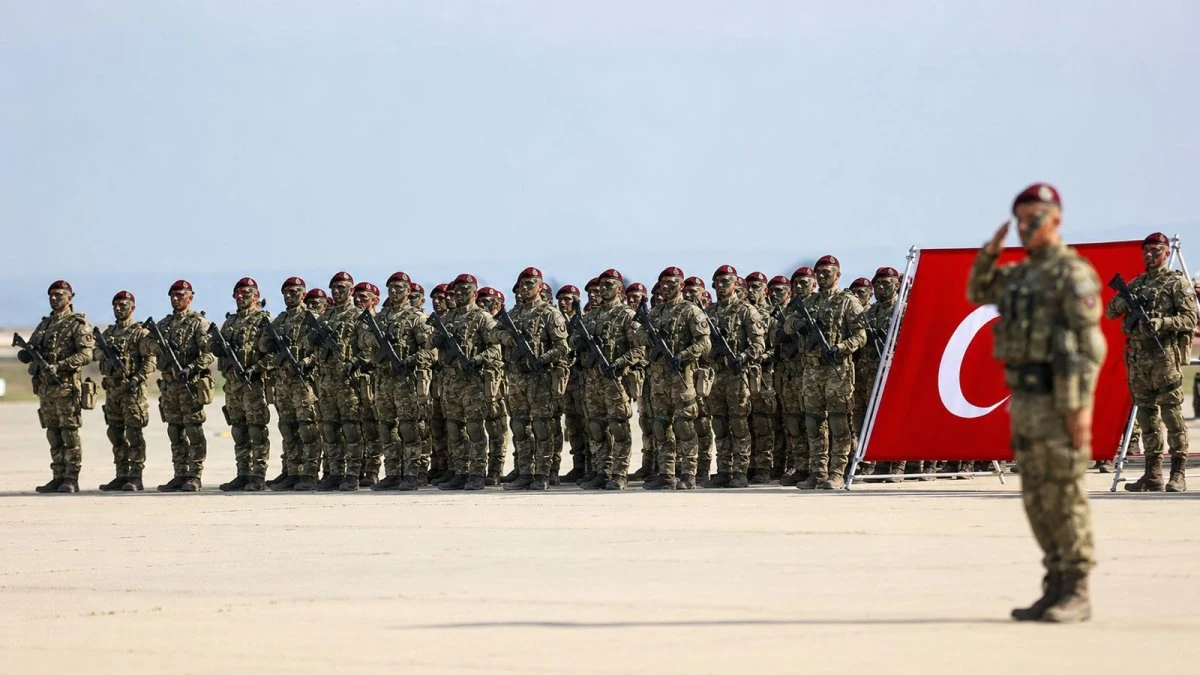
ANKARA, TURKEY — Turkey is showing its strongest interest in NATO in years as regional wars, Black Sea insecurity, shifting U.S. policy and Europe’s defense needs restore Ankara’s importance inside the alliance.
According to an analysis published by The Economist, Turkey’s relationship with NATO has entered a new phase after years of friction over Russia, Syria, U.S. weapons policy, Sweden and Finland’s accession process, and Ankara’s purchase of the Russian S-400 air defense system. The analysis argues that President Recep Tayyip Erdoğan and senior Turkish officials are now speaking more often about NATO as a central pillar of Turkey’s national security.
Ankara prepares to host a NATO summit
Turkey is preparing to host a NATO summit on July 7, a move that has drawn renewed attention to Ankara’s place in the alliance. The meeting comes at a time when Turkey’s strategic value is being reassessed by Western capitals.
For years, Turkey’s NATO membership was marked by mistrust on both sides. Ankara accused some allies of ignoring its security concerns, particularly regarding Kurdish armed groups in Syria. Several European governments, meanwhile, criticized Turkey’s ties with Russia, its S-400 purchase and its delayed approval of Sweden and Finland’s NATO membership bids.
The new picture is more complicated. The Economist’s analysis suggests that Turkey has not abandoned its independent foreign policy, but it has begun to recognize NATO’s practical security value more clearly in a period of rising threats.


Public support for NATO is rising
NATO has never enjoyed overwhelming public support in Turkey. Even during the Cold War, when Turkey was one of the alliance’s key southern flank members against the Soviet Union, suspicion toward the West remained deeply rooted in Turkish political culture.
This skepticism intensified after the failed coup attempt of 2016. Ankara argued that several NATO countries were slow and reluctant to show solidarity with Turkey. That period deepened anti-Western sentiment and reinforced the belief that Turkey had to rely primarily on its own security architecture.
But recent polling suggests a shift. According to a March survey by Metropoll cited in the analysis, 61% of Turkish respondents now consider NATO important for national security. This does not mean Turkish public opinion has become fully pro-Western. It does, however, show that security realities are changing the political mood.


Iran and Ukraine reminded Ankara of NATO’s value
The Economist argues that two major geopolitical shocks have reshaped Ankara’s calculations: the war involving Iran and Russia’s invasion of Ukraine.
The analysis said NATO air defense systems intercepted four Iranian ballistic missiles heading toward Turkey in March, underlining the alliance’s concrete security function for Ankara. Turkey already hosts two NATO bases and a radar station, and the alliance’s presence in the country is expected to grow.
Germany is reportedly preparing to deploy a new Patriot air defense system and around 150 troops to southern Turkey by the end of June. NATO is also said to be planning a new multinational corps headquarters in the region.
For Ankara, these developments carry strategic significance. Turkey has long demanded that NATO take threats to its southern border more seriously. The deployment of air defense systems and expanded alliance infrastructure may be read in Ankara as a sign that those concerns are finally receiving greater attention.
A thaw with Washington changes the atmosphere
Turkey’s renewed interest in NATO is also linked to a softer atmosphere in relations with the United States.
According to the analysis, U.S. President Donald Trump’s decision to withdraw American troops from Syria removed one of the biggest sources of tension between Ankara and Washington. For years, the United States’ cooperation with Kurdish groups in Syria, which Turkey considers terrorist organizations, created a deep crisis between the two NATO allies.
Another important issue is the F-35 fighter jet program. Turkey had ordered the aircraft before the United States suspended its participation in 2019 following Ankara’s purchase of the Russian S-400 system. The analysis said Turkish officials welcomed recent signals from Washington suggesting that the F-35 issue could be revisited.
If progress is made on this file, it could mark a major symbolic and military improvement in bilateral ties. But trust has not fully returned. Ankara still remembers sanctions threats, arms restrictions and what it views as inconsistent U.S. support on regional security issues.
Europe needs Turkey inside the alliance
The European dimension is equally important. The Economist argues that concerns over a possible weakening of U.S. commitment to NATO have pushed European countries to value Turkey more.
Turkey has the second-largest army in NATO and, excluding Ukraine, no European country has a land force with comparable size and recent operational experience. Its military has been active in Syria, Iraq, Libya, the Caucasus and the Eastern Mediterranean. Its control over the Bosphorus and Dardanelles also gives Ankara a decisive role in Black Sea security.
The war in Ukraine has made this geography even more important. Russia’s naval operations, Ukraine’s strikes on the Black Sea Fleet, and the importance of grain routes and maritime access have all reinforced Turkey’s strategic weight.
For Europe, keeping Turkey anchored in NATO is now less a matter of political preference and more a matter of security necessity.
Turkish defense industry gains European relevance
Turkey’s defense industry is also becoming more valuable for European armies.
The Economist highlighted recent agreements between Turkish defense companies and countries including France, Italy, Spain and Estonia. Baykar’s unmanned aerial vehicles remain one of the most visible examples of Turkey’s defense export success. The company has previously sold armed drones to Albania, Croatia, Poland and Romania.
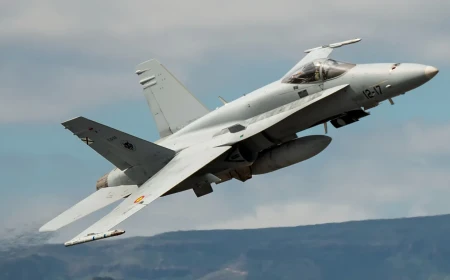
Turkey’s broader defense sector has also expanded beyond drones. The analysis noted that Ankara reached a $3 billion agreement last year to sell 30 training aircraft to the Spanish Air Force.
This trend matters for NATO. Turkey is no longer only a consumer of Western military systems. It is increasingly a supplier, especially in fields where European militaries face capability gaps.
NATO without the United States would pose a dilemma
One of the most sensitive questions in the analysis is what would happen if the United States reduced its role in NATO or moved further away from the alliance.
Some European countries are exploring the idea of sustaining NATO structures without Washington. Others prefer strengthening defense through the European Union or building a new European security framework.
For Turkey, these scenarios carry different implications. Ankara is a NATO member but not an EU member, and its EU accession process has long been effectively frozen. In a NATO structure with reduced U.S. involvement, Turkey would still remain at the table. But in an EU-centered security architecture, Ankara could be pushed outside the main decision-making framework.
This is one reason Turkey has a strong interest in NATO’s survival as the main Western security platform. NATO gives Ankara a seat in Europe’s security debate that the European Union does not.
The analysis also noted that Turkish defense firms have been largely excluded from the European Union’s €150 billion SAFE rearmament program, another reminder that EU-centered defense initiatives may not fully accommodate Turkey.
Trust problems remain unresolved
Despite improving ties, Turkey’s relations with NATO allies remain far from problem-free.
Ankara believes NATO has not sufficiently addressed threats from its southern border, including Kurdish militant groups, human trafficking networks and Israel’s aggressive regional posture. These concerns remain central to Turkey’s security doctrine.
European countries, on the other hand, have not forgotten Turkey’s long delay in approving Sweden and Finland’s NATO accession process after Russia’s full-scale invasion of Ukraine. For many European officials, that episode reinforced doubts about Ankara’s reliability inside the alliance.
Russia remains the largest source of disagreement. European states see Vladimir Putin’s Russia as NATO’s primary threat. Erdoğan does not fully share that view. Turkey has maintained economic, energy and diplomatic ties with Moscow, including dependence on Russian energy and nuclear technology.
Russian tourists also remain economically important for Turkey, giving Ankara another reason to avoid a complete break with Moscow.
Is Ankara moving away from Moscow?
Still, the analysis suggests that Turkey’s relationship with Russia may be cooling.
Russia’s navy has suffered serious blows in the Black Sea. In Syria, Moscow’s influence has weakened after the fall of Bashar al-Assad, while Turkey has emerged as the main outside actor dealing with the country’s new authorities. In the Caucasus, Armenia’s democratic government has been moving away from Russia and seeking normalization with Turkey.
The Economist also noted that Erdoğan frequently visited Russia during the 2010s, but has not visited Putin in the past three years.
This does not mean Turkey is about to abandon its balancing policy. Ankara still wants to maintain channels with Moscow. But the strategic environment that once made Russia look like a useful counterweight to the West has changed.
Turkey’s weight inside NATO is increasing
Turkey’s renewed interest in NATO does not represent a simple return to old Atlanticism. It is better understood as a pragmatic response to new risks.
Iran, Ukraine, the Black Sea, Syria, European rearmament and uncertainty over U.S. policy have all strengthened Turkey’s bargaining position. Ankara remains difficult for many allies, but it is also increasingly hard to ignore.
The Economist’s central conclusion is that Turkey’s strategic value inside NATO is rising again. Trust problems remain, and Ankara will continue to pursue an independent foreign policy. But in a world of overlapping wars and unstable alliances, Turkey is once more becoming one of NATO’s indispensable actors.
What's Your Reaction?
 Like
0
Like
0
 Dislike
0
Dislike
0
 Love
0
Love
0
 Funny
0
Funny
0
 Wow
0
Wow
0
 Sad
0
Sad
0
 Angry
0
Angry
0

Editor | Wise News Press — Delivering accurate, timely global news with integrity, insight, and editorial responsibility.















Comments (0)