



Burnham pledges unwavering UK support for Ukraine ahead of Zelenskyy visit
Andy Burnham said UK support for Ukraine will remain unwavering as Zelenskyy becomes his first foreign leader guest and receives Stone Cloak technology.


By Ahmet Taş | Wise News Press
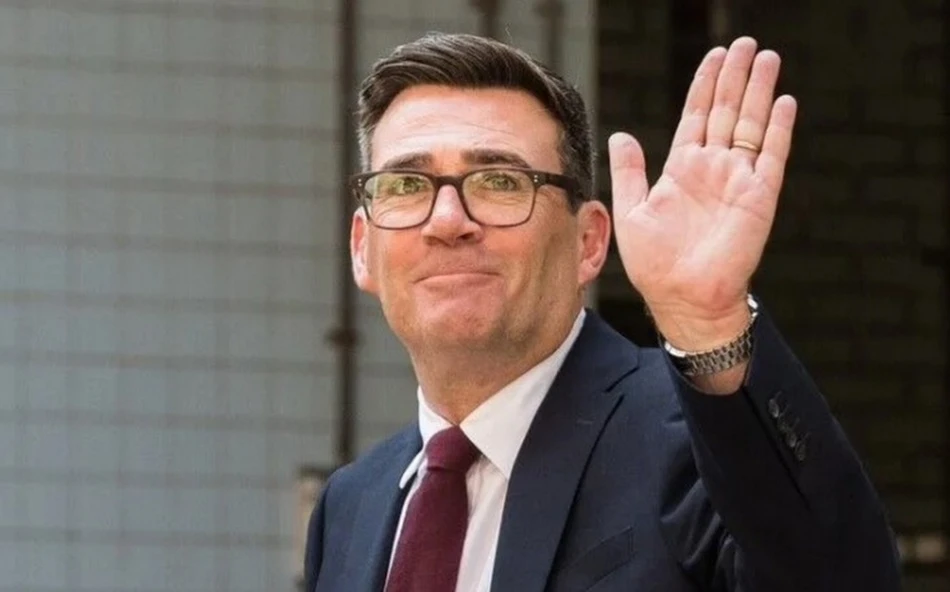
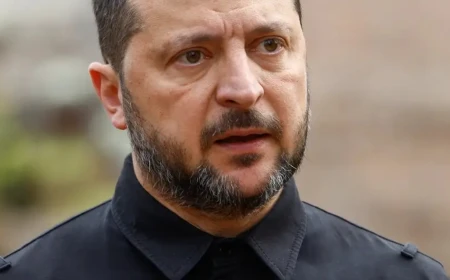
PORTSMOUTH, UNITED KINGDOM — British Prime Minister Andy Burnham pledged “unwavering and 100%” support for Ukraine ahead of welcoming President Volodymyr Zelenskyy as the first foreign leader received since he entered Downing Street.
The two leaders are due to meet at a naval base in Portsmouth, where they will discuss military assistance, European security and deeper defence-industrial cooperation between Britain and Ukraine. The visit is intended to demonstrate continuity in London’s Ukraine policy following Burnham’s appointment as prime minister on July 20.
Burnham promises continuity in Britain’s Ukraine policy
Speaking to the BBC before the meeting, Burnham said his personal support for Ukraine would remain firm and that Britain would continue helping the Ukrainian people in the areas Kyiv considers essential.
“My support for Ukraine will be unwavering and 100%.”
Burnham’s office had already said there would be no change in the United Kingdom’s approach to Ukraine, including its efforts to increase pressure on Russia. During his first telephone conversation with Zelenskyy on July 20, the prime minister reaffirmed what Downing Street described as Britain’s resolute commitment to Ukraine and invited the Ukrainian leader to visit at the earliest opportunity.


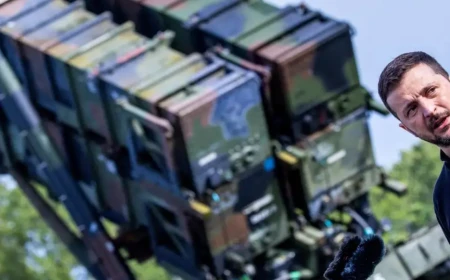
The two leaders also agreed to discuss cooperation within the Anti-Ballistic Missile Coalition, an initiative focused on strengthening Ukraine’s ability to defend its cities and infrastructure against increasingly frequent ballistic missile attacks.
Zelenskyy becomes Burnham’s first foreign leader guest
Zelenskyy’s visit carries symbolic importance because he will be the first foreign leader hosted by Burnham after the new prime minister took office.
The choice signals that support for Ukraine remains among Britain’s principal foreign-policy and national-security priorities despite the change of leadership. Burnham succeeded Keir Starmer on July 20 and formally became prime minister after being invited by King Charles III to form a government.


Burnham and Zelenskyy spoke by telephone on the day of the transition. Zelenskyy said Ukraine and Britain had built the strongest partnership in the history of relations between the two countries and expressed a desire to expand it further.
Burnham, meanwhile, offered condolences to the families of Ukrainians killed in recent Russian attacks and said Britain would continue working to strengthen the defence of both Ukraine and Europe.
Britain will share Stone Cloak technology with Ukraine
A major announcement surrounding the visit concerns Stone Cloak, a British-developed electronic warfare system designed to make Ukrainian drones more difficult for Russian air-defence systems to detect and track.
Britain plans to transfer intellectual property associated with the technology to Ukraine, enabling Ukrainian manufacturers to produce Stone Cloak devices at scale rather than relying exclusively on deliveries from the United Kingdom.
The portable system has been described as approximately the size of a tablet computer. It can be fitted to drones to interfere with or obstruct hostile detection, increasing their chances of reaching intended operational areas.
Technology transfer represents a different model from conventional military assistance. Instead of supplying only completed systems, Britain will help Ukraine develop domestic production capacity and adapt the technology according to battlefield requirements.
The British government also expects knowledge gained from Stone Cloak to contribute to future generations of long-range weapons and electronic warfare systems. Burnham said the technology would play an important role in protecting the security of both Ukraine and the United Kingdom.
Leaders to meet Ukrainian personnel in Portsmouth
Burnham and Zelenskyy are also expected to meet Ukrainian military personnel undergoing training in Britain.
More than 200 Ukrainian troops have been taking part in maritime exercises intended to improve their ability to conduct operations in the Black Sea. The training is connected to Exercise Sea Breeze, a multinational maritime programme involving personnel from 15 countries.
Maritime security remains a central concern for Ukraine because the Black Sea is vital for commercial shipping, agricultural exports, port operations and the country’s broader economic resilience.
Training provided by Britain includes preparation for naval operations and measures against sea mines. These capabilities are intended to help Ukraine protect shipping routes and reduce the threat posed to ports and civilian vessels.
Holding the leaders’ meeting at a naval facility rather than in central London also places defence cooperation at the centre of the visit. It underlines that the UK-Ukraine partnership extends beyond diplomatic declarations to training, technology development and operational planning.
UK support for Ukraine has reached £25 billion
The British government said in July that its total support for Ukraine since Russia launched its full-scale invasion had reached approximately £25 billion.
That figure includes around £16 billion in military assistance and £5.6 billion in non-military support. Britain has committed £3.75 billion in military assistance for 2026 and maintains a policy of providing at least £3 billion annually for as long as necessary.
The support covers weapons, ammunition, drones, air-defence capabilities, military training, humanitarian programmes, fiscal assistance and reconstruction projects.
An earlier government factsheet stated that Britain had trained more than 63,000 Ukrainian personnel under Operation Interflex and had committed hundreds of millions of pounds to air defence. It also reported plans to deliver at least 120,000 drones to Ukraine during 2026.
Britain is also working with France through the Coalition of the Willing to prepare security guarantees that could become active after a credible ceasefire. The coalition has supported additional air-defence systems, interceptors and long-range capabilities for Ukraine while maintaining pressure on Russia’s war economy.
Ukraine becomes an early foreign-policy test for Burnham
The Zelenskyy meeting represents one of Burnham’s first major foreign-policy engagements as prime minister.
Although Burnham has extensive domestic political experience, including his years as mayor of Greater Manchester and previous service in government, he now assumes responsibility for Britain’s role in NATO, European security and the international response to Russia’s war.
His initial conversations with NATO Secretary General Mark Rutte, German Chancellor Friedrich Merz and other European leaders have focused partly on preserving unity over Ukraine and supporting a just and lasting peace.
The new prime minister has so far indicated that Britain will preserve the central elements of the policy pursued under Starmer: military and financial assistance for Ukraine, stronger European defence cooperation, continued pressure on Moscow and long-term security guarantees for Kyiv.
The planned transfer of Stone Cloak technology adds an industrial dimension to that policy. It suggests that future assistance will increasingly involve joint production, intellectual-property sharing and integration between British and Ukrainian defence companies.
Burnham’s “100%” pledge is therefore more than a statement of political solidarity. The Portsmouth meeting is expected to demonstrate that Britain intends to continue supplying military assistance while also helping Ukraine expand its own capacity to manufacture and develop advanced defence systems.
WiseNewsPress.com
What's Your Reaction?
 Like
0
Like
0
 Dislike
0
Dislike
0
 Love
0
Love
0
 Funny
0
Funny
0
 Wow
0
Wow
0
 Sad
0
Sad
0
 Angry
0
Angry
0

Editor | Wise News Press — Delivering accurate, timely global news with integrity, insight, and editorial responsibility.












Comments (0)