



NATO summit in Ankara revives debate over Turkey’s EU path and leverage
Turkey’s upcoming NATO summit in Ankara has revived debate over whether its military weight can translate into renewed EU engagement.
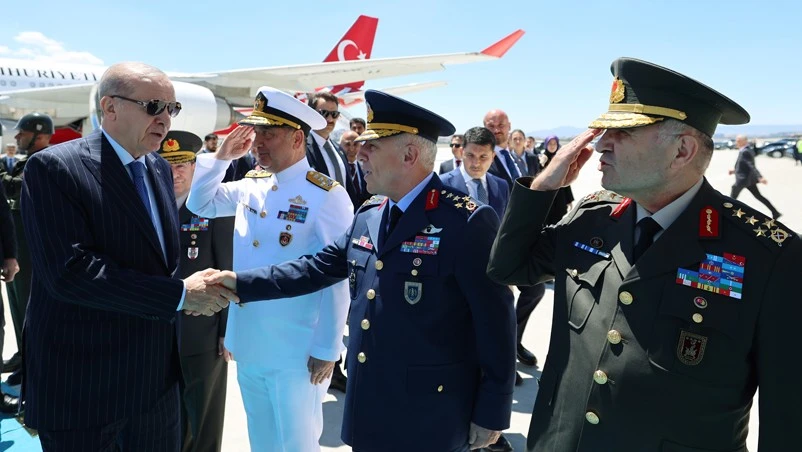


By Ahmet Taş | Wise News Press
ANKARA, TURKEY — Turkey’s upcoming NATO summit in Ankara has revived debate over whether the country’s strategic military role can open a new chapter with the European Union.
Journalist Murat Yetkin argued in his analysis that Turkey’s geography, military capacity and growing defense industry give Ankara real leverage inside NATO, but that these advantages alone are unlikely to overcome long-standing EU concerns over rule of law, judicial independence, visa criteria and investment security. The NATO leaders’ summit is scheduled for July 7–8, 2026, in Ankara, where Turkey hopes to turn strategic visibility into wider diplomatic and economic gains.
Ankara prepares to host a major NATO summit
The 36th NATO Leaders’ Summit will be held in Ankara on July 7–8, 2026. It will be Turkey’s second major NATO summit after the 2004 Istanbul gathering, but the first to be hosted in the capital.
Ahead of the summit, Ankara has accelerated logistical and diplomatic preparations. According to Yetkin’s analysis, the long-underused Etimesgut military airfield has been upgraded to international airport standards under the name “Ankara Airport.” The upgrade is designed to accommodate large state aircraft, including the U.S. presidential plane Air Force One.
The move is expected to ease pressure on Esenboğa Airport and reduce disruption to civilian air traffic and city roads during visits by foreign leaders. It also comes amid expectations that Ankara could eventually receive more direct flights to major Western capitals.
The symbolism is clear: Turkey wants the summit to be more than a diplomatic event. Ankara sees it as a platform to underline its strategic weight at a time of global uncertainty.


Turkey seeks a larger role inside NATO
Turkey’s expectations from the NATO summit go beyond hosting leaders. Ankara wants to emerge from the current international uncertainty as a stronger regional power.
Turkey’s position gives it leverage across several sensitive regions: the Black Sea, the Eastern Mediterranean, the Middle East and the Caucasus. Its large and combat-experienced military, strategic geography and expanding defense industry have increased its importance within NATO.
In a period shaped by the war in Ukraine, energy security, migration pressure, tensions in the Middle East and competition over defense spending, Turkey remains a difficult country for NATO to ignore.


However, the key question is whether this military and geographic importance can translate into political and economic rapprochement with the European Union. Yetkin’s conclusion is cautious: strategic value may strengthen Turkey’s hand, but it does not automatically unlock Europe’s political doors.
Visa liberalization remains a difficult test
One of the most tangible issues for Turkish citizens is visa liberalization. The question is whether Turkey’s NATO role could persuade Brussels to soften its position.
Yetkin argues that this expectation may not be realistic. Turkey still has unresolved obligations from the visa liberalization process linked to the 2016 migration deal. These include issues related to anti-terror legislation, personal data standards and judicial cooperation.
The EU is unlikely to ignore these criteria solely because Turkey has strengthened its defense industry or plays a critical role in NATO. European institutions continue to watch Turkey’s domestic political and judicial environment closely.
Cases involving Osman Kavala and Selahattin Demirtaş, as well as disputes over the implementation of European Court of Human Rights and Constitutional Court rulings, remain central to the EU’s assessment of Turkey. For many European policymakers, strategic cooperation cannot fully replace rule-of-law benchmarks.
Customs Union and investment questions remain open
Beyond visa liberalization, Turkey’s business community has long pushed for modernization of the EU-Turkey Customs Union. Turkish exporters are also watching Europe’s new industrial and supply-chain policies closely.
Yetkin points to debates around “Made in Europe” and whether Turkey can be included in a wider “Made with Europe” framework that protects its export position. The question matters because European market access remains central to Turkey’s economy.
But political obstacles remain. The Cyprus issue continues to block progress in Brussels. The Republic of Cyprus, an EU member, has long held veto power over several Turkey-related files. A NATO summit in Ankara is unlikely by itself to remove that barrier.
Foreign investment is another sensitive area. Turkey continues to attract interest because of its market size, manufacturing base and strategic location. Yet investors also look at legal predictability, property rights and the independence of courts. Reports of state interventions in companies, trustee appointments and politicized legal processes can weaken investor confidence.
In that sense, NATO visibility may improve Turkey’s diplomatic profile, but it cannot replace the need for domestic legal and economic credibility.
European security could offer limited gains
One area where Turkey may achieve more realistic gains is European security architecture. After Russia’s war against Ukraine, Europe has been rethinking defense spending, arms production and strategic autonomy.
Turkey’s defense industry has expanded significantly in recent years, especially in unmanned systems, land platforms, naval capabilities and military technology. This makes Ankara a potentially useful partner in Europe’s broader defense planning.
Yetkin suggests that even limited participation in Europe’s emerging security framework, including initiatives shaped by NATO and U.S. pressure, should be seen as a success for Ankara.
But security cooperation is not the same as EU accession momentum. The European Union separates defense pragmatism from political membership criteria. For Turkey, cooperation in defense may become easier than progress on visa liberalization, Customs Union reform or accession chapters.
A new strategic confidence is shaping Ankara
The analysis also points to a growing strategic confidence in Ankara. According to Yetkin, as President Recep Tayyip Erdoğan’s political circle has narrowed and technocratic advisers have gained influence, a new geopolitical mindset has emerged.
This view emphasizes Turkey’s geography, military strength and defense industry as tools of negotiation with the West. It assumes that Turkey’s strategic indispensability gives Ankara room to demand more from NATO allies and European partners.
Yetkin warns that this confidence should not become overreach. He draws historical parallels to earlier moments when geopolitical ambition was presented as strategic destiny but produced costly outcomes.
The debate is not limited to the government. Similar strategic thinking can be seen in different forms across parts of the opposition and nationalist circles. For this reason, the NATO summit is also becoming a mirror for Turkey’s internal debate over its place in the West.
The Trump factor could reshape Europe’s response
A major uncertainty is the political future of U.S. President Donald Trump. Yetkin argues that if Trump loses control of both the Senate and the House of Representatives in the November 2026 midterm elections, he could become a “lame duck,” changing the balance of global politics.
Such a development could also affect transatlantic relations. European leaders who have felt pressured by Trump may seek to regain room for maneuver. If they avoid confronting Washington directly, Turkey could become a more convenient target for criticism or pressure.
That possibility matters for Ankara. A NATO summit hosted successfully in July may bring short-term prestige, but the international climate could shift quickly after the U.S. midterms.
Turkey therefore needs to prepare for both scenarios: one in which its strategic role strengthens ties with the West, and another in which Europe becomes more demanding on democracy, law and foreign policy alignment.
EU progress depends on more than NATO leverage
The Ankara summit will likely strengthen Turkey’s visibility inside NATO and underline its role in regional security. It may also help Ankara secure limited gains in defense cooperation and strategic dialogue.
But Yetkin’s central argument is that NATO leverage alone will not open the EU’s doors. Visa liberalization, Customs Union reform, investment confidence and political rapprochement require progress in areas that Brussels still considers essential: rule of law, judicial independence, fundamental rights and legal predictability.
Turkey’s military role matters. Its geography matters. Its defense industry matters. But for the European Union, these factors are only part of the equation.
The NATO summit may give Ankara an important diplomatic stage. Whether it becomes a turning point with Europe will depend not only on what happens in the summit halls, but also on what Turkey does at home afterward.
What's Your Reaction?
 Like
0
Like
0
 Dislike
0
Dislike
0
 Love
0
Love
0
 Funny
0
Funny
0
 Wow
0
Wow
0
 Sad
0
Sad
0
 Angry
0
Angry
0

Editor | Wise News Press — Delivering accurate, timely global news with integrity, insight, and editorial responsibility.


















Comments (0)