



Devastating Wildfires in France and Spain Force 200,000 People to Evacuate
Extreme heat and shifting winds have fueled uncontrollable wildfires across France and Spain, forcing the evacuation of nearly 200,000 residents and tourists.


By Ahmet Taş | Wise News Press
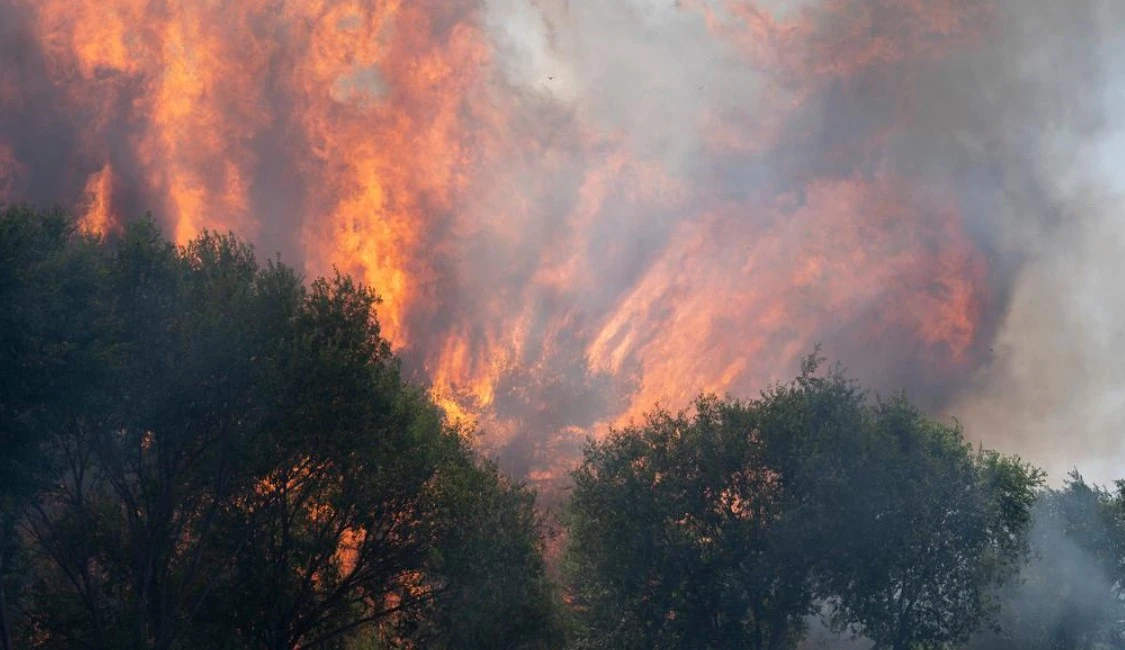
WASHINGTON, USA — Massive and uncontrollable wildfires fueled by extreme temperatures and rapidly shifting winds have forced the evacuation of approximately 200,000 people across southwestern France and central Spain, creating an unprecedented humanitarian and environmental crisis in the region.
The staggering scale of these blazes has triggered national emergencies in multiple countries, prompting massive military mobilizations and urgent international interventions to protect vulnerable communities, historic cultural sites, and major urban centers from the advancing flames. As emergency response units and volunteer organizations work around the clock, the severe weather conditions continue to hamper containment efforts, forcing local authorities to continuously expand evacuation zones and establish emergency shelters for thousands of displaced residents and tourists.
Rapid Spread in French Tourist Hotspots
The situation in France has grown increasingly dire, particularly in the southwestern regions of Gironde and Landes, where the French Interior Ministry reports that approximately 141,000 people have been forced to abandon their homes and vacation accommodations. The Atlantic coast, typically a bustling and vibrant destination for international and domestic tourists, has been transformed into an emergency zone. In several coastal resort areas, the speed and intensity of the advancing flames forced many individuals to flee via boats, executing dramatic maritime evacuations as the smoke turned the sky a dark, ash-filled orange. In response to the massive displacement, local governments and humanitarian organizations have rapidly converted schools, community centers, and municipal gymnasiums into temporary operational shelters to provide basic necessities, medical care, and safe lodging for the evacuees.
Flames Advancing Toward the City of Bordeaux
The threat level escalated significantly as the vast inferno began advancing toward the major historic and economic hub of Bordeaux. French Interior Minister Laurent Nunez addressed the nation, highlighting the extreme difficulties faced by emergency personnel on the ground. According to Nunez, the relentless and unpredictable shifting of the winds has made establishing firebreaks and containment lines nearly impossible. The intense blaze, which earlier necessitated the complete evacuation of the Cap Ferret Peninsula, has already reduced more than 140 square kilometers of lush forestry to ash. With over 110,000 individuals integrated into the evacuation protocols in the Gironde sector alone, civil defense forces are now prioritizing the creation of massive defensive cordons on the outskirts of Bordeaux to prevent the flames from penetrating the densely populated city limits.
Military Deployment and International Support
Recognizing the sheer magnitude of the disaster, French President Emmanuel Macron directed Prime Minister Sebastien Lecornu to immediately activate the government's central crisis management unit. Furthermore, Macron issued a direct mobilization order to the armed forces, instructing military personnel to provide maximum logistical and operational support to the exhausted civilian emergency teams. Because the scale of the fires has overwhelmed domestic firefighting capabilities, France has urgently appealed to the European Union's Civil Protection Mechanism. This call for solidarity resulted in the rapid deployment of specialized international aerial assets, including two Canadair firefighting aircraft from Croatia, two Air Tractor planes from Portugal, and heavy-lift Black Hawk helicopters from Czechia and Slovakia, which are now conducting continuous water-dropping missions over the most critical sectors.


Historic Emergency Declared in Central Spain
The Iberian Peninsula is simultaneously battling its own catastrophic blazes, prompting the Spanish government to declare a national emergency for wildfires for the first time in recent history. The Spanish Interior Ministry confirmed that at least 60,000 individuals have been evacuated from towns and villages situated in the central regions, particularly around Madrid and the neighboring Avila province. With temperatures expected to soar well above 39 degrees Celsius and gale-force winds relentlessly fanning the flames, two distinct and massive fires near the capital ultimately merged into a single, devastating inferno. This merged fire front rapidly consumed an estimated 30 square kilometers of land in a matter of hours. The President of the Madrid Regional Government, Isabel Diaz Ayuso, addressed the media, grimly characterizing the unfolding disaster as the worst fire in the entire recorded history of the Madrid region.
Protecting Cultural Heritage from Destruction
As Spanish authorities coordinate complex logistical operations to move citizens out of harm's way, they are also fighting a desperate battle to save invaluable historical assets. Francisco Martin, the central government representative in the Madrid region, noted that while preserving human life remains the absolute priority, specialized units have been deployed with the specific mission of protecting cultural heritage. A primary focus has been the town of San Lorenzo, which houses the Escorial, a monumental 16th-century palace and monastery complex commissioned by King Philip II. Firefighting teams have established heavy defensive perimeters and specialized fire-retardant lines around the perimeter of the historic site, working tirelessly to ensure that centuries of architectural history are not lost to the advancing firestorm.
Broader Crisis Impacting the Mediterranean Basin
The devastation is not isolated to France and Spain; the broader Mediterranean basin is currently grappling with a severe outbreak of wildfires driven by the same oppressive heatwave. Italy has faced numerous severe forest fires, particularly on the island of Sicily, where dry vegetation and high temperatures have created a highly combustible environment. The human cost of these disasters has been deeply tragic for the first responder community. Official reports confirm that one firefighter lost their life while battling the blazes in Sicily, and two additional firefighters perished during containment operations near the Bordeaux airport in France. These casualties underscore the extreme peril faced by the emergency crews working on the front lines of this multinational crisis.


The Role of Extreme Weather and Future Preparedness
Environmental experts and meteorological agencies emphasize that these catastrophic events are severely exacerbated by prolonged droughts and record-breaking temperatures affecting the European continent. The intensely dry conditions transform vast forested areas into highly flammable zones, allowing fires to spread at unnatural speeds. As local authorities and international coalitions focus on immediate containment and evacuation efforts, discussions are already beginning regarding the urgent need for enhanced early warning systems, improved forest management strategies, and the expansion of transnational aerial firefighting fleets to better prepare for similar extreme weather events in the future.
WiseNewsPress.com
What's Your Reaction?
 Like
0
Like
0
 Dislike
0
Dislike
0
 Love
0
Love
0
 Funny
0
Funny
0
 Wow
0
Wow
0
 Sad
0
Sad
0
 Angry
0
Angry
0

Editor | Wise News Press — Delivering accurate, timely global news with integrity, insight, and editorial responsibility.





















Comments (0)