



Putin, Erdoğan and Tokayev: Turkic World’s Ukraine Peace Strategy
okayev’s Istanbul proposal links Erdoğan’s diplomacy with Turkic states’ security concerns and offers Putin a face-saving route toward Ukraine talks.


By Yusuf Inan | Wise News Press
Journalist and Author | Political and Strategic Analyst
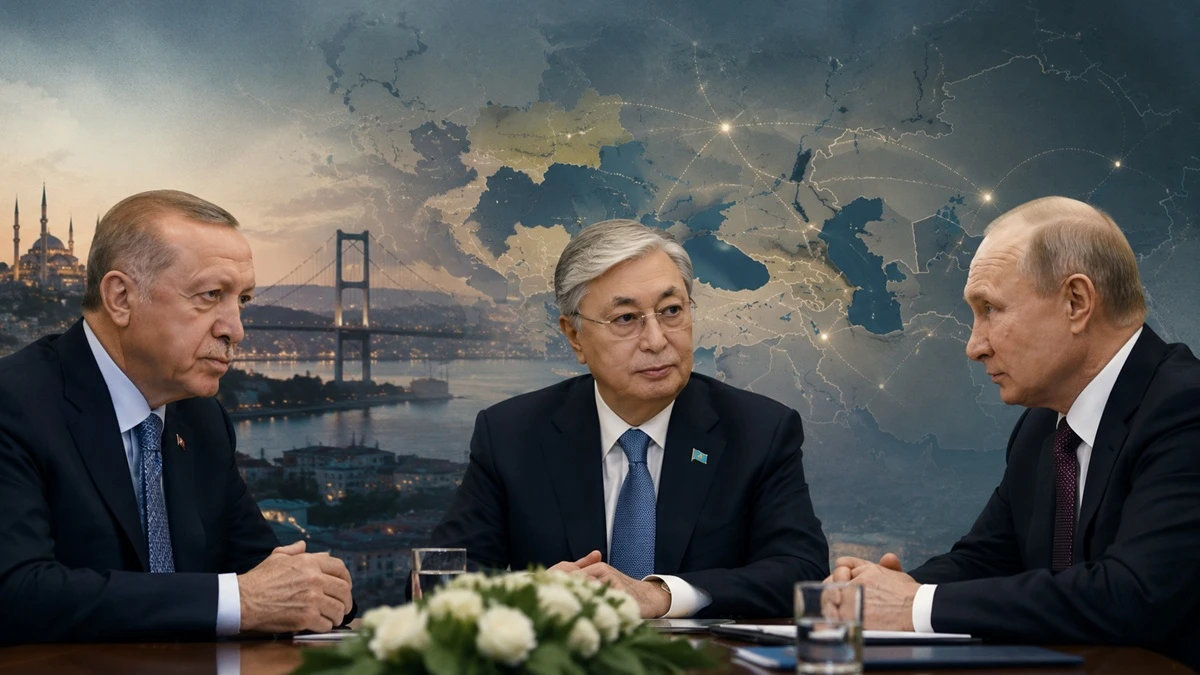
ANKARA, TÜRKİYE — Kazakh President Kassym-Jomart Tokayev’s call on Vladimir Putin to freeze the war and revive the Istanbul framework has linked Türkiye’s diplomacy with the Turkic world’s growing security concerns.
The significance of Tokayev’s intervention lies not only in his call for peace, but also in where and how it was delivered. The appeal came directly in Putin’s presence, on Russian soil, from the leader of one of Moscow’s closest regional partners.
For Kazakhstan and other states across Eurasia, the outcome of the Ukraine war is not a distant European question. It will influence the future of borders, national sovereignty, trade routes, energy security and relations with Russia throughout the former Soviet region.
Kazakhstan’s security calculus goes beyond Ukraine
Kazakhstan shares the world’s longest continuous land border with Russia and has a substantial ethnic Russian population, particularly in its northern regions.


That geography makes the principle of territorial integrity an essential national security issue for Astana. Any lasting acceptance that borders can be altered through military force could create a dangerous precedent for other states with historical, demographic or political ties to Moscow.
Tokayev’s peace appeal should therefore be understood as more than an expression of concern over the deaths of young Russians and Ukrainians. Kazakhstan has a strategic interest in preventing the war from producing a regional order in which powerful states can redefine the borders of their neighbors.
Astana seeks to preserve close economic and political relations with Moscow while maintaining the principle that internationally recognized borders must be respected. Ending the Ukraine war would consequently strengthen not only European security but also Kazakhstan’s own sense of sovereignty.


Kazakhstan’s energy dependence adds another layer to this calculation. Much of its oil reaches international markets through infrastructure crossing Russian territory. Prolonged conflict, sanctions, infrastructure attacks and regional instability create direct economic costs for the country.
Peace would reduce these risks while allowing Kazakhstan to continue its balanced foreign policy between Russia, China, Türkiye and Western powers.
Tokayev offers Moscow a face-saving exit
Tokayev did not confront Putin with accusations, threats or sanctions. He described Russians and Ukrainians as closely connected peoples, expressed regret over the loss of young lives and praised the Russian president’s capacity for diplomatic flexibility.
He then called for the conflict to be frozen and for negotiations to return to what he described as the “Istanbul formula 2.0.”
“Perhaps it is time to freeze this conflict and return to the Istanbul formula 2.0.”
The wording reflects a deliberate diplomatic method.
Kazakhstan is not approaching Moscow through the language used by NATO governments. Instead, Tokayev is using concepts that allow Putin to consider negotiations without publicly acknowledging defeat or accepting a settlement imposed by the West.
This matters because ending a war often requires more than military or economic pressure. Leaders also need a political narrative that enables them to change course without appearing to have surrendered.
Putin may reject the argument that Western pressure forced Russia back to the negotiating table. He could, however, present renewed diplomacy as a response to recommendations from friendly and strategically important partners such as Kazakhstan and Türkiye.
Tokayev’s role is not to impose peace through military strength. His potential contribution is to help construct a diplomatic exit that the Kremlin can explain to its domestic audience.
Why Istanbul remains the least risky venue
Tokayev’s reference to Istanbul, without directly naming Erdoğan, was a highly pragmatic choice.
Istanbul is no longer merely a possible meeting location. It has become an established diplomatic brand in the Russia-Ukraine conflict.
Russian and Ukrainian delegations met there in March 2022 to discuss neutrality, international security guarantees, military restrictions and possible terms for ending the fighting. The talks did not produce a final agreement, but they created one of the most detailed negotiating frameworks developed during the war.
Türkiye later worked with Russia, Ukraine and the United Nations to establish the Black Sea Grain Initiative, signed in Istanbul in July 2022. The arrangement enabled Ukrainian agricultural exports to reach international markets and demonstrated that limited agreements were possible even while the war continued.
Türkiye also supported prisoner exchanges and humanitarian contacts. When direct Russian-Ukrainian negotiations resumed in 2025, Istanbul again hosted the delegations, with prisoner exchanges among the few concrete outcomes.
This record makes Istanbul one of the lowest-risk diplomatic venues available.
Türkiye is a NATO member that supports Ukraine’s sovereignty, yet it has maintained direct political, commercial and diplomatic channels with Moscow. President Recep Tayyip Erdoğan remains able to speak with both Putin and the Ukrainian leadership.
For Russia, Istanbul is not a Western capital seeking Moscow’s strategic defeat. For Ukraine, Türkiye is not a Russian ally capable of dictating terms on the Kremlin’s behalf.
Tokayev’s proposal therefore points toward a venue previously accepted by both parties and associated with practical, if limited, results.
Erdoğan’s diplomacy finds resonance across the Turkic world
President Erdoğan has repeatedly called on Turkic states to support diplomatic efforts aimed at securing a just and lasting peace in Ukraine.
At an Organization of Turkic States summit, Erdoğan argued that the Turkic countries should contribute to initiatives that could bring the parties back to negotiations. He has also maintained that Türkiye is prepared to host direct talks and, when the conditions are ready, a leaders’ summit.
Tokayev has previously highlighted Erdoğan’s role in efforts to resolve the Russia-Ukraine conflict. Türkiye and Kazakhstan have also declared their support for settling international disputes through diplomacy.
The emerging picture is one of strategic convergence.
Türkiye wants to limit the damage that the war is inflicting on Black Sea security, trade, energy routes and the wider European security system. Kazakhstan wants to preserve stable relations with Russia while preventing military revisionism from becoming an accepted principle in Eurasia.
These interests meet in the idea of an Istanbul-centered negotiating process.
Similar statements from Azerbaijan, Uzbekistan, Kyrgyzstan and other regional actors would give Türkiye’s mediation role broader political legitimacy. They would also demonstrate that calls for negotiations are not confined to Western governments seeking concessions from Moscow.
The hard realities of freezing the war
The most controversial element of Tokayev’s proposal is the word “freeze.”
A ceasefire along the current front could reduce casualties, halt missile and drone attacks, facilitate prisoner exchanges and create space for political negotiations.
However, freezing the fighting without a comprehensive settlement could leave Russia in effective control of occupied Ukrainian territory. Moscow could also use a pause to rebuild its forces, replenish ammunition and prepare for another offensive.
That possibility lies at the center of Kyiv’s concerns.
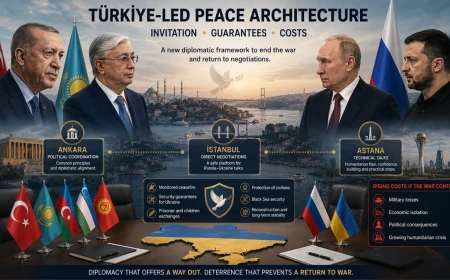
Ukraine is unlikely to accept a ceasefire without enforceable security guarantees. Any renewed Istanbul process would need to answer several difficult questions: Who would monitor the ceasefire? What would happen after a violation? Which states would guarantee Ukraine’s security? Would military assistance continue? How would the occupied territories be addressed?
Russia’s willingness to discuss agreements associated with Istanbul does not necessarily mean that Moscow is ready to accept Ukraine’s conditions. The Kremlin continues to demand that negotiations reflect the military situation and what it describes as realities on the ground.
A temporary cessation of hostilities and a durable peace are therefore not the same thing.
The Istanbul formula can produce results only if it evolves beyond a general appeal to stop shooting and becomes a detailed framework covering enforcement, security guarantees, humanitarian measures and a timetable for political negotiations.
What the Turkic world can and cannot do
The Organization of Turkic States is not a military alliance. It has no collective defense mechanism, sanctions regime or authority to impose a settlement on either Russia or Ukraine.
Its member states cannot end the war through diplomatic declarations alone.
They can, however, influence the political environment surrounding future negotiations.
A coordinated appeal from states that maintain historical, economic and political relations with Russia would carry a different meaning from demands issued by Western capitals. It could show the Kremlin that concern about the war has spread among Moscow’s own partners.
The Turkic states could also contribute according to their diplomatic strengths.
Türkiye can host negotiations and maintain direct communication with both sides. Kazakhstan can use its trusted relationship with Moscow. Azerbaijan can contribute through energy and transport diplomacy. Other Turkic states can support humanitarian initiatives, prisoner exchanges and a common call for the protection of civilians.
Their most realistic role is not to force Putin to accept peace, but to prepare a political bridge that Moscow can use when the costs of continuing the war become greater than the costs of negotiation.
A strategic opening rather than a settlement
Tokayev’s Istanbul appeal is not a complete peace plan, and it will not end the war by itself.
It is nevertheless an important signal that unease over the conflict is becoming more visible among Russia’s closest regional partners. Kazakhstan wants peace because continued war threatens its economic interests, regional stability and the broader principle of secure borders.
Türkiye, meanwhile, is seeking to preserve Istanbul as the most credible venue where Russia and Ukraine could eventually resume substantive negotiations.
These strategic interests reinforce one another.
Tokayev’s statement shows that Erdoğan’s Istanbul-centered diplomatic approach is gaining resonance within the Turkic world. Similar appeals from other regional leaders could strengthen Türkiye’s position, lower the political cost of negotiations for Moscow and help prepare the ground for a new diplomatic process.
The Turkic world’s influence will not come from becoming a military bloc against Russia. Its value lies in constructing a route through which Putin could move toward negotiations without claiming that Russia had submitted to Western pressure.
With enforceable security guarantees, Ukrainian participation and serious preparation, the Istanbul framework could become the foundation of that route.
Tokayev’s intervention should therefore be viewed not as the end of a peace process, but as a strategic opening.
Yusuf İnan
WiseNewsPress.com
Yusuf İnan is a journalist, author, and political and strategic analyst. He serves as editor-in-chief of UAPresa.com, WiseNewsPress.com, SehitlerOlmez.com and YerelGundem.com. His work focuses on strategic and political analysis concerning developments in Türkiye and around the world.
What's Your Reaction?
 Like
0
Like
0
 Dislike
0
Dislike
0
 Love
0
Love
0
 Funny
0
Funny
0
 Wow
0
Wow
0
 Sad
0
Sad
0
 Angry
0
Angry
0

Editor | Wise News Press — Delivering accurate, timely global news with integrity, insight, and editorial responsibility.








Comments (0)