



Mehmet Oz gains influence in Trump team as HHS succession talk grows
Bloomberg says Mehmet Oz is gaining influence in Trump’s health team and is increasingly discussed as a possible successor to HHS Secretary Robert F. Kennedy Jr.


BY AHMET TAŞ | WISE NEWS PRESS
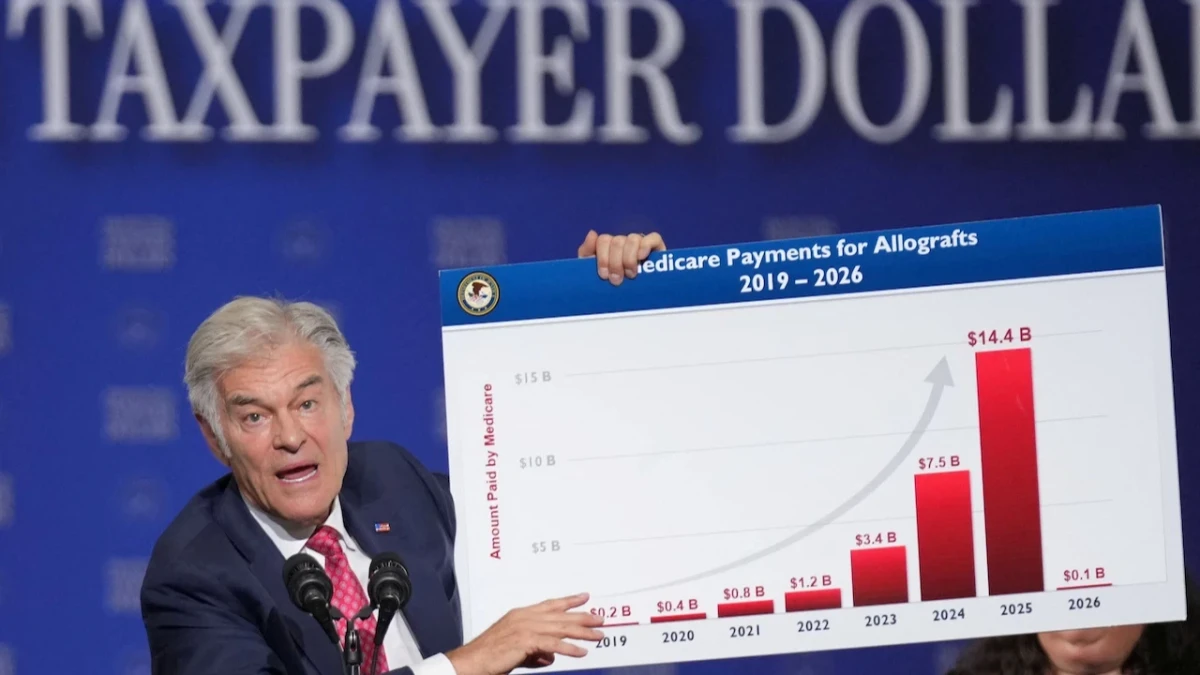
WASHINGTON, UNITED STATES — Mehmet Oz has emerged as an increasingly influential figure in President Donald Trump’s health team, prompting speculation that he could become a candidate to lead the U.S. Department of Health and Human Services if the post becomes vacant.
Bloomberg News reported that Oz, who leads the Centers for Medicare & Medicaid Services, is increasingly viewed in Washington as a potential successor to Health and Human Services Secretary Robert F. Kennedy Jr. The report is based on political discussions and people familiar with the administration, not on an announced nomination or confirmed cabinet change.
Official government pages continue to identify Kennedy as the 26th HHS secretary and Oz as the 17th CMS administrator. Neither the White House nor HHS has announced that Kennedy plans to leave or that Oz is under formal consideration for the cabinet position.
Bloomberg report brings succession speculation into focus
Bloomberg’s account described Kennedy’s department as facing management strains and uneven policy rollouts, while presenting Oz as a loyal and increasingly prominent administrator. According to the report’s public summary, debate in Washington has intensified over Kennedy’s future, and Oz is being discussed as a possible replacement should a vacancy arise.
That description should not be interpreted as evidence that Trump has decided to dismiss Kennedy. The health secretary remained publicly active throughout June and July, announcing funding programs, nutrition initiatives, changes to COVID-19 emergency authorizations and other administration policies.


The significance of the Bloomberg report lies instead in Oz’s position within the administration. His name is no longer associated solely with the technical management of Medicare and Medicaid. He is increasingly being treated as a political communicator and senior health-policy figure with direct value to the White House.
CMS gives Oz substantial institutional authority
CMS is the largest agency within HHS. According to its official profile, the agency manages programs affecting more than 160 million people and operates with an approximately $1.7 trillion budget. Its responsibilities include Medicare, Medicaid, the Children’s Health Insurance Program and federal health insurance marketplaces.
That scope gives Oz influence over some of the most politically sensitive areas of the American health system: insurance coverage, payments to hospitals and physicians, prescription-drug access, fraud enforcement and state Medicaid programs.


Under Oz, CMS has promoted tougher anti-fraud measures and reforms aimed at reducing administrative delays in prior authorization. In 2026, the agency announced initiatives to digitize authorization procedures, improve transparency and speed up patients’ access to prescribed medicines.
The role therefore gives Oz more than public visibility. It allows him to demonstrate whether he can run a complex federal institution, deliver Trump’s priorities and work with insurers, state governments, hospitals and Congress.
White House role has extended beyond health administration
Oz’s visibility increased further when he appeared in the White House briefing room while Press Secretary Karoline Leavitt was on maternity leave.
The administration had invited several camera-ready officials to brief reporters, including Vice President JD Vance, Secretary of State Marco Rubio and Treasury Secretary Scott Bessent. Oz used his appearance to discuss prescription-drug prices, healthcare fraud and federal health programs.
He was also questioned about Trump’s health and praised the president’s energy and mental acuity, describing recent medical findings in highly positive terms. Reuters reported that Oz called Trump’s examination results “spectacular,” although outside medical commentators continued to question the limited public information about the president’s health assessments.
The briefing illustrated both Oz’s strengths and limitations. His years in television made him comfortable before cameras, but he repeatedly declined to answer questions outside healthcare, saying that national-security matters were beyond his area of responsibility.
His appearance does not prove that he is being prepared for a cabinet promotion. It does show that the White House is willing to use him as one of the administration’s public-facing officials.
Trump and Oz share a television-era political profile
Oz first became nationally prominent through appearances on Oprah Winfrey’s program and later through his own daytime television show. CMS identifies him as a cardiothoracic surgeon, professor emeritus and winner of nine Daytime Emmy Awards. He holds an undergraduate degree from Harvard and joint medical and business degrees from the University of Pennsylvania.
Trump and Oz both converted celebrity television profiles into Republican politics. Trump endorsed Oz during his unsuccessful 2022 U.S. Senate campaign and later selected him to lead CMS. The Senate confirmed Oz in April 2025.
Their shared familiarity with television, branding and direct communication may help explain Oz’s access and usefulness inside the administration. He can present technically complicated healthcare policies in language designed for mass audiences.
That strength also attracts scrutiny. Oz faced criticism during his television career for promoting products and health claims that critics said were insufficiently supported by evidence. His confirmation process revived questions about scientific credibility, financial interests and his approach to Medicaid and Medicare policy.
Kennedy and Oz currently operate as partners
Despite succession speculation, the public record shows Oz and Kennedy working closely rather than openly competing.
The two officials jointly announced commitments from major insurers to reduce and modernize prior-authorization requirements. The initiative covered plans serving nearly eight in 10 Americans and included commitments to expand electronic processing, improve transparency and reduce delays.
They have also appeared together in administration initiatives involving nutrition, hospital food, healthcare fraud and the broader “Make America Healthy Again” agenda. HHS communications continue to present Kennedy as the department’s leader and Oz as one of its principal implementing officials.
Bloomberg’s description of Oz as a possible heir does not necessarily imply a breakdown in that relationship. A senior official may remain loyal to a cabinet secretary while simultaneously becoming a plausible replacement in the event of resignation, dismissal or another personnel change.
Oz’s relative institutional stability may also strengthen his standing. Axios reported in February that CMS was widely regarded as one of the more stable and effective parts of the health department during a period of senior staff changes.
No formal HHS nomination process has begun
Kennedy remains in office, and no formal process to replace him has been announced. Bloomberg’s report therefore concerns political positioning and succession speculation rather than an active appointment.
Should the HHS position become vacant, Trump would select a nominee, who would generally require Senate confirmation before taking permanent control of the department. Oz’s previous Senate confirmation for CMS would not automatically transfer him into the secretary’s role.
His potential advantages would be clear: he already manages a major HHS agency, has regular exposure to Trump’s priorities, works closely with Kennedy and possesses extensive public-communication experience.
The challenges would be equally significant. The HHS secretary oversees not only CMS but also the Food and Drug Administration, Centers for Disease Control and Prevention, National Institutes of Health and a wide range of public-health and social-service agencies. Running the full department would require balancing political priorities with scientific institutions, Congress, states and the medical community.
For now, Oz remains CMS administrator and Kennedy remains health secretary. What has changed is Oz’s political profile: he is increasingly seen not only as the official managing Medicare and Medicaid, but as a broader power broker in Trump’s health-policy operation.
Whether that rising influence eventually leads to the HHS secretary’s office will depend on Kennedy’s future, Trump’s decision and a possible confirmation battle in the Senate.
WiseNewsPress.com
What's Your Reaction?
 Like
0
Like
0
 Dislike
0
Dislike
0
 Love
0
Love
0
 Funny
0
Funny
0
 Wow
0
Wow
0
 Sad
0
Sad
0
 Angry
0
Angry
0

Editor | Wise News Press — Delivering accurate, timely global news with integrity, insight, and editorial responsibility.



















Comments (0)