



Ukraine’s acting defence minister Yevhenii Khmara: what is known so far
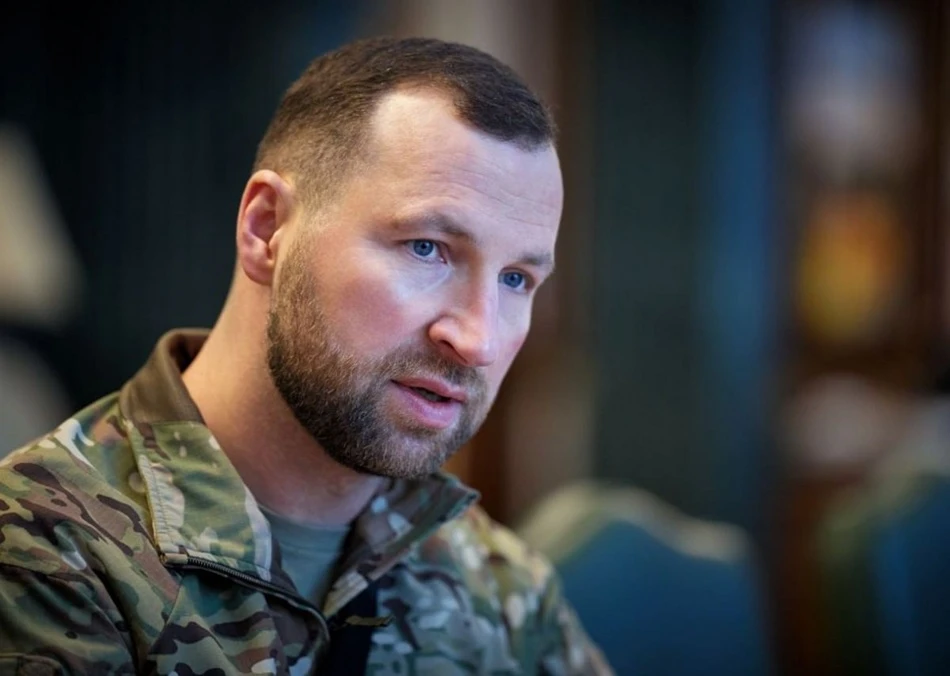
Yevhenii Khmara, a former SBU Alpha commander, is temporarily leading Ukraine’s Defence Ministry as parliament considers a permanent appointment.


By Ahmet Taş | Wise News Press
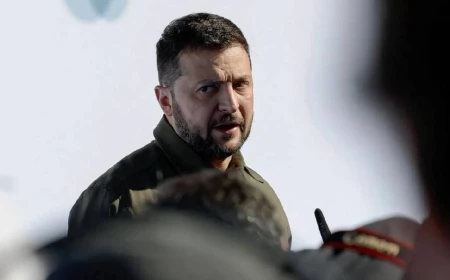
KYIV, UKRAINE — President Volodymyr Zelenskyy has placed Major General Yevhenii Khmara in temporary charge of Ukraine’s Defence Ministry, choosing a special-operations veteran to oversee wartime reform and long-range strike policy.
Khmara is serving only in an acting capacity because his permanent appointment has not yet been submitted to and approved by the Verkhovna Rada. His selection followed the abrupt departure of Mykhailo Fedorov, whose dismissal exposed divisions within Ukraine’s wartime leadership and prompted protests in Kyiv and other cities.
Zelenskyy said Khmara’s experience conducting technology-based combat operations made him particularly suited to the role. The president indicated that the new acting minister would continue supporting combat brigades, expanding long-range operations and implementing agreements with Ukraine’s international defence partners.
Why Khmara is serving only as acting minister
The Ukrainian government has temporarily entrusted Khmara with the responsibilities of defence minister, but he has not yet received the parliamentary approval required for a permanent appointment. Zelenskyy has said that his administration is completing the necessary legal procedures before formally presenting Khmara’s candidacy to lawmakers.


Ukrainian law requires the defence minister to be a civilian. Khmara entered the new position while serving as a major general and senior officer of the Security Service of Ukraine, meaning his military or security-service status must be resolved before a full appointment can be completed.
The timing may also delay the process. Reuters reported that the next scheduled parliamentary session was set for August 18, while the level of support for Khmara’s confirmation had not yet become clear.
Until those steps are completed, Khmara can direct the ministry’s current operations but does not possess the same political mandate as a minister confirmed by parliament.


From SBU Alpha to the leadership of the security service
Khmara spent much of his career in the Security Service of Ukraine’s Special Operations Center “A,” commonly known as Alpha. According to Suspilne, he had served in the unit since 2011 and was appointed its commander in 2023.
Alpha was established as the SBU’s elite counterterrorism and special-operations formation. Since Russia’s full-scale invasion, it has increasingly operated as a combat unit involved in frontline missions, drone warfare and operations behind Russian lines. The SBU describes the formation as responsible for hundreds of specialised missions, although many details remain classified.
Khmara took part in operations connected to the defence and subsequent liberation of the Kyiv region at the beginning of Russia’s full-scale invasion in 2022. He later participated in fighting in the Donetsk region, according to biographical information published by Ukrainian public broadcaster Suspilne.
Zelenskyy appointed Khmara acting head of the SBU on January 5, 2026, after Vasyl Maliuk left the post. During the following six months, Khmara was associated primarily with the service’s combat and long-range operational work, while First Deputy Head Oleksandr Poklad reportedly coordinated counterintelligence and cooperation with other law-enforcement bodies.
Poklad is expected to assume temporary leadership of the SBU following Khmara’s transfer to the Defence Ministry.
A career centred on special operations
Unlike many defence ministers, Khmara’s background is primarily operational rather than political or administrative. His professional profile has been built around small-unit tactics, sensitive missions and the use of new technology against larger conventional forces.
Associated Press described him as a highly regarded special-operations commander and identified him as one of the figures associated with Operation Spiderweb, Ukraine’s covert drone attack on Russian strategic air bases. The operation involved transporting first-person-view drones deep into Russian territory before launching coordinated strikes against military aircraft.
Khmara has also been linked in Ukrainian reporting to the campaign to regain control of Snake Island in 2022. However, many details concerning individual commanders’ responsibilities in such operations have not been publicly released by Ukraine’s security agencies.
He holds the rank of major general and has received several Ukrainian state decorations. Ukrainian sources report that these include all three classes of the Order of Bohdan Khmelnytskyi, the Order for Courage, Third Class, and the presidential Cross of Military Merit.
Technology and long-range strikes will remain priorities
Khmara’s appointment signals that Kyiv intends to retain a technology-focused defence strategy despite Fedorov’s removal. Zelenskyy said the acting minister had gained extensive experience organising technological strike operations and would continue overseeing Ukraine’s long-range capabilities.
The SBU’s Alpha unit has played a prominent role in attacks on Russian oil infrastructure, defence-production facilities and other targets far from the Ukrainian border. Reuters reported that those operations had become an important element of Kyiv’s attempt to weaken Russia’s military logistics and energy revenues.
Zelenskyy also said Khmara would be responsible for long-range operations across Ukraine’s broader security forces, not only those previously carried out by the SBU. That mandate could give him a central role in coordinating drones, missiles and other unmanned systems between separate military and security formations.
The new government led by Prime Minister Sergii Koretskyi has identified drone supplies, defence-industry expansion and preparations for further Russian attacks on energy infrastructure among its main priorities.
Fedorov’s dismissal triggered protests
Khmara took over the ministry amid a political crisis caused by Zelenskyy’s dismissal of Mykhailo Fedorov after only six months in the role. Fedorov had been credited with reducing bureaucracy, modernising procurement and expanding Ukraine’s use of drones and data-driven military systems.
The former minister said his relationship with Armed Forces Commander-in-Chief Oleksandr Syrskyi had broken down. Fedorov accused the military leadership of blocking Defence Ministry initiatives and failing to adapt quickly enough to technological changes in warfare. Syrskyi responded by defending his record, including his role in the defence of Kyiv in 2022, and called for attention to remain focused on the war effort.
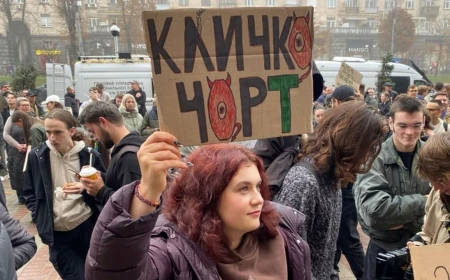
More than 1,000 people gathered near the presidential office in Kyiv on July 16, while demonstrations were also reported in other Ukrainian cities. Some protesters demanded Fedorov’s return, while others called for Syrskyi to be dismissed instead. Further demonstrations continued after Khmara’s appointment.
Zelenskyy said the Defence Ministry and military leadership had failed to achieve the unity he wanted. By selecting Khmara, whose career combines special operations with technological warfare, the president appeared to signal that the central elements of Fedorov’s drone and long-range strategy would continue.
The main challenges facing the acting minister
Khmara’s immediate task will be maintaining continuity during a politically sensitive transition. He must preserve relationships with international defence partners, ensure the supply of drones and ammunition to frontline units, and coordinate the ministry’s programmes with Ukraine’s military command.
He will also inherit long-running institutional problems, including procurement oversight, recruitment difficulties, troop shortages, bureaucracy and tensions between civilian reformers and senior military commanders. Reuters reported that Ukrainian forces continued to face pressure from Russian advances in the east, shortages of ground troops and insufficient air-defence systems.
A further challenge will be establishing public confidence following Fedorov’s contested dismissal. Khmara has largely operated outside public view, and his experience managing a large civilian ministry, public procurement and parliamentary oversight is less established than his reputation as a combat commander.
His permanent future in the role will depend on whether Zelenskyy submits his candidacy, whether Khmara meets the legal requirement for civilian status and whether a majority of lawmakers supports his appointment.
For now, his selection shows that Ukraine’s leadership is placing special operations, unmanned systems and long-range strikes at the centre of its defence policy, even as the government faces internal divisions over how the war should be managed.
WiseNewsPress.com
What's Your Reaction?
 Like
0
Like
0
 Dislike
0
Dislike
0
 Love
0
Love
0
 Funny
0
Funny
0
 Wow
0
Wow
0
 Sad
0
Sad
0
 Angry
0
Angry
0

Editor | Wise News Press — Delivering accurate, timely global news with integrity, insight, and editorial responsibility.












Comments (0)