



Ivan Vyhivskyi: Ukraine’s new interior minister and career police leader
Ivan Vyhivskyi rose from investigator to national police chief before becoming Ukraine’s interior minister, bringing wartime security and reform experience.


By Yusuf Inan | Wise News Press
Journalist and Author | Political and Strategic Analyst
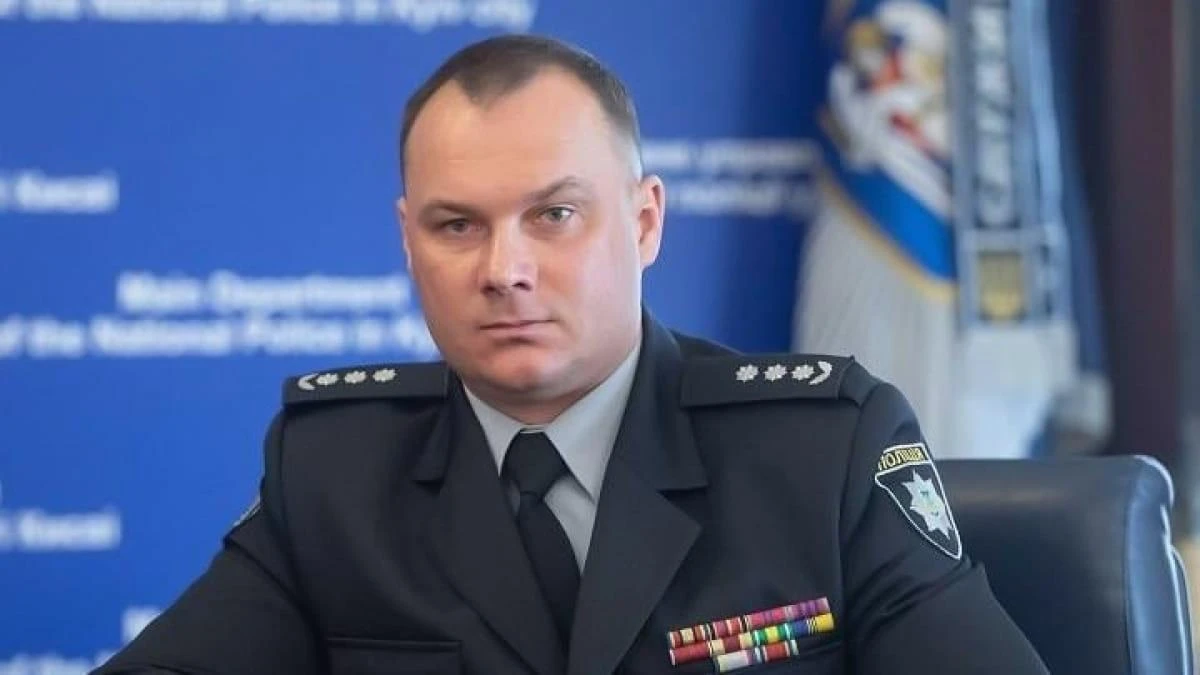
KYIV, UKRAINE — Ukraine’s parliament has appointed Ivan Vyhivskyi as interior minister, elevating a career police officer whose path from investigator to national police chief was shaped by wartime security, institutional reform and technology.
Approved as part of the new cabinet on July 16, 2026, Vyhivskyi entered the ministry after leading the National Police of Ukraine for three years. His appointment places a law-enforcement administrator with experience at local, regional, capital-city and national levels in charge of one of Ukraine’s largest security systems.
The Interior Ministry oversees a broad institutional network that includes the National Police, National Guard, State Border Guard Service, emergency services and migration authorities. Vyhivskyi therefore moves from commanding a single nationwide service to coordinating agencies responsible for public order, border protection, civil defence, emergency response and wartime resilience.
From investigator to interior minister
Ivan Mykhailovych Vyhivskyi, whose surname also appears as Vyhovskyi in some English-language publications, was born on March 26, 1980. Public biographical records identify Ukraine’s Zhytomyr region as his birthplace.


He graduated from the National University of Internal Affairs in 2003 and built his professional life inside Ukraine’s law-enforcement system. Before becoming a national public figure, he spent years working through the operational and investigative levels of policing.
His official profile before the ministerial appointment listed him as a second-rank police general. Unlike a traditional party politician who moves into a security portfolio from parliament or political campaigning, Vyhivskyi arrived at the cabinet table after decades of institutional service.
This distinction helps explain his public style. His statements generally concentrate on operational capacity, institutional coordination, personnel, technology and citizen safety rather than political slogans. His record presents him primarily as a professional security administrator accustomed to managing large organisations under pressure.


A career rooted in investigations
Vyhivskyi’s early career developed in the Mykolaiv region, particularly around the city of Ochakiv. He began in investigative work, gaining direct experience in gathering evidence, questioning witnesses and managing criminal cases.
He later progressed through senior investigative and command positions. His responsibilities expanded from individual casework to supervising departments, coordinating criminal investigations and managing local police operations.
This gradual advancement gave him experience in both the legal and practical dimensions of policing. He worked close to local communities during his early years, while later assignments required responsibility for larger organisations, operational planning and personnel management.
By 2015 and 2016, he had taken on leadership responsibilities in the Ochakiv police structure. He subsequently became a deputy head of the police administration in Mykolaiv and led its investigative branch.
The career sequence is significant because it shows continuity rather than a sudden rise. Vyhivskyi passed through the investigative, managerial and regional command levels before reaching national leadership. Available records place his strongest documented progression from Mykolaiv to Poltava, then Kyiv and finally the National Police headquarters.
Regional leadership in Poltava and Kyiv
Vyhivskyi became head of the Poltava regional police on February 14, 2020. The appointment gave him responsibility for an entire regional structure, including criminal investigations, public order, traffic safety, community policing and local emergency coordination.
In August 2021, he was appointed police chief of Kyiv, one of the most prominent and demanding law-enforcement posts in the country. The capital contains the central government, parliament, foreign embassies, strategic infrastructure and the country’s largest concentration of major public events.
His Kyiv tenure became considerably more demanding after Russia launched its full-scale invasion in February 2022. Police responsibilities extended beyond conventional law enforcement to checkpoints, searches for sabotage groups, assistance to civilians and protection of public infrastructure.
Vyhivskyi was appointed acting chief of the National Police in January 2023. The Ukrainian government confirmed him permanently in the position on July 14 of that year. He remained national police chief until his appointment as interior minister on July 16, 2026.
His move to the ministry therefore represents a continuation of his career path. He already knew the structure, personnel and operational challenges of the country’s largest civilian law-enforcement organisation before assuming responsibility for the broader Interior Ministry system.
Leading a police force during wartime
Vyhivskyi’s national leadership coincided with the transformation of Ukrainian policing under wartime conditions. The police continued investigating ordinary crimes and maintaining public order, but its responsibilities also expanded to frontline support, civilian evacuations, explosive ordnance work and the documentation of alleged war crimes.
The National Police reported opening 53,100 new criminal investigations connected to alleged war crimes during 2025. The overall number registered since the beginning of the full-scale invasion reached approximately 198,900.
Police investigators increasingly used open-source intelligence, digital evidence and artificial intelligence-assisted analytical tools to identify individuals, establish timelines and connect evidence gathered in different regions. International databases and cooperation with foreign law-enforcement institutions supported this work.
Vyhivskyi described Ukraine’s police as an institution operating between cities, liberated communities and areas close to active combat. In early 2026, he said about 10,000 police officers were serving on or near the front, while other public statements indicated that approximately one-fifth of the force had some connection to combat-zone duties.
Special police evacuation teams known as the “White Angels” became one of the most visible symbols of this wartime role. These units entered heavily shelled communities to evacuate children, older residents, people with disabilities and others unable to leave without assistance.
Police personnel also supported identification work after missile attacks, assisted emergency responders, cleared explosive hazards and delivered aid to isolated settlements.
Technology as part of internal security
Technology has remained one of the clearest themes in Vyhivskyi’s public record. His approach treats digital systems not merely as administrative tools but as central elements of modern security.
Under his National Police leadership, Ukraine expanded the use of criminal intelligence systems, digital weapons records, open-source investigations and data-based threat analysis. He also supported stronger mechanisms for identifying drone launches and determining who was operating unmanned aircraft.
Vyhivskyi argued that commercially available FPV drones could increasingly be misused for attacks on people or property. His position favoured detection, registration and operator identification systems that would allow authorities to respond before or immediately after an incident.
Weapons control was another important priority. Police reported removing more than 4,700 firearms, over 16,000 grenades, 747 grenade launchers, more than 3 tonnes of explosives and approximately 2 million rounds of ammunition from illegal circulation during 2024.
At the same time, digital registration systems were expanded to process legal declarations and applications. This combination reflects a policy of recognising the wartime circulation of weapons while strengthening traceability and state oversight.
Cybersecurity also became part of routine internal security. The police introduced a cyber-threat-sharing system integrated with Ukraine’s national computer emergency response infrastructure. An anti-fraud project helped block fraudulent transactions worth 145 million hryvnias and restricted access to 72,803 malicious internet domains during 2025.
An institutional rather than partisan profile
Vyhivskyi’s public record does not place him easily on a conventional left-right political spectrum. He built his career inside policing rather than through a political party, parliamentary faction or election campaign.
His leadership outlook is better described as state-centred, security-focused and institutionally minded. That assessment is based on his repeated emphasis on discipline, operational readiness, public safety, technological modernisation and cooperation between state agencies.
Three themes appear consistently in his public statements: maintaining citizens’ trust, adapting institutions to wartime realities and using technology to improve prevention and investigation.
He has also supported closer alignment with European security practices. National Police planning under his leadership incorporated risk-based policing, organised-crime assessment methods, dialogue with communities and institutional compatibility with European Union and NATO standards.
The National Police Development Strategy for 2026–2030 placed communication and public trust among its central principles. This indicates that Vyhivskyi’s approach sees effective security and democratic legitimacy as connected rather than competing objectives.
As interior minister, he will need to apply this outlook across a much broader system. His success will depend not only on operational results but also on coordination between agencies that have different traditions, personnel structures and wartime responsibilities.
International partnerships built around operations
Vyhivskyi developed extensive working relationships with foreign law-enforcement institutions while leading the National Police.
His meetings with representatives of the United States Federal Bureau of Investigation covered cybercrime, alleged war crimes, human trafficking, money laundering and transnational organised crime. Discussions with the US Drug Enforcement Administration focused on synthetic narcotics and the modernisation of Ukraine’s anti-drug structures.
Cooperation with Polish police addressed the experience of maintaining public security during wartime. Meetings with Finnish officials covered civilian evacuation, victim identification and the documentation of crimes connected to the invasion.
These contacts were practical rather than ceremonial. They centred on evidence exchange, training, investigative techniques, digital systems and coordination in cross-border cases.
The international dimension will become even more important at the Interior Ministry. Ukraine’s progress toward European Union membership requires continued alignment in border management, organised-crime prevention, migration policy, civil protection and police accountability.
Vyhivskyi’s previous cooperation with European and American institutions gives him experience in the technical language of international security partnerships and may help maintain continuity in externally supported reform programmes.
What his appointment means for Ukraine
Vyhivskyi’s promotion signals continuity in Ukraine’s wartime internal-security policy rather than a sharp institutional change.
The government has selected a minister who already understands the National Police from the local level to national headquarters. He has managed regional organisations, capital-city security and a countrywide force operating during a full-scale war.
His likely priorities include strengthening the investigation of alleged war crimes, improving coordination among police and National Guard units, regulating weapons and drones, expanding cyber capabilities and advancing compatibility with European security institutions.
He will also oversee emergency-response and border institutions whose responsibilities have become increasingly interconnected. Missile attacks, population displacement, sabotage risks, damaged infrastructure and humanitarian evacuations require several Interior Ministry agencies to operate together rather than independently.
Vyhivskyi enters office with a professional identity shaped by investigation, regional command and wartime policing. His record suggests a methodical leadership style that values operational information, digital tools and institutional coordination.
For Ukraine, the appointment places an experienced career officer at the centre of domestic security policy during a period in which policing, national defence, civil protection and European integration are more closely connected than at any previous point in the country’s modern history.
Yusuf İnan
WiseNewsPress.com
Yusuf İnan is a journalist, author, and political and strategic analyst. He serves as editor-in-chief of UAPresa.com, WiseNewsPress.com, SehitlerOlmez.com and YerelGundem.com. His work focuses on strategic and political analysis concerning developments in Türkiye and around the world.
What's Your Reaction?
 Like
0
Like
0
 Dislike
0
Dislike
0
 Love
0
Love
0
 Funny
0
Funny
0
 Wow
0
Wow
0
 Sad
0
Sad
0
 Angry
0
Angry
0

Editor | Wise News Press — Delivering accurate, timely global news with integrity, insight, and editorial responsibility.













Comments (0)