



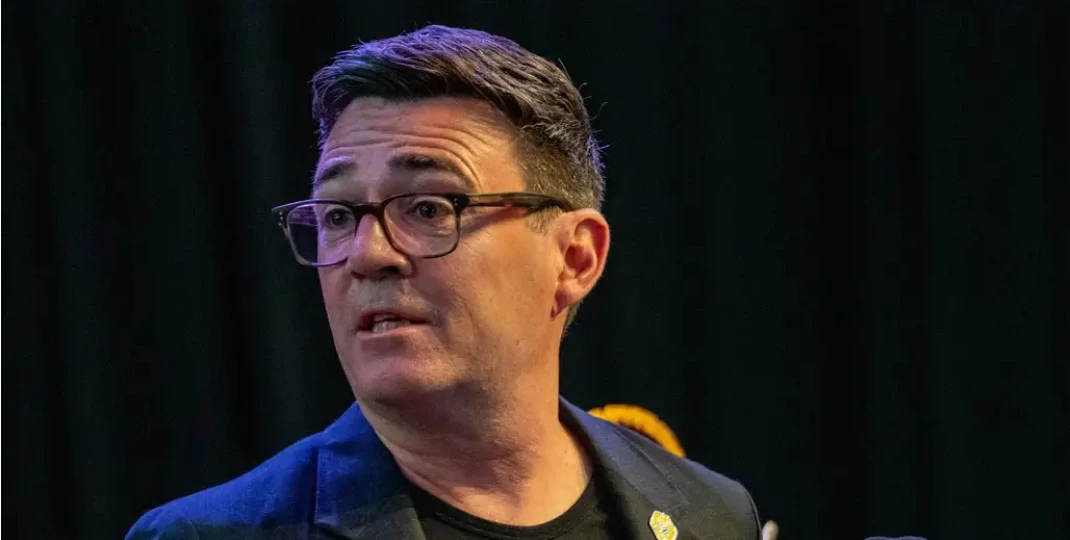
Who is Andy Burnham, the United Kingdom’s new prime minister in 2026?
Andy Burnham has succeeded Keir Starmer as UK prime minister. Here is his political record, Manchester legacy, policies and biggest challenges.


By Yusuf İnan | Wise News Press
LONDON, UNITED KINGDOM — Andy Burnham formally became the United Kingdom’s new prime minister on July 20, succeeding Keir Starmer and promising action on living costs, public services, regional inequality and political instability.
King Charles III invited Burnham to form a government during an audience at Buckingham Palace. The former mayor of Greater Manchester then travelled to Downing Street, where he described the transition as an opportunity to change Britain’s political and economic direction.
Burnham entered office as the seventh UK prime minister since 2016. His rise followed his return to Parliament in June and his election as Labour Party leader on July 17, when he received the backing of 379 Labour MPs and 23 affiliated organisations.
From Greater Manchester to Downing Street
Burnham’s route to the premiership accelerated after he won the Makerfield parliamentary by-election on June 18. He secured the seat for Labour with a majority of 9,231 votes, while turnout reached 58.7 percent. The victory returned him to the House of Commons for the first time since 2017.
His election as an MP required him to leave the Greater Manchester mayoralty because the position includes policing and crime responsibilities that cannot be held simultaneously with membership of Parliament. The result nevertheless gave Burnham the parliamentary platform required to seek Labour’s leadership after pressure on Starmer intensified.


Starmer resigned after two years as prime minister, despite having led Labour to a large general election victory in 2024. Burnham subsequently emerged as the only viable candidate to lead the governing party and was formally announced as Labour leader three days before entering Downing Street.
Working-class roots in northern England
Andrew Murray Burnham was born on January 7, 1970, in Aintree, near Liverpool. His father worked as a telephone engineer, while his mother was employed as a medical receptionist. He grew up in Culcheth, between Liverpool and Manchester, and joined the Labour Party at the age of 15.
Burnham studied English at Fitzwilliam College, Cambridge. He has spoken about feeling socially out of place at university because many of his classmates came from more privileged backgrounds, an experience that later influenced his emphasis on regional and class inequality.


After university, he worked in trade journalism and later became a researcher for Labour politician Tessa Jowell. He also served as an adviser to Culture Secretary Chris Smith before winning the Leigh parliamentary seat in the 2001 general election.
Burnham is married to Marie-France van Heel, whom he met during his university years, and the couple have three children. He is also known as a lifelong supporter of Everton Football Club and has maintained close cultural ties to north-west England throughout his career.
Cabinet experience under Blair and Brown
Burnham held several government positions during the administrations of Tony Blair and Gordon Brown. His senior roles included Chief Secretary to the Treasury, Culture Secretary and Health Secretary. He later served in Labour’s opposition front bench as shadow education, health and home secretary.
His national political career was closely associated with campaigns for accountability over the Hillsborough disaster and the infected blood scandal. Burnham repeatedly supported demands from victims and families for public investigations and stronger institutional accountability.
He stood for the Labour leadership in 2010 and again in 2015 but lost both contests. In 2015, he finished second to Jeremy Corbyn. Burnham later left Westminster to contest the newly established Greater Manchester mayoralty, a move that ultimately rebuilt his national profile.
Manchester record reshaped his political career
Burnham was elected mayor of Greater Manchester in 2017 and won re-election in 2021 and 2024. His years in regional government gave him a reputation for combining centre-left social policies with practical cooperation involving businesses, councils and trade unions.
One of his most prominent achievements was the Bee Network, which brought bus services under greater local control and sought to integrate buses, trams and other transport systems. Greater Manchester became the first area in England to reverse decades of bus deregulation through the introduction of locally controlled services.
Burnham also prioritised housing, homelessness, technical education and regional investment. During the COVID-19 pandemic, he challenged Boris Johnson’s government over financial assistance for communities facing stricter restrictions, earning the media nickname “King of the North.”
His record was not without criticism. Opponents questioned whether his homelessness targets were realistic and challenged aspects of policing and housing policy. Nevertheless, his visibility during disputes with Westminster helped establish him as one of Labour’s most recognisable politicians outside London.
What Burnham means by ‘Manchesterism’
Burnham describes his economic philosophy as “Manchesterism,” a model that combines regional devolution, public control of essential services, industrial investment and cooperation with private enterprise.
The approach is different from traditional state-centred socialism. It seeks to allow businesses to grow while directing more of the benefits of development toward local services, housing, transport, skills and communities that have experienced long-term industrial decline.
Burnham has also used the phrase “business-friendly socialism” to describe the model. Its central argument is that Britain concentrated too much political and financial power in Westminster and the Treasury, leaving towns and regions without sufficient authority to shape their own economies.
His proposal for a northern government centre, sometimes described as “No. 10 North,” reflects that strategy. Burnham has argued that a prime minister should not govern exclusively from London and that national decision-making must give more weight to communities across northern England and other regions.
First promises as prime minister
In his first Downing Street speech, Burnham promised to develop a 10-year programme for political, economic and social renewal. He said his government would address immediate living-cost pressures before presenting the broader plan later in the year.
His stated priorities include reviving British industry, expanding affordable housing, reducing street homelessness, strengthening public influence over essential services and transferring more political authority to regional and local government.
Burnham said his administration would “take power out of here and carry it into every postcode,” presenting decentralisation as both an economic policy and a way to restore public confidence in politics.
He has argued that water, energy, transport and housing require stronger public control to remain affordable. However, the details of how the programme will be funded, which services could be nationalised and how spending plans will fit within fiscal rules have yet to be fully explained.
Major challenges facing the new government
Burnham takes office with Labour still holding a parliamentary majority, but he inherits many of the pressures that weakened Starmer’s administration. These include low economic growth, high household costs, shortages in housing, overstretched health and public services, migration concerns and declining trust in national institutions.
He must also respond to the rise of Reform UK, particularly in former industrial communities where Labour once enjoyed reliable support. Burnham’s allies believe his northern identity and record in Greater Manchester can reconnect Labour with those voters, but regional popularity does not automatically translate into national success.
Foreign policy will provide another immediate test. The government faces continuing decisions over support for Ukraine, relations with the United States and European Union, defence spending and conflicts in the Middle East. Burnham has significantly more experience in domestic and regional government than in international diplomacy.
His central political challenge will be turning a reputation for practical regional leadership into a credible national programme. The success of his premiership may depend on whether policies tested in Greater Manchester can be expanded across a much larger and more economically divided country.
WiseNewsPress.com
What's Your Reaction?
 Like
0
Like
0
 Dislike
0
Dislike
0
 Love
0
Love
0
 Funny
0
Funny
0
 Wow
0
Wow
0
 Sad
0
Sad
0
 Angry
0
Angry
0

Editor | Wise News Press — Delivering accurate, timely global news with integrity, insight, and editorial responsibility.
















Comments (0)