



Zelensky says Russia produces 120 ballistic missiles every month
Ukrainian President Volodymyr Zelensky warned that Russia can produce around 120 ballistic missiles every month, enabling repeated large-scale attacks.


By Yusuf İnan | Wise News Press
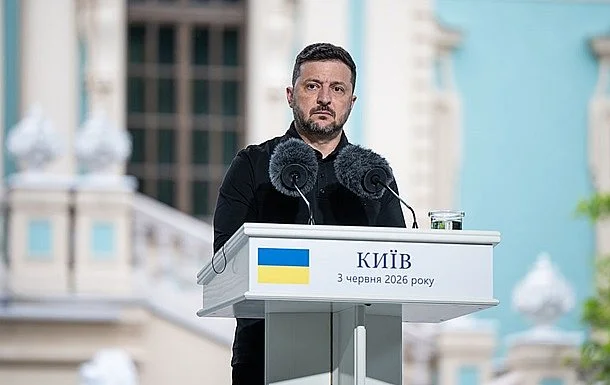
KYIV, Ukraine — Ukrainian President Volodymyr Zelensky said Russia can produce around 120 ballistic missiles every month, warning that Moscow has the capacity to launch repeated large-scale attacks in addition to its ongoing missile campaign.
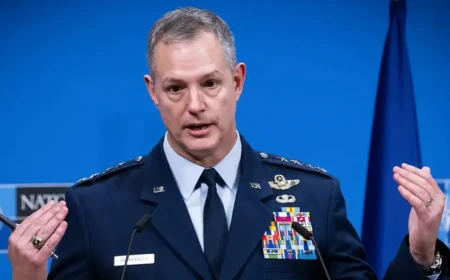
Zelensky made the remarks on Wednesday, June 3, while addressing participants of the Ukraine-NATO Council meeting in Kyiv. The Ukrainian leader said Russia’s missile production capacity remains a major threat not only to Ukraine’s front-line positions, but also to cities, energy infrastructure and civilian life across the country.
Zelensky warns of Russia’s missile capacity
Zelensky said Russia is capable of producing approximately 120 ballistic missiles each month.
“Russia has the ability to produce about 120 ballistic missiles every month. And these are only ballistic missiles. Russia also produces other types of missiles,” Zelensky said.
According to the Ukrainian president, this means Moscow can carry out several large-scale mass attacks every month, in addition to the constant missile terror it is already conducting.
The warning came at a time when Ukraine is pressing its partners for more air defense systems, interceptor missiles and long-term military support to counter Russian missile and drone strikes.


The warning came at a Ukraine-NATO Council meeting
Zelensky’s comments were delivered during a Ukraine-NATO Council meeting in Kyiv, where the future of Ukraine’s defense, the scale of Russian attacks and the need for stronger air protection were among the key issues.
The Ukraine-NATO Council has become an important platform for coordination between Kyiv and its allies. Through this mechanism, Ukraine seeks to keep missile defense, ammunition supplies and long-term security support at the top of the NATO agenda.
By highlighting Russia’s monthly ballistic missile production, Zelensky aimed to underline the scale of the threat facing Ukraine and the urgency of speeding up allied assistance.


Russia produces more than ballistic missiles
Zelensky stressed that the figure of 120 missiles refers only to ballistic missiles and does not include other categories of weapons produced by Russia.
Moscow also continues to use cruise missiles, air-launched missiles, sea-launched missiles and attack drones in its strikes against Ukraine. Russian attacks often combine several types of weapons in one wave in order to overload Ukrainian air defenses.
This mixed-strike strategy has become one of Moscow’s main tools during the war. By launching ballistic missiles, cruise missiles and drones together, Russia tries to force Ukraine to use large numbers of interceptors while increasing the chances that some targets will be hit.
For Kyiv, this means air defense planning must address not one threat, but a layered and evolving Russian strike system.
Large-scale attacks remain a monthly risk
Zelensky said Russia’s current production capacity allows it to organize several major attacks every month.
Such attacks can target energy infrastructure, power grids, industrial sites, logistics facilities and residential areas. In previous waves, Russian missiles and drones have struck Ukrainian cities far from the front line, causing civilian casualties and widespread damage.
Ballistic missiles are especially difficult to intercept because of their speed and short warning time. Ukraine has relied heavily on advanced Western systems, including Patriot batteries, to counter this threat.
However, the availability of interceptor missiles remains a key concern. If Russia can continue producing ballistic missiles at a high rate, Ukraine must also receive a steady and predictable supply of air defense ammunition.
Air defense remains Ukraine’s top priority
Zelensky’s remarks again placed air defense at the center of Ukraine’s message to NATO.
Kyiv has repeatedly said that protecting Ukrainian skies is essential for saving lives, keeping the energy system functioning and preventing Russia from turning missile attacks into a tool of national exhaustion.
Ukraine wants more Patriot systems, more missiles for existing air defense platforms and additional support for other layered defense capabilities. These include systems designed to counter drones, cruise missiles and aircraft.
The Ukrainian government argues that air defense is not only a national survival issue for Ukraine, but also a wider European security issue. If Russia’s missile production continues unchecked, the threat could shape the security environment across the continent.
Missile production shows Russia’s war machine is still active
Zelensky’s estimate also points to a broader challenge: Russia’s defense industry remains active despite Western sanctions.
Since the start of the full-scale war, Moscow has worked to expand military production, reorganize its defense economy and find alternative supply channels for components. While sanctions have created pressure, they have not fully stopped Russia’s ability to produce missiles and other weapons.
The figure cited by Zelensky suggests that Moscow is preparing for a long war and intends to maintain pressure on Ukraine through regular missile strikes.
This is why Kyiv continues to call for stricter sanctions enforcement, stronger controls on dual-use components and efforts to block Russia’s access to foreign technologies used in missile production.
NATO support will shape Ukraine’s defense
The Ukrainian president’s message to NATO was clear: Russia’s production capacity requires a sustained allied response.
Ukraine needs not only emergency deliveries after major attacks, but a long-term system of support that can match the scale and pace of Russian production. This includes air defense systems, interceptor missiles, radar support, repair capacity and industrial cooperation.
If Russia can produce missiles every month, Ukraine and its partners must plan defense on a monthly and yearly basis rather than reacting attack by attack.
For NATO countries, this creates a difficult but urgent task. They must increase defense production while continuing to support Ukraine’s immediate battlefield needs.
A race between Russian missiles and Ukrainian defenses
Zelensky’s statement shows that the war is increasingly shaped by production capacity.
On one side, Russia is trying to maintain missile output and launch repeated attacks against Ukraine. On the other side, Ukraine depends on domestic resilience and Western defense supplies to protect its cities and infrastructure.
This makes the war not only a contest on the front line, but also a contest between industrial systems, supply chains and air defense stockpiles.
If Ukraine receives sufficient air defense support, Russia’s missile campaign may become less effective and more costly. If support slows, Moscow could use its production capacity to intensify pressure on Ukrainian civilians and critical infrastructure.
Kyiv urges partners not to lose time
Zelensky’s warning was also a call for urgency.
The Ukrainian president has repeatedly warned that delays in defense deliveries cost lives. His latest remarks suggest that Russia’s production tempo gives Moscow the ability to continue launching heavy attacks unless Ukraine’s air defense is strengthened quickly.
For Kyiv, the message is straightforward: Russia is not only using missiles from old stockpiles, but continuing to produce new ones at scale.
That means Ukraine’s partners must treat air defense as a long-term priority. The coming months may show whether NATO countries can increase the speed and volume of support enough to match the threat described by Zelensky.
What's Your Reaction?
 Like
0
Like
0
 Dislike
0
Dislike
0
 Love
0
Love
0
 Funny
0
Funny
0
 Wow
0
Wow
0
 Sad
0
Sad
0
 Angry
0
Angry
0

Editor | Wise News Press — Delivering accurate, timely global news with integrity, insight, and editorial responsibility.

















Comments (0)