



The Sorrows of Turks: Is It Harder to Remember History’s Pain or Forget It?
Dr. Hayati Bice discusses the collective memory of Turkish people in his analysis of the book "The Sorrows of the Turks," debating why the nation buries its historical tragedies.


WISE NEWS PRESS / ANKARA, TÜRKİYE — NOVEMBER 10, 2025
The Sorrows of Turks: Is It Harder to Remember History’s Pain or Forget It?
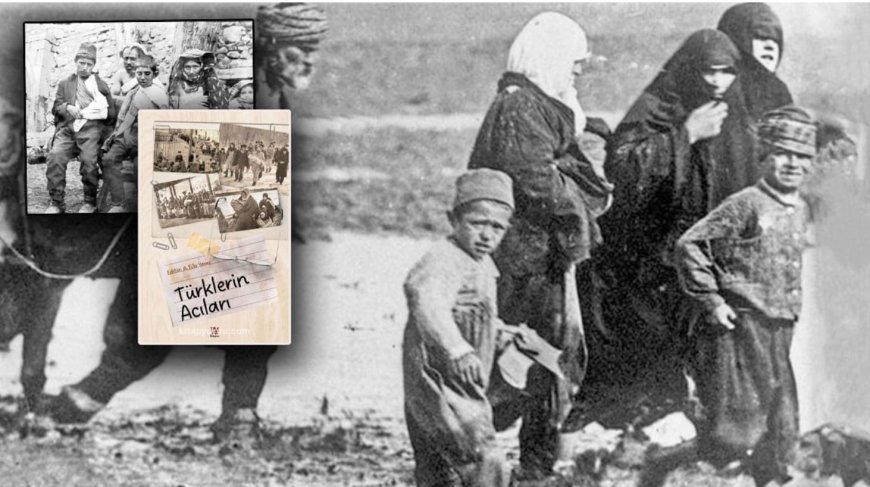
Dr. Hayati Bice, in an analysis of the recently published book “The Sorrows of the Turks,” highlights how national tragedies are less frequently discussed, written about, or remembered compared to victories, raising a critical debate on the Turkish nation's mechanism for handling historical pain.
The book, a two-year project by the Kuşlukta Writers Community, consists of 28 separate articles covering a wide range of narratives, from the Balkan War's sorrows to the plight of Turkic peoples in Crimea and the Caucasus who were exiled to the steppes of Turkistan and Siberian tundras during World War II. The project specifically aimed to use an intimate methodology focusing on individual human stories rather than "soulless texts that treat people like statistical data," a point strongly emphasized by community member Mine Sultan Ünver. Prof. Dr. Mehmet Öz, Head of the Turkish Hearths (Türk Ocakları), summarized the book's goal, stating, "Perhaps due to the grandeur of Turkish history and the inherent gravitas in the national character, the Turkish nation prefers not to recount the atrocities and tortures it suffered; it virtually buries its sorrows, choosing instead to build a brand new future."
The Nation That Hides Its Pains


Dr. Hüseyin Özbay, in his introductory piece titled "The Nation That Hides Its Pains," added his own observation to Ziya Gökalp's famous quote ("We made history, but we did not write it"): "We became the nation that suffered the most pain in history and today, yet we did not sufficiently concretize and publicize it." Özbay argues that while the Turkish character has shown modesty by not resorting to "artificial and fake propaganda of sorrows," this trait has also led to great negligence in transmitting many tragedies to new generations, causing many pains and their sources to be erased from collective memory.
During the writing process, the raw emotional power of the events discussed often led to minutes-long silences among community members. Bice recalls heart-wrenching stories, such as the child tortured in Khojaly, Azerbaijan, and the need to understand the echoes of the Morea Rebellion to grasp current tensions with Greece in Western Thrace and the legacy of Dr. Sadık Ahmed.
### A Psychoanalytic View: Vengeance vs. Forgetting


The book includes a pivotal essay by Psychiatrist Prof. Dr. Ali Çayköylü, titled "Are Turks Indecisive About Transferring Their Historical Pains to New Generations?" requested by Editor Prof. Dr. Filiz Yavuz. Çayköylü observes that Turkish society is often driven by emotional and superficial decisions, often acting with mercy and compassion even toward its enemies—perhaps more so than other nations—but notes that this comparison excludes nations "that sustain their existence by oppressing people through a colonial, barbaric, and plundering culture."
Referencing Carl Gustave Jung's concept of the collective unconscious, Çayköylü suggests that while the individual is not the society itself, the sum of individual characteristics determines the collective memory. He then asks a crucial question: "Are Turks perhaps more forgiving, finding it unsuitable to keep their historical pains alive with feelings of revenge (revanchism)?"
Vengeance and forgetfulness or forgetting often cannot stand side by side. How prevalent is vengeance in the culture of Turkish societies? It is claimed that Turks do not live much with feelings of revenge. One argument supporting this claim attempts to explain it by the absence or scarcity of an idiom or proverb related to vengeance in our language.
Çayköylü concludes that national sorrows are often suppressed or downplayed due to the fear that they might threaten national identity or damage the narrative of an "legendary state and nation," potentially eroding social self-confidence. He warns: "If the human memory is blunted more than necessary, the social impact and benefit of the word ‘lesson’ cannot emerge."
More Sorrows Awaiting a Second Volume
Though the first volume is 423 pages, many subjects remain untouched, necessitating a second volume. These include the trauma of Karbala, the current humanitarian crisis in Gaza, the defense of Medina by Fahreddin Pasha, the laments of Yemen, the situation of Syrian Turkmens, the severe pressures on Uyghur Turks in East Turkistan, the ecological disaster surrounding the Aral Sea, and the destructive impact of separatist terrorism within Turkey.
Dr. Hayati Bice concludes his article with a powerful sentence: “Let us analyze the sorrows in our history properly, and learn the necessary lessons well, so that our future generations do not experience greater sorrows.”
What's Your Reaction?
 Like
0
Like
0
 Dislike
0
Dislike
0
 Love
0
Love
0
 Funny
0
Funny
0
 Wow
0
Wow
0
 Sad
0
Sad
0
 Angry
0
Angry
0

Editor | Wise News Press — Delivering accurate, timely global news with integrity, insight, and editorial responsibility.
















Comments (0)