



Can Putin’s partners bring him to talks? Türkiye’s new peace architecture
Tokayev’s appeal revives a Türkiye-led strategy combining diplomacy, security guarantees and rising costs to return Russia and Ukraine to negotiations.


By Yusuf Inan | Wise News Press
Journalist and Author | Political and Strategic Analyst
ANKARA, TÜRKİYE — Kazakh President Kassym-Jomart Tokayev’s call beside Russian President Vladimir Putin to freeze the war and return to an “Istanbul formula 2.0” did not, by itself, produce a diplomatic breakthrough.
The Kremlin rejected the proposal, while Ukraine welcomed it and argued that Moscow must face greater pressure before accepting realistic peace initiatives. Yet these responses do not require choosing between two absolute conclusions.
Tokayev’s intervention is neither a formula capable of bringing Russia immediately to the negotiating table nor proof that diplomacy through Moscow’s partners has failed.
The more realistic conclusion is that Russia should be offered political space to return to negotiations without having to present the decision to its domestic audience as capitulation to Western pressure. That space, however, must be supported by enforceable security guarantees, a viable negotiating framework and international instruments demonstrating the growing cost of continuing the war.


Why Tokayev’s appeal matters — and why it is not enough
Tokayev delivered his message not in Washington, Brussels or London, but at a joint Russia-Kazakhstan forum in Omsk, with Putin present.
The Kazakh leader proposed freezing the conflict as the first stage of a broader peace process and returning to the Istanbul framework under security guarantees involving major powers, including Russia.
Kazakhstan shares the world’s longest continuous land border with Russia and maintains extensive economic, political and security ties with Moscow. Tokayev also stressed that Kazakhstan’s strategic relationship with Russia had not changed.


His appeal therefore did not represent a geopolitical shift into an anti-Russian camp. Its importance came from something else: a close regional partner was able to tell the Kremlin that the war’s human, economic and political costs were becoming increasingly difficult for neighbouring states to ignore.
The Kremlin’s rejection on the same day demonstrated the limits of a single friendly message. A statement without a coordinated security model, timetable, monitoring mechanism, incentives and diplomatic follow-up is unlikely to alter Russia’s military objectives.
The correct conclusion is not that the words of Russia’s partners are irrelevant. It is that diplomacy conducted through those partners must become organised, repeated and connected to a broader political strategy.
Ukraine’s response points to a two-track strategy
Ukraine welcomed Tokayev’s appeal while linking meaningful diplomacy to increasing pressure on Moscow.
Ukrainian officials have repeatedly argued that a ceasefire must be supported by strength, monitoring and consequences for violations. They have also warned that declarations alone will not persuade Russia to end the war.
This position contains an important balance.
Ukraine can discuss ending hostilities along the current front without legally surrendering the occupied territories. A temporary ceasefire is not the same as recognising the battlefield line as an international border.
A halt in fighting could reduce civilian and military casualties, facilitate prisoner exchanges, support the return of abducted Ukrainian children and open space for broader political negotiations.
But a ceasefire must not become a preparation period for another offensive. Its credibility would depend on effective observation, continued Ukrainian defence capacity, clear security commitments and defined consequences for renewed aggression.
A sustainable strategy must therefore have two interconnected tracks.
The first is to provide Moscow with a political explanation for ending the war that does not rest solely on surrendering to Western demands.
The second is to show that if Russia repeatedly rejects workable peace proposals, the military, economic and diplomatic costs of continuing the war will grow.
A diplomatic invitation and international pressure are not necessarily competing policies. They can be sequential and mutually reinforcing instruments.
Why Türkiye is one of the natural coordinating powers
Türkiye’s value does not arise solely from its ability to communicate with Russia and Ukraine.
Ankara is a NATO member that supports Ukraine’s sovereignty and territorial integrity while maintaining extensive political, commercial, energy and security relations with Moscow.
Türkiye has facilitated direct contacts, prisoner exchanges, humanitarian arrangements and negotiations during the war. Foreign Minister Hakan Fidan has said that Ankara remains in contact with the relevant parties and is prepared to contribute to a ceasefire, monitoring arrangements and a long-term peace framework.
Ukraine has also publicly recognised Türkiye’s role. During talks with Fidan in Kyiv in July 2026, Andrii Sybiha said Türkiye had played an important role in peace efforts and could continue to contribute to the diplomatic process.
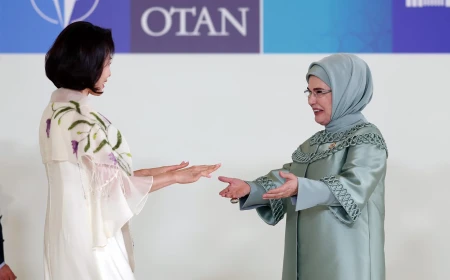
The NATO Summit held in Ankara on 7–8 July 2026 further demonstrated Türkiye’s importance within the Western security architecture. Allied leaders reaffirmed their support for Ukraine’s sovereignty and pledged continued military assistance, while Türkiye continued to preserve channels of communication with Moscow.
Ankara’s second advantage is its institutional position in the Turkic world.
Türkiye is one of the founding members of the Organization of Turkic States, whose headquarters is in Istanbul. The organisation was established to develop broad cooperation among Turkic states.
None of this makes Türkiye the only possible mediator. The United States, European states, the United Nations and Gulf countries also have important roles.
Türkiye is nevertheless one of the strongest candidates to connect NATO, the Black Sea region, Moscow, Kyiv, the Turkic states and influential Muslim-majority countries within the same diplomatic architecture.
The OTS should coordinate a peace appeal, not form an anti-Russia bloc
It would be neither realistic nor strategically useful to transform the Organization of Turkic States into a political front against Moscow.
Kazakhstan, Kyrgyzstan and Uzbekistan maintain different levels of economic, security, transportation and social ties with Russia. Those relationships cannot be ignored or reversed by a declaration.
Yet those ties are also what give these countries diplomatic value. They can communicate with the Kremlin without first breaking their relationship with it.
The objective should therefore not be a hostile and binding “anti-Russia OTS statement.”
A more workable model would involve member states repeating the same core message in language suited to their own relations with Moscow:
The war must end. The Istanbul negotiations should resume. Ukraine’s sovereignty must be protected. The security concerns raised by the parties must be discussed within international law, and urgent humanitarian matters must be separated from the most difficult territorial disputes.
When Moscow hears such demands from Washington, Brussels and London, it can portray them as part of a Western strategy of containment.
When similar messages come—through different diplomatic language—from Ankara, Astana, Baku, Tashkent and Bishkek, it becomes harder to argue that concern about the war exists only within NATO.
Such coordination may not compel Putin to change his policy. It could, however, challenge the Kremlin’s presentation of the war as exclusively a confrontation with the West and offer a different political narrative for returning to negotiations.
Diplomatic room for Moscow cannot come at Ukraine’s expense
Providing Russia with diplomatic space to re-enter negotiations must not mean rewarding territorial conquest.
This is the most sensitive boundary of the proposed strategy.
A ceasefire must not automatically transform the current front line into a legal border. No diplomatic mechanism should decide Ukraine’s future without Kyiv’s full participation.
An agreement that dismantles Ukraine’s defence capacity or leaves the country exposed to another attack would not create lasting peace.
A formula offered to Moscow must therefore stop far short of accepting all Russian demands. It should create a framework in which Russia’s stated security concerns can be discussed, the killing can be halted and unresolved political and territorial issues can be transferred to a structured diplomatic process.
Ukraine’s guarantees cannot consist of goodwill statements alone.
Ceasefire monitoring, documentation of violations, continued air defence, long-term security commitments and predetermined consequences for another attack must be clearly defined.
Offering Russia a path back to diplomacy and giving Ukraine credible protection are not competing objectives. They are the two indispensable elements of the same agreement.
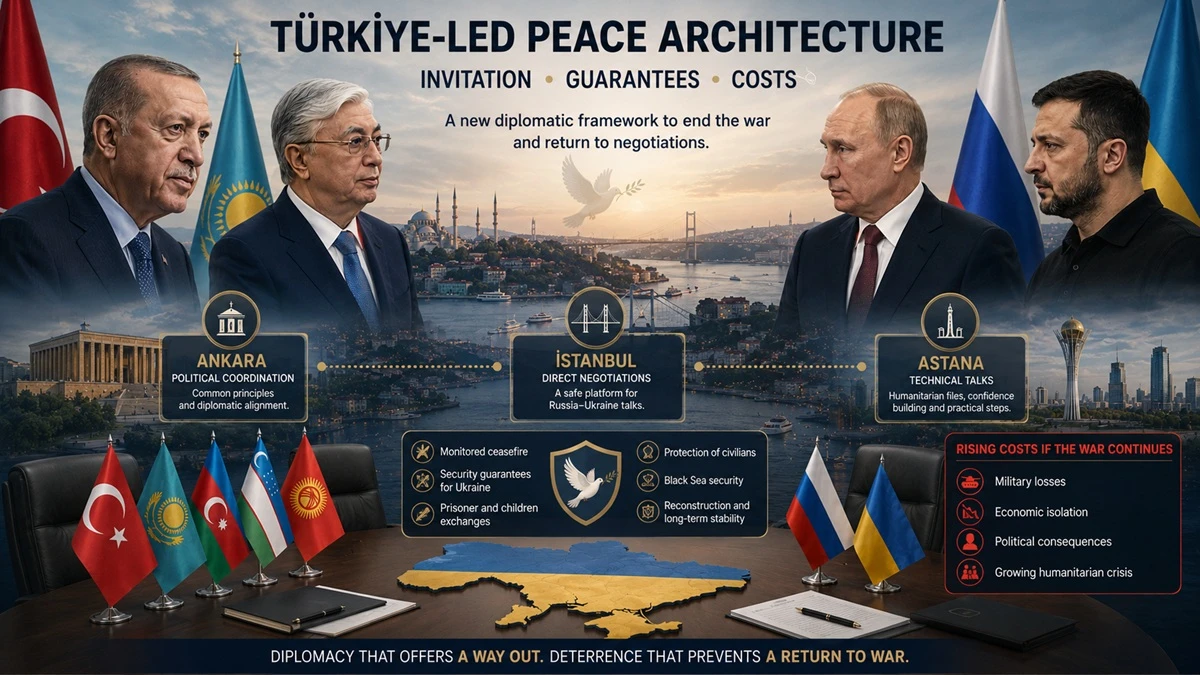
A practical division of labour between Ankara, Istanbul and Astana
A new initiative must be more than a ceremonial summit and a photograph of leaders around a table.
Ankara, Istanbul and Astana could assume separate but complementary functions.
Ankara could become the centre of political coordination. Türkiye could begin with an informal meeting of OTS foreign ministers to establish common principles.
The resulting declaration should not humiliate Russia. It should call for a monitored ceasefire, renewed Istanbul talks, respect for Ukrainian sovereignty, prisoner exchanges, the return of children, civilian protection, nuclear safety and security of navigation in the Black Sea.
Istanbul could serve as the centre for direct Russian-Ukrainian negotiations. Türkiye’s role would not be to impose a settlement, but to provide continuity, security, communication channels and technical infrastructure.
Because Istanbul has already hosted Russian and Ukrainian delegations, a renewed process would not need to begin without institutional memory. Türkiye’s official mediation policy also provides an existing framework for such a role.
Astana could host technical negotiations on prisoner exchanges, abducted children, civilian evacuations, nuclear safety and confidence-building measures.
Kazakhstan’s unwillingness to assume a comprehensive formal mediation role does not prevent it from contributing to limited humanitarian files. That would be a realistic use of Astana’s access to Moscow without exaggerating its capacity.
After a common Türkiye–OTS position is developed, selected Muslim-majority states could form a second circle of support.
Saudi Arabia, Qatar, the United Arab Emirates, Pakistan and Indonesia would not necessarily follow one political line. Different states could instead contribute to humanitarian financing, food security, prisoner exchanges, reconstruction and political support for negotiations.
The OIC’s high-level participation in the 2026 Antalya Diplomacy Forum demonstrated Türkiye’s capacity to bring officials and institutions from this broader diplomatic space together.
This second circle would not replace the West. Its purpose would be to show that the demand for peace does not come solely from NATO and Europe.
What the 2018 Mykolaiv project reminds us
In 2018, through Fond İnan, which I founded, we planned a Turkic World Festival in Mykolaiv intended to bring communities from Türkiye, Ukraine and the Turkic world together around cultural and humanitarian solidarity.
Fond İnan was established in 2016 to build humanitarian, cultural and social bridges between Türkiye and Ukraine and to support people in need.
The project was not implemented. The disputes surrounding that outcome are not the subject of this analysis.
Nor should the festival be portrayed as an initiative that could have prevented the war or as a model for today’s interstate peace negotiations.
Its limited historical significance is that the need to strengthen Ukraine’s connections with the Turkic world—through governments, municipalities, civil society and humanitarian organisations—was already visible before the full-scale invasion.
The requirement today is far greater than a cultural event. It is for a measured, institutional and results-oriented diplomatic mechanism led by states.
Conclusion: Invitation, guarantees and costs must form one strategy
Tokayev’s appeal may not represent a turning point, but it revealed a diplomatic possibility.
A close partner of Russia called, in Putin’s presence, for the war to be frozen and for negotiations to return to Istanbul. Ukraine welcomed the message. The Kremlin rejected it.
The correct response is not to abandon diplomacy through Russia’s partners and demand only more sanctions.
Nor is it enough to repeat friendly appeals indefinitely without consequences.
What is needed is a strategy that combines invitation, guarantees and cost.
Türkiye could coordinate a peace appeal among Turkic states, support direct negotiations in Istanbul and encourage technical work in Astana.
Ukraine must be a founding party to the process. A ceasefire must not legally legitimise occupation, and security guarantees must be concrete and enforceable.
If Moscow continues to reject such a framework, broader political and economic pressure would gain stronger legitimacy—not merely as a Western demand, but as an international response to the rejection of credible diplomatic alternatives.
Russia’s partners may be able to invite Putin back to the negotiating table.
What could make that return politically possible is a balanced formula that gives Moscow room to negotiate. What could make peace lasting is credible and concrete security for Ukraine.
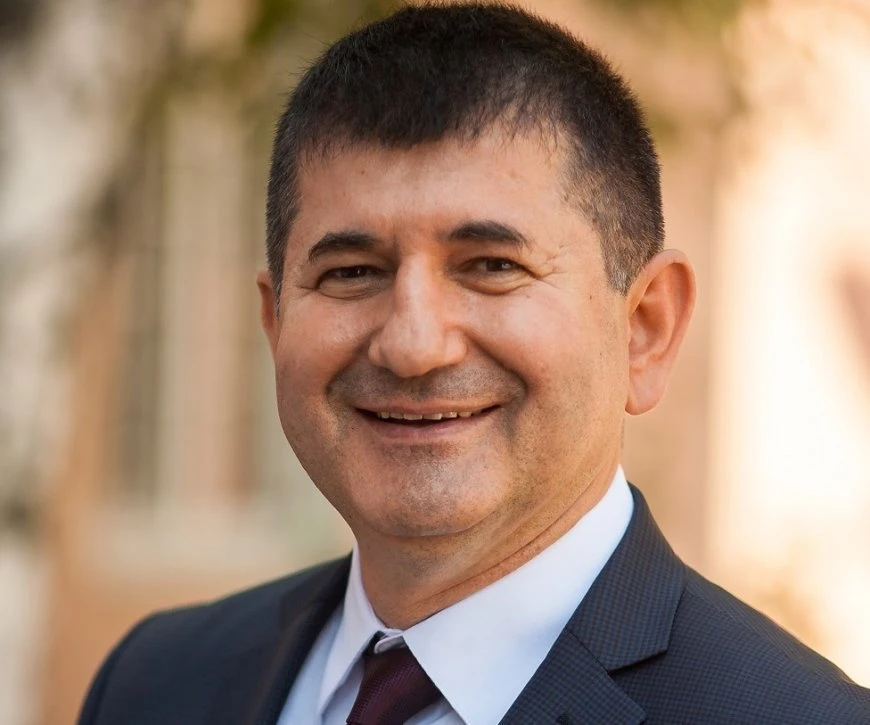
Yusuf İnan
WiseNewsPress.com
Yusuf İnan is a journalist, author, and political and strategic analyst. He serves as editor-in-chief of UAPresa.com, WiseNewsPress.com, SehitlerOlmez.com and YerelGundem.com. His work focuses on strategic and political analysis concerning developments in Türkiye and around the world.
Author’s note: Yusuf İnan is the founder of Fond İnan and originated the Turkic World Festival project planned for Mykolaiv in 2018.
What's Your Reaction?
 Like
0
Like
0
 Dislike
0
Dislike
0
 Love
0
Love
0
 Funny
0
Funny
0
 Wow
0
Wow
0
 Sad
0
Sad
0
 Angry
0
Angry
0

Editor | Wise News Press — Delivering accurate, timely global news with integrity, insight, and editorial responsibility.








Comments (0)