



The Sergeant Who Changed History: The Full Story of How Ahmet Cavus Captured General Trikoupis
Sergeant Ahmet and two soldiers captured Greek Commander-in-Chief Trikoupis in a daring bluff. From the confrontation on Elmalıdağ to Atatürk’s interrogation, here is the complete story of the event that changed the war.
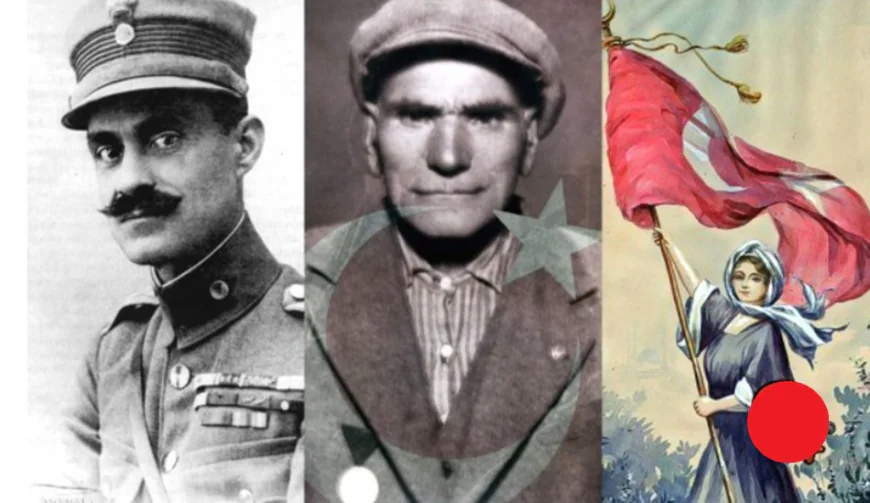


WISE NEWS PRESS / GLOBAL INSIGHT / AFYONKARAHISAR, TURKEY — DEC 16, 2025
It was a feat that defied logic. Sergeant Ahmet (Ünlü) Çavuş from Afyon, accompanied by only two fellow soldiers, captured General Nikolaos Trikoupis, the Commander-in-Chief of the Greek Army, along with his entire staff. This impossible mission not only instilled high morale in the Turkish Army but also marked a definitive turning point in the War of Independence.
Today, a modest monument stands on the Çakmaklı-Bölmelik Hill. On its marble plaque, the following lines are inscribed:
"This is the place where, on Saturday, September 2/3, 1922, at 22:30, the Commander-in-Chief of the Greek Armies General Trikoupis, along with 2nd Corps Commander Colonel Vangelis, Colonel Kalinalis, and their chiefs of staff and aides, were taken prisoner by Staff Colonel Dadaylı Halit Bey (Akmansü), Commander of the 5th Caucasian Division of the victorious Turkish Armies."
The Bluff on Elmalıdağ
On that historic night, Sergeant Ahmet and his two comrades were on a reconnaissance mission. They were expecting a reinforcement group of 40 men to follow, but they were alone. Their equipment was limited; their most trusted weapons were 11 time-fuse grenades.
Climbing Elmalıdağ silently to avoid detection, Ahmet Çavuş was ahead of the group. As he approached the summit, he heard voices and saw silhouettes. Getting closer, he discerned 8-10 officers sitting around a portable table. He did not wait for his friends. Grabbing a grenade, he shattered the silence of the night with a roar:


"Don't move! Hands up! Surrender, or you will all die immediately!"
The Greek officers, stunned by the lightning-fast command, stood up and raised their hands. Suddenly, one officer attempted to flee on a horse. Ahmet Çavuş gave him no chance; he grabbed the horse's reins, seized the rider by the collar, and pulled him down.
One of the officers, his hands still in the air, asked: "Who are you? What is your rank?"


Ahmet Çavuş replied boldly: "I am a Sergeant Major! I am the Regiment Commander."
The Greek officer, who spoke good Turkish, was confused: "How can a sergeant command a regiment?" Ahmet continued without pausing: "In our army, we have corporals who command divisions!"
"We Have Surrounded You"
Ahmet’s two friends approached and confiscated the officers' pistols, swords, and grenades. The highest-ranking officer, still in disbelief that they had been captured, asked: "How much force do you have?"
Ahmet played his psychological hand perfectly: "We have three units ready to attack! We have completely surrounded you, and we will destroy you all."
Realizing that resistance was futile and could lead to death, the Greek officers surrendered. The ice broke between the two groups; a Turkish soldier offered rusks from his bag, and the Greeks offered cigarettes in return. The starving enemy soldiers devoured the rusks immediately.
Trikoupis: The Commander Who Didn’t Know He Was Commander
While the soldiers were talking, District Governor Hüseyin Hüsnü Bey and Battalion Commander Fuat Bey arrived. Fuat Bey couldn't believe his eyes. "Trikoupis... Trikoupis..." he shouted.
Sergeant Ahmet and his friends had unknowingly captured the new Commander-in-Chief of the Greek Army. Ironically, General Trikoupis himself did not know he had been appointed to the post to replace General Yeoryos Hacıanestis. The Greek courier carrying the order had been captured by Turkish cavalry earlier. Trikoupis would learn of his promotion from the Turks.
Trikoupis Recalls the Capture (1952)
In 1952, at the age of 84, General Trikoupis received Turkish journalist Hıfzı Topuz at his home in Athens and described the moment of his surrender:
"According to our understanding, a sword is not surrendered to the enemy; it is considered a disgrace! My aide came to me excitedly: 'General! Let's destroy your sword,' he said. I handed it over immediately. He broke it right in front of me. My horse had been shot and was dying nearby. I jumped on another horse and tried to break through the circle. I failed. I was caught. The cavalry sword hanging on the saddle was also confiscated. They took me and my friends first to Ismet Pasha, the Western Front Commander, and then to the presence of Mustafa Kemal (Atatürk) Pasha..."
Ahmet Çavuş was later thanked and awarded the "Medal of Independence" for his courage. Some of Trikoupis's clothes were also gifted to him.
The Contrast: The Elegant Prisoner and the Disheveled Victor
The list of captives was extensive: Commander-in-Chief Trikoupis, 2nd Corps Commander General Dijennis (known for his brutality and noted in the "Investigation of Atrocities" reports), 2nd Corps Chief of Staff Colonel Yuvannis, 13th Division Commander Colonel Vangelis, Colonel Kalinalis, and their aides.
When Trikoupis dismounted at the Turkish headquarters, he was wearing his newest uniform. He asked in French, "Who is the commander?"
Colonel Halit Bey (Dadaylı Halit) had been sleepless for days. He was unshaven, and his khaki uniform was old and dirty. Trikoupis could not conceive that this unkempt man could be a commander. Halit Bey turned to him and said in perfect French: "I am the commander. Welcome to our camp. You are our guest. Please..."
Villagers Refuse to Feed the Enemy
Halit Bey ordered food for the prisoners, but the headquarters had none. They asked the nearby Göğem Village for supplies. The villagers, who had suffered under Greek occupation—their homes raided, crops stolen, and people oppressed—refused.
They declared they would not give food to the enemy but would provide anything Halit Bey and his soldiers needed. Halit Bey respected their stance. The prisoners were fed with soldiers' rations.
Confrontation with Asım Gündüz and Atatürk
On September 3, the prisoners were transferred to Uşak. Colonel Asım Gündüz, Chief of Staff of the Western Front, met them with fury. Witnessing the burned villages and massacred civilians, he addressed the Greek officers in French: "I do not know whether to greet you as the administrators of a modern army or as members of a vile, blood-drinking gang!"
Later, they were brought before Commander-in-Chief Mustafa Kemal Pasha. Atatürk tried to console his defeated counterpart: "Do not be upset! Even the greatest commanders can be defeated. Napoleon was also defeated."
But he then asked the critical question: "Why did you persecute the civilian population? Does ruthlessness, massacre, and rape suit civilized people, especially us soldiers?"
Trikoupis, looking miserable, replied: "You can be sure I did not know. I did not give any orders against civilians." Atatürk’s response was like a slap: "That means you could not command your soldiers!"
Atatürk allowed Trikoupis to send a telegram to his family in Istanbul to inform them he was alive, a gesture that moved the Greek general to tears.
POW Life in Kayseri
General Trikoupis, along with other generals and high-ranking officers, was sent to a prisoner camp in the Talas district of Kayseri. Trikoupis's wife, Elena, and their twin daughters, Maria and Eirini, were also brought to Talas.
The high-ranking officers were allocated lodgings at the American Hospital, where they could sit in the garden. Lower-ranking soldiers were placed in houses in Talas and Zincirdere. They worked on the construction of the Kayseri-Sivas highway for wages and were released after the Treaty of Lausanne in 1923.
The Hero’s Legacy: From Battlefield to Silver Screen
Ahmet (Ünlü) Çavuş, born in Afyon in 1890, was a veteran of Gallipoli. He had walked home barefoot from Istanbul after WWI, only to be arrested and tortured by Greek forces in Afyon. He escaped to Ankara, fought at Inönü and Sakarya, and finally made history at the Great Offensive.
After the war, Ahmet returned to civilian life. He married and had six children: sons Cemalettin, Osman, Selçuk, and Vedat, and daughters Hatice and Müfide. His eldest son, Cemalettin Ünlü, later became the Managing Editor of the influential Ulus newspaper.
Ahmet Çavuş worked as a head warden at Afyon Prison and later as a night watchman, living a life of poverty until his death on May 18, 1956.
His story inspired Turkish cinema. In 1972, director Semih Evin wrote and directed the film "Ahmet Çavuş," starring Erol Taş and Aytekin Akkaya, immortalizing the hero who captured a general with a bluff.
What's Your Reaction?
 Like
0
Like
0
 Dislike
0
Dislike
0
 Love
0
Love
0
 Funny
0
Funny
0
 Wow
0
Wow
0
 Sad
0
Sad
0
 Angry
0
Angry
0

Editor | Wise News Press — Delivering accurate, timely global news with integrity, insight, and editorial responsibility.












Comments (0)