



Tokayev urges Putin to freeze Ukraine war and revive Istanbul talks
Kazakh President Kassym-Jomart Tokayev urged Vladimir Putin to freeze the war in Ukraine and return to an Istanbul-based peace framework.


By Ahmet Taş | Wise News Press
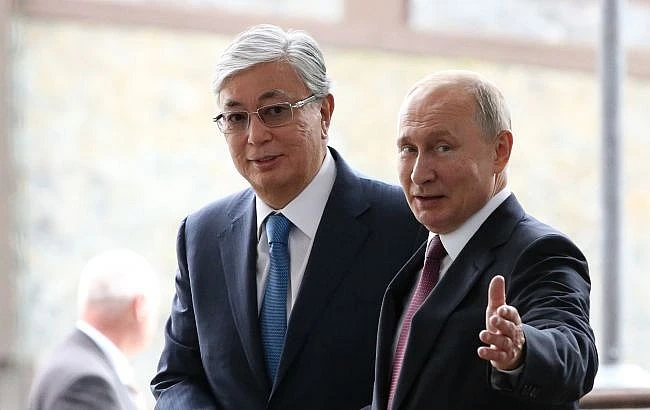
OMSK, RUSSIA — Kazakh President Kassym-Jomart Tokayev urged Russian President Vladimir Putin to consider freezing the war in Ukraine and returning to an Istanbul-based negotiating framework backed by international guarantees.
Tokayev made the proposal during bilateral talks in the Russian city of Omsk on July 25, where the two leaders met on the sidelines of the 22nd Russia-Kazakhstan Interregional Cooperation Forum. The meeting had officially been expected to focus primarily on bilateral relations and regional cooperation.
The Kazakh leader described the proposal as his personal assessment rather than a formally negotiated peace initiative. He did not announce that either Moscow or Kyiv had accepted the plan or that new negotiations had been scheduled.
What Tokayev proposed
According to Interfax, Tokayev said the prolonged war could be halted through what he called an “Istanbul formula 2.0,” followed by a broader diplomatic process supported by major international powers.


“Perhaps this conflict should now be frozen and we should return to the Istanbul formula 2.0.”
Tokayev said the mechanism would need guarantees from major powers and should ultimately lead toward a lasting peace. He argued that freezing armed hostilities was a method previously used in international diplomacy, although he did not explain how a ceasefire line would be monitored or enforced.
The Kazakh president also said he had received messages concerning the war from officials or other contacts in Europe and the United States. He said those communications had encouraged him to raise the subject directly during his meeting with Putin.


Tokayev expressed regret over the deaths of young people and described Russians and Ukrainians as closely connected peoples. He argued that continuing the war served the interests of those opposed to both countries, language that partly reflected Moscow’s public framing of the conflict.
Tokayev rejects a formal mediator role
Despite presenting a possible route toward negotiations, Tokayev said Kazakhstan did not intend to become an official mediator between Russia and Ukraine.
He told Putin that he was declining calls to act as an intermediary, while maintaining that he was prepared to express his assessment of how the war might be stopped. Tokayev’s position appears to distinguish between offering political advice and taking responsibility for organising or guaranteeing negotiations.
Kazakhstan has previously presented itself as a state capable of maintaining working relations with competing international blocs. It has preserved extensive political, economic and security ties with Russia while also supporting the principle of Ukraine’s territorial integrity and expanding cooperation with Western countries.
Tokayev also emphasised during the Omsk meeting that Kazakhstan continued to regard Russia as an important strategic partner and remained committed to allied relations despite international difficulties.
What the 2022 Istanbul talks contained
Russian and Ukrainian delegations held a series of negotiations during the opening months of Russia’s full-scale invasion, including talks in Istanbul on March 29, 2022.
Those discussions produced a preliminary framework under which Ukraine would consider permanent neutrality and abandon its ambition to join NATO in return for binding international security guarantees. The framework also allowed Ukraine to continue pursuing European Union membership.
However, the parties did not sign a final peace agreement.
Major differences remained over the strength and permitted equipment of Ukraine’s armed forces, the operation of international security guarantees and the future status of Russian-occupied Ukrainian territory. The two sides also disagreed over whether Russia could effectively veto action by guarantor states if Ukraine were attacked again.
The phrase “Istanbul formula 2.0” used by Tokayev therefore does not refer to a completed treaty that can simply be restored. It appears to mean reviving elements of the unfinished 2022 framework and adapting them to the military and political conditions of 2026.
Moscow has repeatedly cited the 2022 drafts as a possible basis for renewed negotiations. Ukraine, however, has argued that any future settlement must provide credible security guarantees and cannot leave the country vulnerable to another Russian attack.
Why security guarantees remain central
Tokayev’s reference to guarantees from major powers addresses one of the central obstacles in any potential ceasefire.
A temporary halt in fighting would not by itself resolve disagreements over Ukrainian territory, military deployments, sanctions or Kyiv’s long-term security alignment. It would also require a monitoring mechanism capable of identifying violations and determining how guarantor states should respond.
Ukrainian President Volodymyr Zelenskyy said in June that fixing the existing front line could represent the quickest route to stopping hostilities, but he distinguished that approach from an indefinite frozen conflict. Zelenskyy said any cessation of fighting would need international monitoring and guarantees designed to prevent Russia from restarting the war.
Tokayev did not specify which countries, apart from Russia, should provide guarantees or whether Ukraine would have an equal role in defining the arrangement.
His proposal therefore represents a political appeal rather than a detailed peace plan with agreed territorial, military and enforcement provisions.
Russia and Kazakhstan maintain strategic relations
The remarks were delivered within the broader context of close Russia-Kazakhstan relations.
The two countries cooperate in trade, energy, transport, defence and regional organisations. In November 2024, Tokayev and Putin adopted a joint statement on deepening their strategic partnership in what they described as a changing global order.
Kazakhstan also depends on transport routes passing through Russia for a substantial proportion of its oil exports, giving Astana a strong economic interest in maintaining stable relations with Moscow. At the same time, Kazakhstan has sought to diversify its partnerships and avoid being identified exclusively with Russian foreign policy.
That balancing strategy helps explain why Tokayev reaffirmed allied ties with Russia while also telling Putin that the nature of the war remained difficult for many people to understand.
According to reports from the meeting, Tokayev characterised the fighting as an interstate war rather than a civil conflict and said Kazakhstan continued to treat Ukraine with respect.
No immediate breakthrough announced
Tokayev’s intervention came as diplomatic contacts over the war continued without a clear breakthrough.
Russia said on July 24 that it was prepared to examine new US proposals while continuing military operations. American officials similarly said Washington remained willing to support negotiations but warned that a rapid settlement should not be expected.
The Kazakh proposal may add another public call for a ceasefire and renewed talks, but its impact will depend on whether Russia and Ukraine see sufficient common ground to enter substantive negotiations.
A return to Istanbul would also require agreement on the participants, the status of occupied territory, enforceable security guarantees and the sequencing of a ceasefire and political settlement.
For now, Tokayev’s remarks mark a notable appeal from one of Russia’s closest regional partners to halt the fighting. They do not, however, constitute an accepted agreement or establish a timetable for renewed negotiations.
WiseNewsPress.com
What's Your Reaction?
 Like
0
Like
0
 Dislike
0
Dislike
0
 Love
0
Love
0
 Funny
0
Funny
0
 Wow
0
Wow
0
 Sad
0
Sad
0
 Angry
0
Angry
0

Editor | Wise News Press — Delivering accurate, timely global news with integrity, insight, and editorial responsibility.







Comments (0)