



European officials warn Russia could test NATO within months as fears grow
European leaders and intelligence officials warn Russia may test NATO within months, while Baltic states urge calm over panic-driven war talk.



By Ahmet Taş | Wise News Press
BERLIN, Germany — European leaders and intelligence officials have warned that Russia could test NATO within months through a provocation, limited incursion or hybrid attack.
According to DW Turkish, citing The Guardian, the warnings come amid growing concern in European capitals that Moscow may seek to challenge NATO’s unity without launching a full-scale conventional war. Officials point to drone incidents, sabotage risks, cyberattacks and possible border provocations as scenarios that could be used to test the alliance’s response.
European leaders raise alarm
Polish Prime Minister Donald Tusk said last week that Russia could try to prove NATO’s Article 5 mutual defence commitment is “more theoretical than practical” by striking alliance territory. Tusk said his warning was based on intelligence assessments.
French President Emmanuel Macron described Tusk’s concerns as “solid and well documented.” Macron also called an urgent meeting with French party leaders and presidential candidates to discuss Russia and broader European security concerns.
Dutch Prime Minister Rob Jetten said the warning should be taken “very seriously,” while Finnish President Alexander Stubb said it would be useful for European societies to prepare mentally for the possibility that “something” could happen.


What NATO’s Article 5 means
NATO’s Article 5 states that an attack on one member is considered an attack on all. It is the central principle of the alliance’s collective defence system.
The concern among European officials is that Moscow may attempt a limited or ambiguous action that falls into a grey zone. Such an incident could force NATO members to decide whether the attack is serious enough to trigger a collective response.
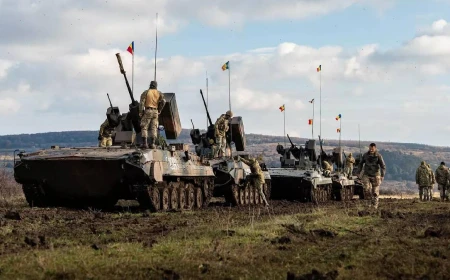
Possible scenarios discussed by officials include drone incursions, missile incidents, cyber operations, sabotage against infrastructure or a small-scale border violation. These would not necessarily amount to a full invasion, but they could still test NATO’s political will and operational readiness.


Intelligence officials point to months, not years
Michal Koudelka, head of the Czech intelligence service BIS, told The Guardian that increased drone activity and even a limited incursion into NATO territory could be part of the Kremlin’s calculations.
Koudelka said such a scenario could happen within months rather than years. His assessment adds to a wider debate in Europe over whether Russia is preparing more direct pressure against countries supporting Ukraine.
The report also noted that CIA Director John Ratcliffe made a surprise visit to Moscow last month and warned the Kremlin against any attack on NATO territory.
Hybrid warfare is already a concern
Germany has repeatedly warned that Russia could become ready for a broader confrontation with NATO by 2029. German defence and intelligence officials have also said Europe is already facing a form of hybrid warfare.
Recent incidents, including drone activity and suspected sabotage threats, have increased concerns about the protection of critical infrastructure. A drone reportedly found with explosives at Leipzig Airport has been cited among the cases that sharpened the debate in Berlin.
According to Politico, 100 hybrid attacks officially attributed to Russia were recorded across Europe between January and August. A senior NATO official quoted in the report said the real number could be above 200, even without counting cyberattacks. The official also said Europe faces thousands of Russia-linked cyberattacks every month.
Baltic states urge calm
Despite the warnings, officials in the Baltic states are urging European societies not to slide into panic. Countries bordering Russia have long warned that Moscow poses a serious security threat, but they also fear that constant talk of an imminent war could damage public confidence and economic stability.
Normunds Mezviets, director general of Latvia’s State Security Service, said he saw no sign of an imminent attack. He warned that Moscow’s broader goal is to spread fear and uncertainty across Western societies.
Estonian Foreign Ministry Secretary General Jonatan Vseviov also criticised panic on social media. He said that if there were clear reasons to fear an attack, officials would say so openly. Until then, he urged people to stay calm and continue their normal lives.
War talk carries political risks
The debate over a possible Russian attack has consequences beyond defence planning. In several European countries, warnings about war can weaken trust in mainstream parties if voters believe governments cannot prevent escalation.
Analysts say this is one reason why Russia may benefit from uncertainty even without launching a direct military strike. Fear, political division and distrust inside European societies can serve Moscow’s interests by weakening public support for Ukraine and for defence spending.
This makes the tone of official communication important. European governments are trying to warn the public without creating panic. The message from officials is that the threat is serious, but societies should respond with preparedness rather than fear.
Moscow denies attack plans
The Kremlin denies that Russia intends to attack NATO. Moscow has repeatedly dismissed Western warnings as alarmist and has accused NATO of escalating tensions near Russia’s borders.
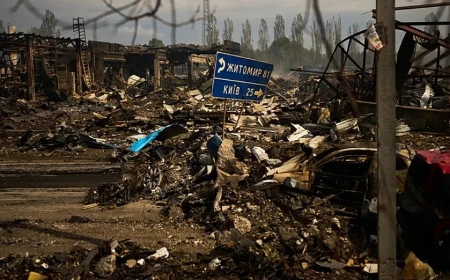
Still, Russia’s war against Ukraine, intensified drone strikes and a rise in hybrid security incidents have pushed European defence planning higher on the political agenda. The latest warnings show that European leaders are increasingly focused not only on the battlefield in Ukraine, but also on the possibility that Moscow could test NATO’s red lines elsewhere in Europe.
WiseNewsPress.com
What's Your Reaction?
 Like
0
Like
0
 Dislike
0
Dislike
0
 Love
0
Love
0
 Funny
0
Funny
0
 Wow
0
Wow
0
 Sad
0
Sad
0
 Angry
0
Angry
0

Ahmet Taş is a journalist, editor and Turkey Office Manager of the Wise News Press Media Group. He works across news, digital media and international publishing, focusing on accurate, responsible and accessible journalism. He contributes to the development of media projects that bring important political, social and global developments to a wider international audience.














Comments (0)