



Ukraine's multinational defense: Turks, Georgians and others who fought
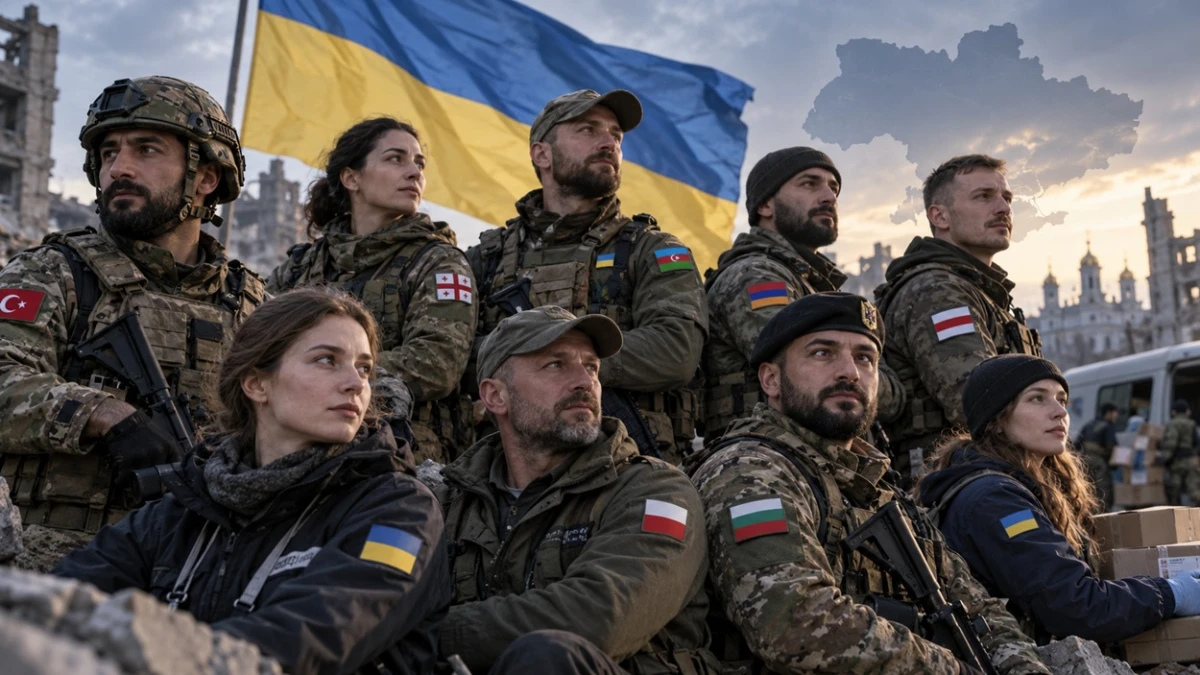
From Turkish and Georgian volunteers to Ukrainian citizens of Azerbaijani, Armenian, Hungarian and Bulgarian origin, many communities joined Ukraine’s defense.


By Yusuf İnan | Wise News Press
KYIV, UKRAINE — Ukraine's defense against Russia has included not only ethnic Ukrainians but also citizens from historic minority communities and thousands of foreign volunteers from dozens of countries.
The distinction matters. An Azerbaijani, Armenian, Hungarian, Bulgarian or Roma soldier fighting for Ukraine may be a Ukrainian citizen from an ethnic minority, not a foreign fighter. By contrast, many Turks, Georgians, Belarusians, Poles, Russians and Latin Americans joined Ukraine as citizens of other countries.
That makes Ukraine's wartime manpower unusually multinational.


According to Ukraine's Military Ombudsman Olha Reshetylova, around 16,000 foreign volunteers from at least 72 countries were serving in Ukraine's defense as of 5 August 2026. Nearly 40% were citizens of Latin American countries, showing how the foreign volunteer profile has expanded far beyond Europe and the former Soviet region. The Ombudsman's office said it had received more than 300 complaints from foreign service members, their relatives and representatives since beginning work in January 2026.
Ukraine's Ministry of Defense says foreigners who meet legal requirements can sign military contracts and serve in combat brigades across the Armed Forces. Since 2022, their service has taken several forms: International Legions, national volunteer formations and foreign personnel integrated directly into Ukrainian brigades.
Foreign military service is now part of Ukraine's formal defense system
Foreign participation is no longer limited to small independent volunteer groups.


The Ukrainian Defense Ministry says foreign nationals may serve by contract if they are legally present in Ukraine, have valid identification, meet medical and age requirements and pass security checks. Foreign personnel can now serve in regular combat brigades rather than being confined to separate international units.
The system has also become more institutionalized. A dedicated recruitment center for foreign nationals and stateless persons was established, while the government has expanded the legal framework governing foreign service members. Foreign troops may also qualify for combatant status and certain veteran protections if they meet statutory requirements.
Ukraine's military intelligence service, HUR, said in March 2026 that its International Legion included volunteers from more than 50 countries. Its representative said roughly 70% of the unit consisted of fighters originating from the United States, European countries and other foreign states, under Ukrainian command structures.
Turkish citizens fought and died, but no reliable total exists
There is still no official Ukrainian figure for the number of Turkish citizens who have served in Ukraine's armed forces.
However, individual cases are documented.
Turkish citizen Sedat Kök, who had worked in cybersecurity, traveled to Ukraine and joined the 23rd Mechanized Brigade. Turkish outlet Serbestiyet reported that after completing military training, he was deployed to the front and was killed in March 2025 in fighting on the southern Donetsk-Zaporizhzhia axis.
Another Turkish citizen, Ali Emre Kaymaz, was reported killed while serving as a volunteer on the Ukrainian side in February 2026. Crimea News Agency cited Memorial International Volunteers for Ukraine as announcing his death during combat.
Media reports have circulated estimates of the total number of Turks who joined Ukraine's military, but those numbers are not supported by transparent official Ukrainian statistics. Some estimates also originate in Russian intelligence or wartime propaganda channels. For that reason, a precise figure should not be presented as established fact.
What can be stated with confidence is that Turkish citizens have served in Ukrainian formations and at least two publicly identified Turkish volunteers have been reported killed.
Azerbaijanis illustrate the difference between ethnicity and nationality
The Azerbaijani case is different because many people described in media coverage as “Azerbaijani soldiers” are actually Ukrainian citizens of Azerbaijani ethnic origin.
Report.az said that 12 Azerbaijanis were killed and six wounded during 2025, mainly in fighting in the Donbas and Kharkiv directions. Importantly, the report stated that all of those killed and wounded were Ukrainian citizens.
This distinction is essential. Their participation was not foreign military intervention; they were members of Ukrainian society serving the country of which they were citizens.
Such examples show why ethnicity cannot automatically be equated with foreign nationality.
Ukraine's Azerbaijani community has produced servicemen across different ranks and formations, and the community has suffered repeated battlefield losses since the start of the full-scale invasion.
Armenians, Georgians and Belarusians followed very different paths
Ukraine's Armenian community has also produced soldiers who fought and died in the country's defense.
Karen Khachatryan, born in Baku and raised in Ukraine, joined the Armed Forces on 25 February 2022 and served in the 57th Separate Motorized Infantry Brigade. He was killed near Bakhmut on 30 November 2022. Ukrainian memorial records identify him as a defender who had spent most of his life in Ukraine.
Another Armenian-born defender, Haik Khachatryan, lived with his family in Volyn and was mobilized after the full-scale invasion. He was killed in April 2023 after serving in Ukraine's Territorial Defense Forces.
At a higher command and intelligence level, Security Service captain Karen Shahbazyan received the title Hero of Ukraine in February 2025 for courage and service in defending Ukraine's sovereignty and territorial integrity.
Georgians represent one of the most visible groups of foreign nationals fighting for Ukraine.
The Georgian Legion has operated since the earlier phase of the Russo-Ukrainian war beginning in 2014. Civil Georgia reported in June 2025 that the unofficial number of Georgian citizens killed while fighting in Ukraine had reached 67, after the Georgian Foreign Ministry confirmed another death.
That figure is not an official cumulative Ukrainian military statistic, but it is one of the more consistently tracked nationality-based casualty estimates available.
Belarusian volunteers built a different model around the Kastuś Kalinoŭski Regiment, formed by opponents of Alyaksandr Lukashenka's government.
According to Belarusian opposition-linked data cited by Belsat, more than 1,000 Belarusians had served through the regiment during the first four years of the full-scale war. Pozirk reported in January 2026 that available data indicated around 70 Belarusian volunteers had been killed fighting Russia in Ukraine.
For many Belarusian volunteers, defending Ukraine is also presented as part of a wider struggle against Moscow's influence and authoritarianism in Belarus.
Russians and Chechens also fight against Moscow
One of the war's most striking features is the presence of Russian citizens fighting on Ukraine's side.
Ukraine's HUR published profiles in September 2026 of Russian citizens serving in the Freedom of Russia Legion, including a former Russian naval serviceman who later joined Ukrainian military intelligence after assisting Ukraine with information about a Russian missile vessel.
The Siberian Battalion includes ethnic Russians as well as Tatars, Yakuts, Buryats and members of other peoples from the Russian Federation. Some of these volunteers describe Ukraine's victory as connected to their own opposition to Kremlin rule or aspirations for greater autonomy and self-determination.
Chechen volunteers form another important category.
Analysts cited by Euronews identified at least eight battalion-sized Chechen formations fighting on Ukraine's side, including the Dzhokhar Dudayev Battalion. Many of their commanders and fighters view the war as a continuation of the earlier Chechen struggle against Moscow. Exact personnel numbers cannot be independently verified.
These groups must be distinguished from Ramzan Kadyrov's Chechen forces, which fight for Russia.
The same ethnic identity, therefore, can appear on opposite sides of the battlefield.
Hungarians, Bulgarians and Roma fought as Ukrainian citizens
Ukraine's historic minorities have also paid a military price.
By April 2023, 18 Transcarpathian families had received emergency assistance from Hungary's foreign ministry after a family member of Hungarian nationality or Hungarian background died as a soldier in Ukraine. Among them were Ottó Lengyel, who volunteered in 2022 and was killed in Bakhmut, and Miklós Guti, who died while serving near Kreminna.
The examples are important because political tensions between Kyiv and Budapest do not necessarily reflect the attitudes of ethnic Hungarians living in Ukraine.
Bessarabian Bulgarians in southern Ukraine have also suffered repeated battlefield losses.
Bulgarian News Agency reports in 2026 documented the deaths of several ethnic Bulgarian Ukrainian soldiers from the Bolhrad region, including Alexander Vinogradov, Denis Davidov, Mikhail Boshkov, Igor Tariverdiev, Stepan Nikolov and Mykola Bulekov.
BTA notes that ethnic Bulgarians form one of the largest historic communities in Odesa region, based on Ukraine's last census, though those demographic figures are now decades old and should not be treated as a precise 2026 population count.
Roma Ukrainians have also served in substantial numbers.
A report presented at the Council of Europe found that Roma in Ukraine were fighting on the front lines in high numbers, many as volunteers, while Roma civil society organizations were simultaneously providing humanitarian assistance in war-affected areas. No comprehensive public casualty figure exists for Roma soldiers.
Poles and Latin Americans show how the foreign volunteer profile changed
Polish citizens have fought and died in Ukraine since the early stages of the full-scale invasion.
Tomasz Marcin Sekala, a 22-year-old member of the International Legion, was killed in Luhansk region in July 2024.
Polish volunteer Kacper Bass, who had served for more than three years and fought on several difficult sectors, died in a Polish hospital at the end of 2025 from wounds sustained on the front in Kharkiv region.
Not all Polish victims were combatants. Marek Rusek-Wolski, a humanitarian volunteer delivering aid near the front, was killed in a Russian drone strike near Kharkiv in 2026. Poland's Foreign Ministry confirmed his death.
By 2026, however, the biggest shift in foreign participation was geographical.
Ukraine's Military Ombudsman says nearly 40% of approximately 16,000 current foreign volunteers come from Latin America. This means the foreign defense contingent is no longer primarily European or post-Soviet in composition.
Which nationality suffered the most losses? There is no reliable ranking
The central methodological problem is that different sources count different categories.
Georgian estimates generally concern Georgian citizens.
Azerbaijani figures often concern Ukrainian citizens of Azerbaijani ethnicity.
Armenian community counts can mix soldiers and civilians.
Hungarian, Bulgarian and Roma cases largely involve historic Ukrainian minority communities.
Turkish and Polish cases more often involve foreign citizens who voluntarily joined Ukraine.
Belarusian, Russian and Chechen figures are frequently organized around political or national volunteer formations.
Because Ukraine does not publish a comprehensive casualty database cross-referenced by citizenship and ethnicity, a definitive league table of which nationality lost the most people cannot be responsibly produced.
What can be documented is broader and arguably more significant: Turks, Georgians, Belarusians, Poles and Russian citizens came from abroad to fight for Ukraine, while Ukrainian citizens of Azerbaijani, Armenian, Hungarian, Bulgarian, Roma and other backgrounds fought as members of the country's own multiethnic society.
The word “martyr” should also be used carefully in international reporting. It carries different religious, cultural and political meanings. Neutral English-language journalism is better served by terms such as fallen defender, service member killed in action, volunteer fighter or civilian aid worker, unless a community's own terminology is being directly attributed.
The war has therefore demonstrated that citizenship, ethnicity and birthplace did not mechanically determine political allegiance.
An ethnic Azerbaijani or Armenian could defend Ukraine as a Ukrainian citizen. A Turkish or Georgian citizen could travel to Ukraine voluntarily and sign a military contract. A Belarusian or Russian dissident could take up arms against Moscow. A Polish volunteer could fight, while another Polish citizen could serve only as a humanitarian worker.
Ukraine's defense became multinational not because all these people shared the same identity, but because they made different choices in response to the same invasion.
WiseNewsPress.com
What's Your Reaction?
 Like
0
Like
0
 Dislike
0
Dislike
0
 Love
0
Love
0
 Funny
0
Funny
0
 Wow
0
Wow
0
 Sad
0
Sad
0
 Angry
0
Angry
0
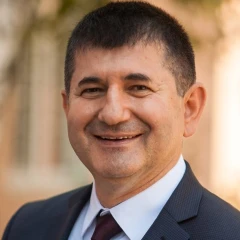
Yusuf İnan is a journalist, columnist, strategic analyst and head of the Wise News Press Media Group. His work focuses on international affairs, geopolitics, security and major social issues. Through his journalism, he promotes peace, dialogue, mutual understanding and responsible reporting while contributing to the development of international media projects.







Comments (0)