



Mecca Pact: Türkiye’s role in the emerging regional security order
The Mecca Pact links Türkiye, Saudi Arabia and Pakistan in collective defense, potentially reshaping regional deterrence, security partnerships and power balances.


By Yusuf Inan | Wise News Press
Journalist and Author | Political and Strategic Analyst
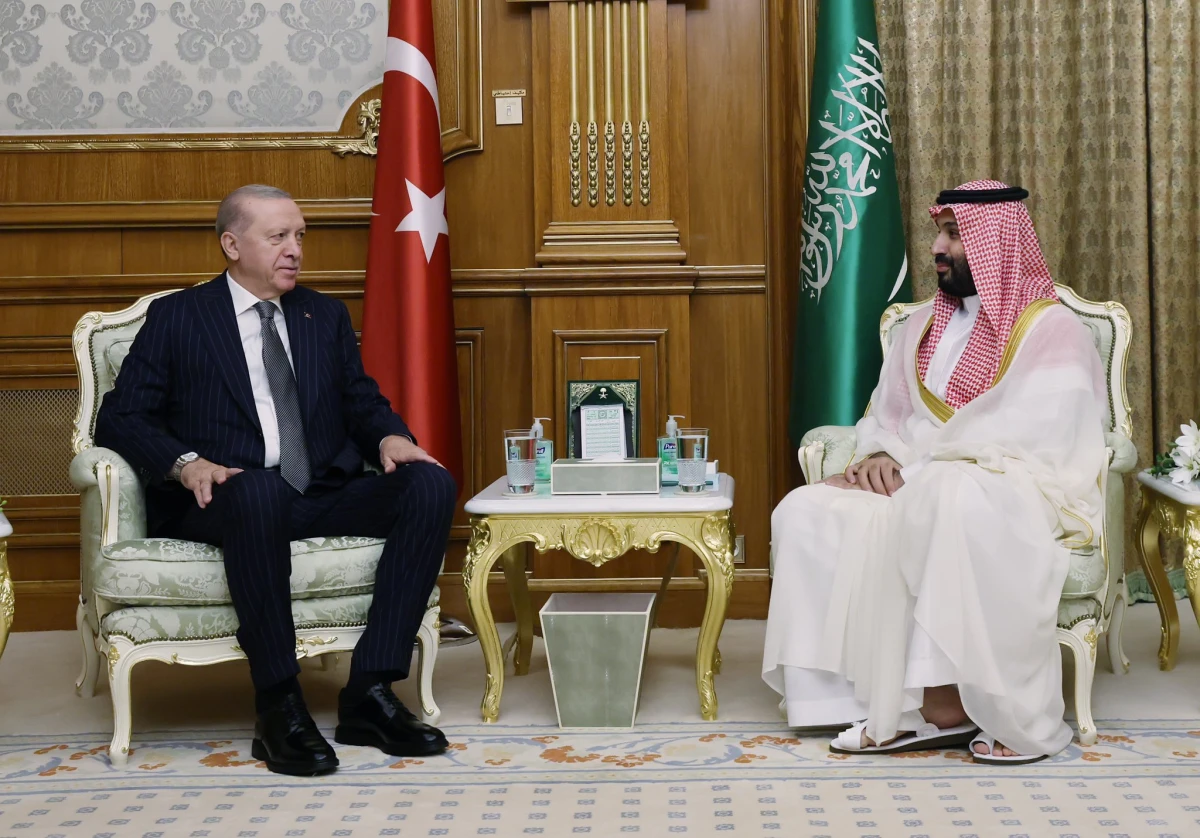
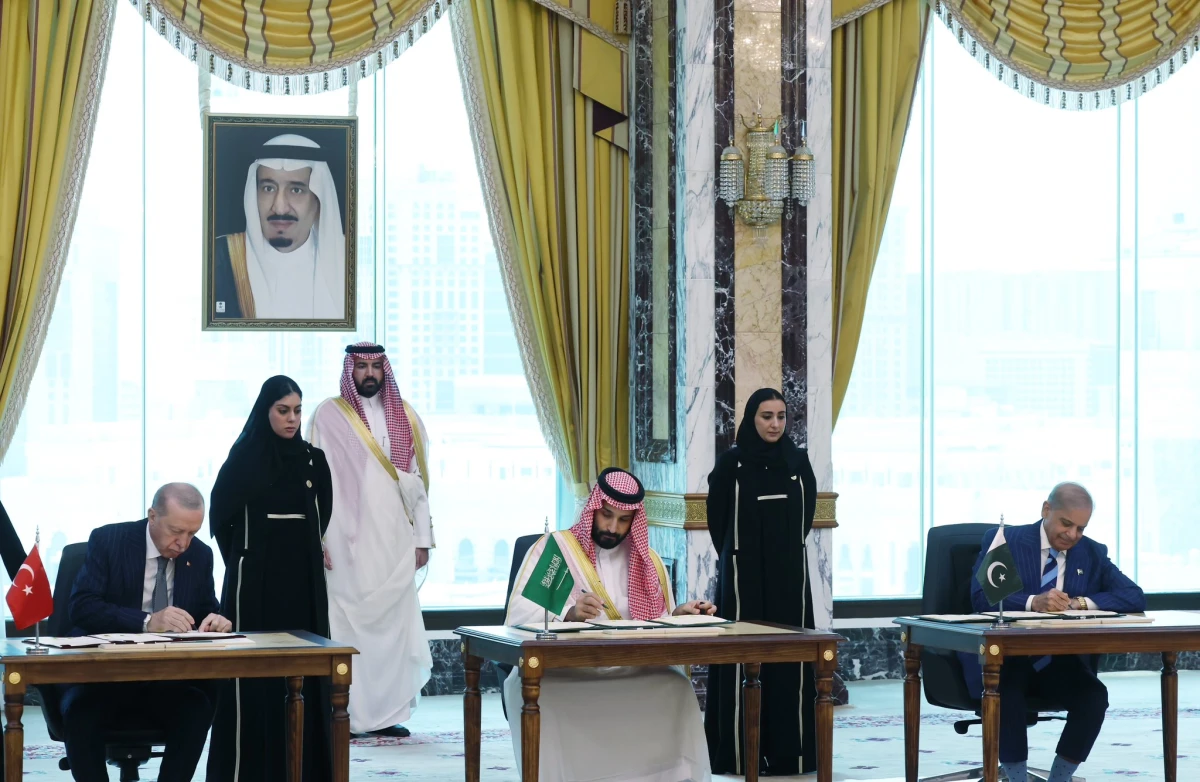
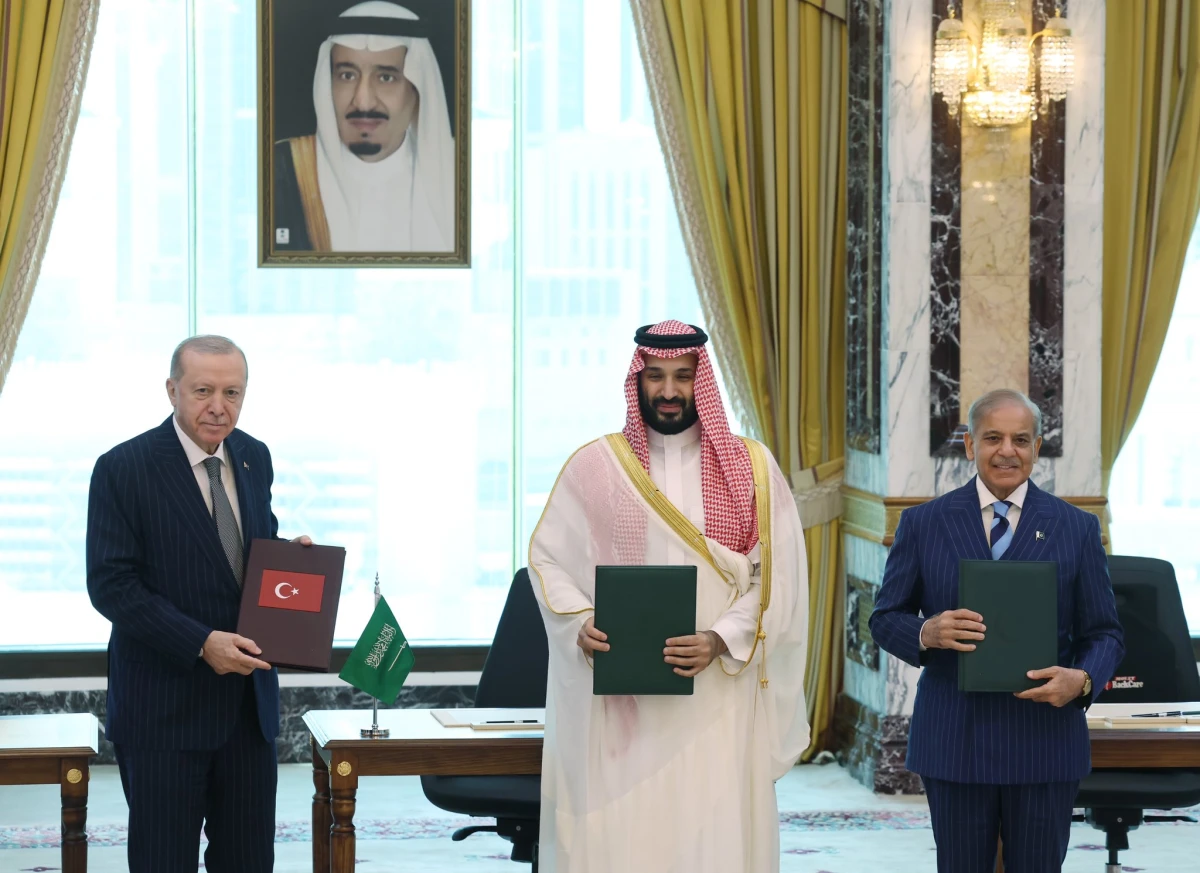
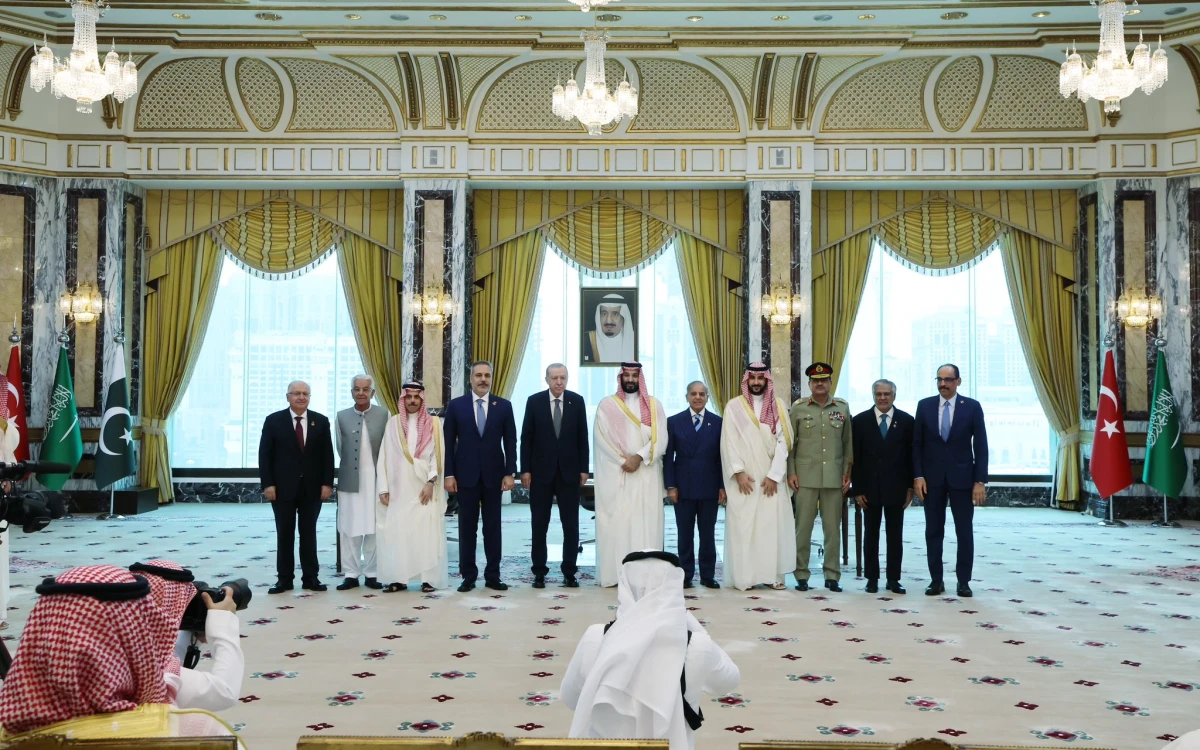
ANKARA, Türkiye — The defense agreement signed by Türkiye, Saudi Arabia and Pakistan in Mecca introduces a new layer to the Middle East’s security architecture by declaring that an armed attack against one signatory will be treated as an attack against all three.
The pact combines three very different strategic assets: Türkiye’s NATO membership, large conventional military and expanding defense industry; Saudi Arabia’s economic weight and central position in Gulf security; and Pakistan’s nuclear status and long-standing military relationship with Riyadh. The publicly announced framework also envisages deeper defense cooperation, while subsequent reporting indicates plans for a ministerial mechanism and a Saudi-based permanent secretariat.
The most useful way to assess the agreement is therefore not to ask whether Türkiye has suddenly become “the leader of the Muslim world,” but whether the new mechanism changes the distribution of deterrence, creates additional institutional capacity and increases the strategic weight of its participants.
Iran raised the pact’s immediate relevance, but did not create it
The timing is striking.


Just before the Mecca agreement, Iran warned Gulf states that oil, power and water infrastructure could be targeted unless they persuaded Washington to halt further attacks against Iran. Reuters reported explicit warnings concerning Gulf infrastructure amid a deteriorating regional security environment.
The pact was signed shortly afterward, at a moment when Saudi infrastructure and regional shipping routes were already facing serious security pressure.
Yet chronology should not be confused with causation.


The trilateral defense framework had been under negotiation before the latest Iranian warnings. It is therefore more accurate to describe the crisis as a factor that increased the strategic relevance of an already developing arrangement, rather than the event that suddenly created it.
There is also an important factual boundary. The Reuters reporting reviewed here describes threats against energy, power, water and other critical infrastructure; it does not establish that Iran specifically threatened the Kaaba, Mecca or Medina.
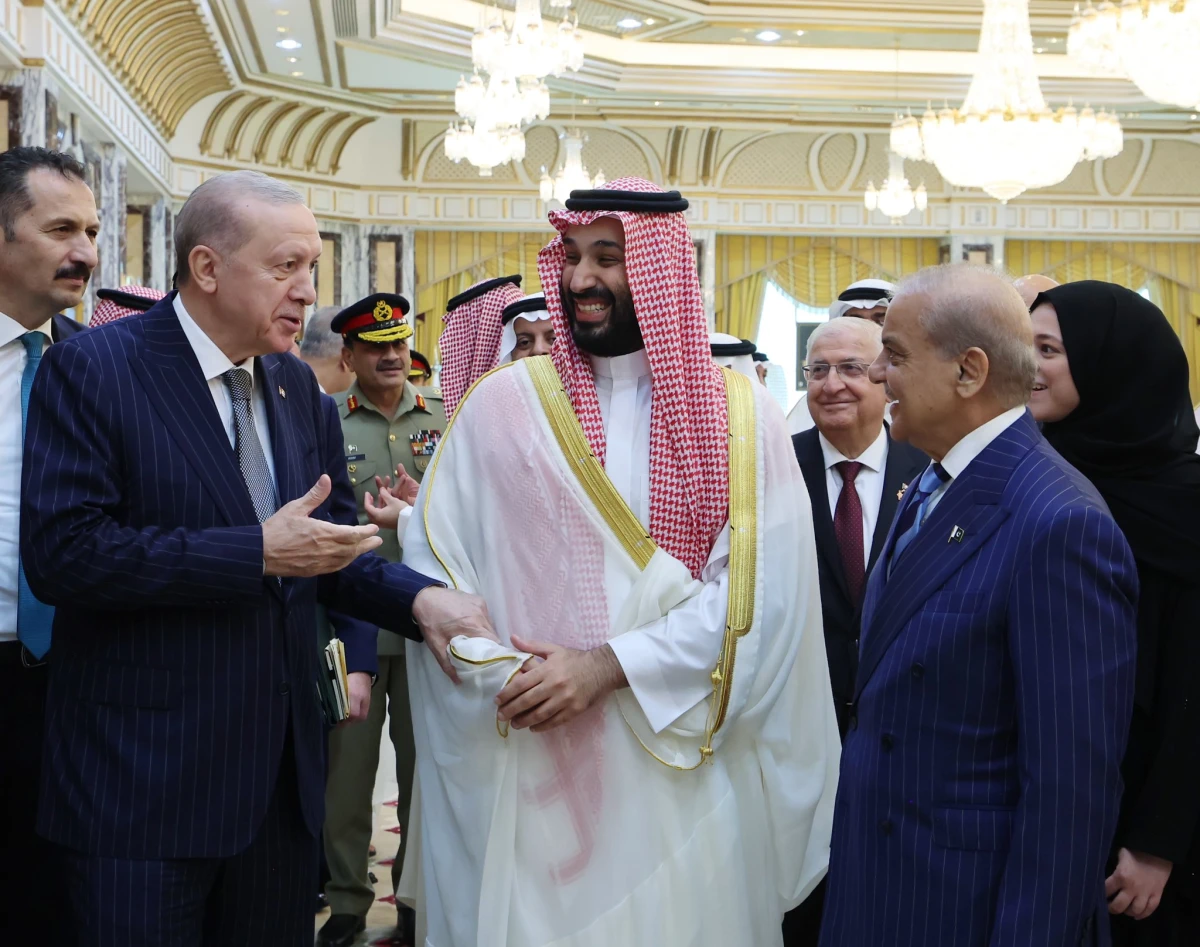
The more defensible strategic conclusion is narrower but still significant: by making Saudi Arabia’s security part of a collective-defense commitment, Türkiye and Pakistan potentially raise the military and political cost of a large-scale attack against the state that contains Islam’s two holiest cities.
The pact can be read through balance-of-threat theory
From a realist perspective, the Mecca Pact fits the logic of balance of threat.
States generally respond not only to another actor’s aggregate power, but also to geography, offensive capabilities, vulnerability and perceived intentions. The current Middle Eastern environment contains all of these variables: missile and drone warfare, attacks on energy facilities, instability in maritime corridors and uncertainty over the future role of external security providers.
That does not make the pact automatically an anti-Iran alliance.
The official Turkish position is that the arrangement is defensive and does not target any third country or bloc. Independent reporting likewise records assurances that Iran is not formally designated as the alliance’s adversary.
This distinction is central to deterrence theory.
An offensive coalition communicates an intention to alter the regional order by force. A deterrence framework instead attempts to communicate that aggression will carry a higher and less predictable cost.
Whether the Mecca Pact becomes a genuine deterrent will depend on what follows the declaration: intelligence cooperation, joint exercises, military planning, logistics, air and missile defense, defense-industrial integration and credible political decision-making during an actual crisis.
Türkiye is diversifying its security network without leaving NATO
For Türkiye, the agreement adds another layer to an already diversified system of security partnerships.
Ankara remains fully embedded in NATO, while simultaneously participating in a new collective-defense arrangement with two major Muslim-majority states. Turkish authorities explicitly reject the claim that the Mecca Pact constitutes a parallel structure intended to replace NATO.
This is better described as security diversification than geopolitical realignment.
Türkiye does not have to choose between the Atlantic alliance and regional partnerships for both to influence its security environment. The new pact potentially expands the number of political and military networks through which Ankara can operate without formally abandoning its existing treaty commitments.
That may increase Türkiye’s room for strategic maneuver.
It also creates possible liabilities.
Multiple security commitments are easier to manage in peacetime than during war. If Saudi Arabia or Pakistan were involved in a crisis in which Turkish interests were only partially aligned with theirs, Ankara would have to interpret what collective defense requires in practice.
The public documents do not establish that every attack would automatically trigger the deployment of Turkish forces. Reuters noted that the original agreement did not publicly specify predetermined troop commitments or a detailed automatic military response.
The strategic significance of the pact therefore depends as much on its decision-making procedures as on its headline collective-defense clause.
Why Mecca matters: historical memory adds symbolic weight
The location of the signing also matters.
Mecca is not an ordinary diplomatic venue. It is Islam’s holiest city, and the official agreement itself invokes historical relations, Islamic solidarity and the collective security of the three states.
For Türkiye, this intersects with a deep Ottoman historical memory.
The TDV Encyclopedia of Islam records that Sultan Selim I adopted the title Khādim al-Haramayn, “Servant of the Two Holy Sanctuaries,” after the incorporation of the Hijaz into the Ottoman political sphere. Ottoman rulers subsequently associated their relationship with Mecca and Medina with service, financial support, pilgrimage routes and security as well as sovereignty.
This does not mean the modern Republic of Türkiye is legally identical to the Ottoman Empire, nor does Ottoman history grant Ankara a special contemporary right over the holy cities.
The relevant concept is instead strategic culture and historical memory.
Modern Türkiye occupies the former imperial core and continues to operate in regions where Ottoman history remains part of political language and collective memory. That historical layer can shape how contemporary actions are interpreted without determining their legal meaning.
The same applies to Fahreddin Pasha, remembered in Turkish historical literature as the Ottoman commander who defended Medina during the First World War. TDV identifies him specifically as the “defender of Medina.”
To say that “the spirit of Fahreddin Pasha was present in Mecca” would be a political metaphor, not a historical fact. But the metaphor draws on a real body of historical memory in which the defense of the Haramayn carries emotional and political significance.
Religious references should be treated as identity narratives, not geopolitical mandates
References to prophetic traditions concerning Turks require even greater caution.
One report preserved in Sunan Abi Dawud includes the instruction to leave the Turks alone as long as they leave others alone. Another report in Sahih al-Bukhari refers to future fighting involving Turks in an eschatological context.
These texts do not provide a defensible basis for claiming that the Prophet Muhammad assigned permanent political leadership of the Muslim world to Turks.
Their relevance to a modern strategic analysis is therefore limited to identity formation, collective memory and political symbolism, not twenty-first-century alliance doctrine.
A similar distinction applies to Hagia Sophia.
Passages in Said Nursi’s Emirdağ Lâhikası clearly advocate restoring Hagia Sophia to its earlier status as a place of Muslim worship.
But these passages do not provide reliable evidence that Nursi specifically predicted that Recep Tayyip Erdoğan would personally be the leader to reopen it.
The historical fact is that Hagia Sophia was reopened for Muslim worship in 2020 following a Turkish court decision and Presidential Decree No. 2729.
Describing that development as something “destined” or “granted” to a particular political leader belongs to theological interpretation, not empirical political science. Such interpretations may still matter politically because symbols and beliefs can contribute to a leader’s social legitimacy, but they should not be confused with verifiable strategic causation.
The Muslim security environment remains polycentric
The Mecca Pact does not make Türkiye the uncontested center of the Muslim world.
Saudi Arabia retains unique religious importance through Mecca and Medina and considerable economic influence. Pakistan contributes nuclear capability, a large population and military weight. Egypt remains one of the Arab world’s historically important political and military states.
Indeed, Egypt’s absence from the first group of signatories is analytically important precisely because Cairo already participates with Türkiye, Saudi Arabia and Pakistan in the R4 consultation mechanism. The four foreign ministers met in Cairo on June 21, 2026, to discuss regional and international developments.
There is no verified basis for concluding that Egypt was deliberately excluded. Current reporting instead indicates that the mechanism may expand, with Egypt discussed as a potential future participant.
That possibility points toward a broader conclusion.
If additional states join, the Mecca Pact could evolve from a trilateral agreement into the nucleus of a wider regional security structure. If no such expansion or operational integration occurs, it may remain primarily a powerful political declaration backed by bilateral defense relations.
The real test will be institutions, capabilities and crisis behavior
Three broad trajectories are therefore possible.
In the first, the pact remains largely declaratory: military contacts deepen, but there is limited integration.
In the second, the states develop standing institutions, joint planning, intelligence mechanisms, interoperability and defense-industrial projects. Plans for a ministerial committee and a Saudi-based secretariat suggest that at least some degree of institutionalization is intended.
In the third, other states join and the arrangement becomes part of a wider regional security architecture.
Each scenario also carries risks. A stronger defensive mechanism may reassure its members while being interpreted by Iran or other regional powers as containment, producing the classic security dilemma in which defensive measures by one side are perceived as offensive preparation by another.
For Türkiye, the most analytically defensible conclusion is therefore not that the pact proves a predetermined quest for leadership.
Rather, Türkiye’s NATO membership, military capacity, defense industry and ability to maintain relationships across different geopolitical blocs give it a structurally important position inside the new mechanism.
The pact may increase that weight if it becomes institutionalized and effective. But its eventual significance will be determined by military interoperability, political cohesion, enlargement, crisis management and the willingness of each member to bear real costs for the security of the others.
The ceremony in Mecca gave the agreement historical and religious symbolism. The future of the pact, however, will be decided by institutions, capabilities and state behavior — not symbolism alone.
Yusuf İnan
WiseNewsPress.com
Yusuf İnan is a journalist, author, and political and strategic analyst. He serves as editor-in-chief of UAPresa.com, WiseNewsPress.com, SehitlerOlmez.com and YerelGundem.com. His work focuses on strategic and political analysis concerning developments in Türkiye and around the world.
What's Your Reaction?
 Like
0
Like
0
 Dislike
0
Dislike
0
 Love
0
Love
0
 Funny
0
Funny
0
 Wow
0
Wow
0
 Sad
0
Sad
0
 Angry
0
Angry
0

Editor | Wise News Press — Delivering accurate, timely global news with integrity, insight, and editorial responsibility.











Comments (0)