



Saudi Arabia–France partnership deepens amid a shifting Middle East order
Mohammed bin Salman’s Paris visit expanded Saudi-French cooperation across defense, energy, investment and diplomacy as both sides navigate a changing Middle East.


By Ahmet Taş | Wise News Press
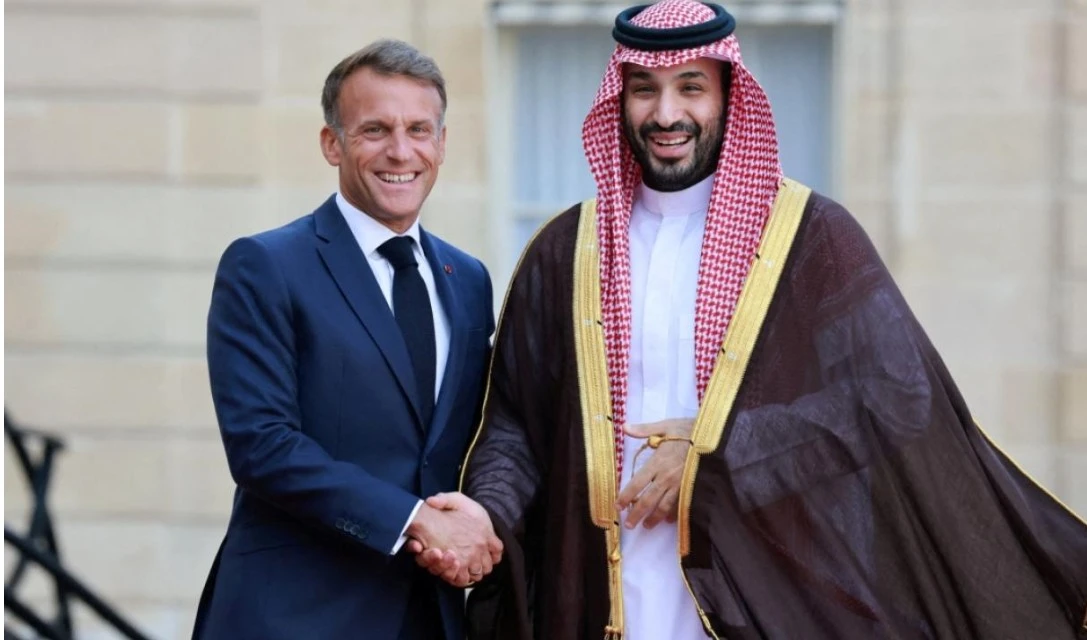
PARIS, FRANCE — Saudi Crown Prince and Prime Minister Mohammed bin Salman’s official visit to Paris has pushed Saudi-French relations into a broader strategic phase, combining defense, energy, technology and investment with increasingly close coordination on the Middle East’s major security crises.
French President Emmanuel Macron hosted the crown prince on Aug. 23–24, with the two leaders chairing the first meeting of the French-Saudi Strategic Partnership Council. The framework builds on the strategic partnership announced during Macron’s December 2024 state visit to Saudi Arabia and is intended to institutionalize cooperation across political, economic and security fields.
Lebanese academic Hattar Abu Diyab, writing for Al Majalla in an analysis later published by Independent Türkçe, argues that the relationship is also being shaped by a shared desire for greater freedom of action in an international system increasingly defined by rivalry among major powers. In his assessment, Riyadh and Paris are trying to preserve their own strategic decision-making while building partnerships that do not require total alignment with a single geopolitical camp.
A century-old relationship enters a more strategic phase
France and Saudi Arabia are marking a century since the establishment of political relations, but the latest phase goes well beyond ceremonial diplomacy.
The joint statement issued by the Élysée said Macron and Mohammed bin Salman reaffirmed their ambition to deepen a strategic partnership based on friendship, trust, mutual respect and common interests. They also emphasized a shared view of Middle East stability based on state sovereignty, international law and political solutions to conflicts.

The first Strategic Partnership Council meeting is significant because it creates a standing political mechanism rather than relying solely on occasional summits between leaders.
That institutionalization reflects the broadening scope of bilateral relations. What was once heavily associated with energy, commercial ties and defense procurement increasingly includes artificial intelligence, quantum technologies, culture, tourism, education and regional diplomacy.
Abu Diyab describes this as continuity rather than a sudden realignment. Saudi-French relations have evolved over decades, while both governments are now adapting the relationship to a more fragmented geopolitical environment.


Iran, Gaza and Lebanon move to the center of coordination
The breadth of the regional agenda discussed in Paris illustrates how political the partnership has become.
France and Saudi Arabia called for a negotiated solution to tensions surrounding Iran’s nuclear program and urged Tehran to resume full cooperation with the International Atomic Energy Agency. They also condemned attacks on shipping in the Strait of Hormuz and called for freedom of navigation to be restored in accordance with international law.
On the Israeli-Palestinian conflict, the two governments reiterated support for Palestinian statehood and a political solution. The original analysis treats Palestine as one of the clearest areas where Saudi and French diplomatic interests have increasingly converged.
Lebanon remains another major point of coordination.
Paris and Riyadh backed the strengthening of Lebanese state institutions and armed forces, called for implementation of U.N. Security Council Resolution 1701 and said non-state armed groups should be disarmed. They also called for Israel to withdraw from Lebanese territory.
These positions do not mean France and Saudi Arabia have identical regional policies. But they demonstrate an increasingly structured effort to act together on diplomatic files where both countries believe they can influence outcomes.
Defense cooperation is moving toward technology and localization
Security ties have long been one of the pillars of the relationship.
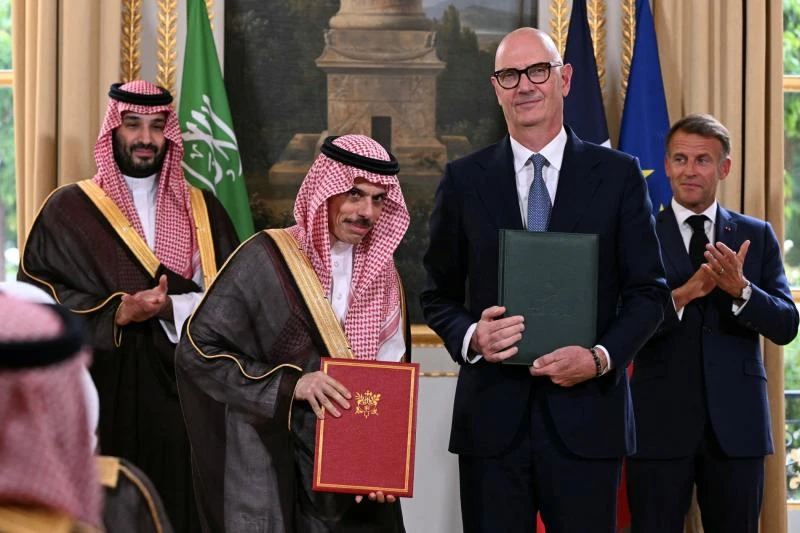
During the Paris visit, both sides adopted a declaration strengthening defense cooperation, including armaments and military training.
For France, Saudi Arabia represents one of the Middle East’s most important defense markets and a potential partner for advanced industrial cooperation.
For Riyadh, the objective is no longer simply to purchase weapons abroad.
Saudi Arabia’s Vision 2030 strategy places growing emphasis on local manufacturing, technology transfer, domestic defense capacity and reducing dependence on a narrow group of suppliers.
Abu Diyab’s analysis highlights Saudi interest in French air-defense technology, including equipment produced by Thales, particularly as drones and missiles have become central threats to Gulf infrastructure and maritime security.
That could create a more sophisticated relationship in which French companies are not only exporters but participants in Saudi Arabia’s effort to build its own defense-industrial ecosystem.
Trade, artificial intelligence and a €6 billion French investment plan
Economic ties provide the material foundation for the political relationship.
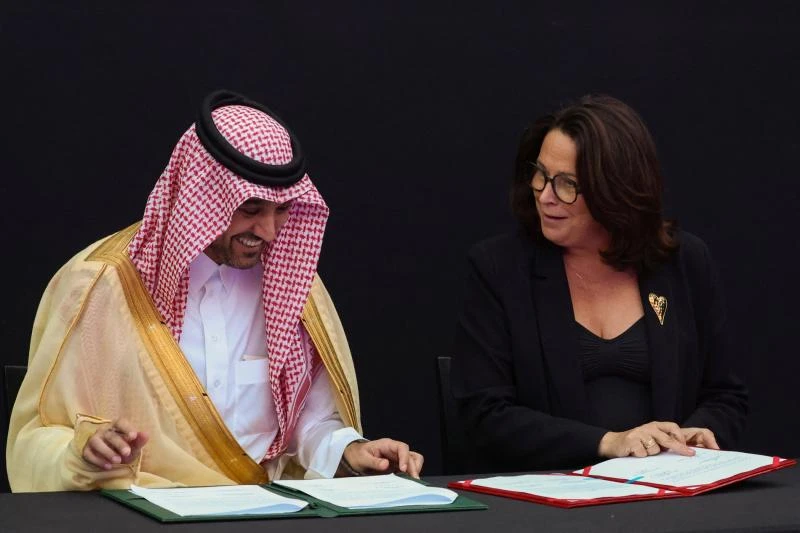
According to the official joint statement, bilateral trade reached approximately $11.8 billion in 2025. France and Saudi Arabia agreed to expand cross-investment in sectors including energy, water management, transport, logistics, finance and insurance.
One of the most striking projects announced around the visit involves Saudi Arabia’s Qiddiya Investment Company.
The company plans a major entertainment, hospitality, cultural and sports destination in Cergy-Pontoise in the Île-de-France region. The current concept includes as many as three major entertainment anchors, hotels and other leisure facilities, with total development investment projected at around €6 billion.
Paris said the visit also produced more than 22 agreements and memorandums of understanding covering areas such as defense, health, artificial intelligence, emerging technologies and entertainment.
The inclusion of AI and quantum computing is particularly important.
Saudi Arabia is trying to use Vision 2030 to diversify away from dependence on hydrocarbons, while France has ambitions to remain one of Europe’s leading technology and artificial-intelligence hubs. The two economies therefore have complementary interests: Saudi capital and large-scale development projects on one side, French industrial, technological and engineering expertise on the other.
AlUla and esports turn culture into strategic influence
Culture has also become a tool of statecraft in Saudi-French relations.
The two governments agreed to extend their cooperation on AlUla until 2035, reinforcing a partnership centered on archaeology, heritage and cultural development.
For Saudi Arabia, AlUla is central to its attempt to build a global tourism industry while presenting the kingdom internationally through history, culture and heritage rather than primarily through oil and geopolitics.
France brings major museum, archaeological and cultural-management expertise to that effort.
Sport and entertainment are playing a similar role.
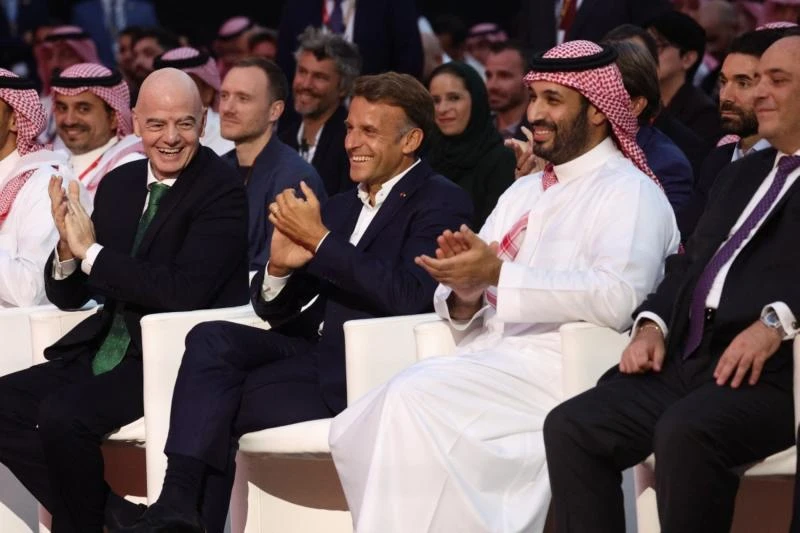
Mohammed bin Salman’s Paris program included the closing ceremony of the Esports World Cup at the Grand Palais. The source analysis interprets such events as part of Saudi Arabia’s expanding “soft power” strategy under Vision 2030.
The symbolism was notable: economic policy, entertainment, diplomacy and national branding were presented as parts of the same strategic relationship.
This also explains why the Saudi-French partnership should no longer be measured purely by oil contracts or arms deals.
Riyadh and Paris are both seeking room for independent decisions
The geopolitical dimension may ultimately be the most consequential.
France has long promoted the concept of European strategic autonomy — the idea that Europe should retain the capacity to make major diplomatic and security decisions without depending entirely on Washington.
Saudi Arabia is pursuing its own version of strategic diversification.
The kingdom remains deeply connected to the United States, but Riyadh has simultaneously expanded ties with China, Türkiye, Pakistan, France and other powers.
Abu Diyab argues that this makes the Saudi-French relationship especially relevant in a period of global transition. Neither government necessarily wants to abandon its traditional alliances; both want more options.
That distinction matters.
Closer Saudi-French relations are not evidence of an anti-American alliance. France remains a NATO member, while Saudi Arabia retains extensive strategic and military links with Washington.
Instead, the emerging model is one of multiple partnerships operating simultaneously.
Riyadh can cooperate with Washington on security, Beijing on trade and technology, Paris on defense and culture, and Ankara and Islamabad on regional defense arrangements.
France, meanwhile, can remain anchored in the Western alliance while developing an independent diplomatic role in the Gulf and wider Middle East.
Can the partnership shape the emerging Middle East order?
The test will be whether the relationship can produce results during crises rather than simply generate agreements and summit declarations.
The French-Saudi agenda now touches Iran’s nuclear program, Gaza, Palestinian statehood, Lebanon, Yemen, Sudan, Syria, maritime security, energy markets and defense cooperation.
That breadth gives the partnership strategic potential but also exposes its limits.
Paris and Riyadh have different domestic systems, security priorities and relationships with regional actors. Their interests may converge on some issues and diverge on others.
Still, the August visit demonstrated a significant evolution.
Saudi Arabia increasingly sees France as more than a supplier of military equipment or cultural expertise. France increasingly treats Mohammed bin Salman’s government as a central actor in the political and economic reordering of the Middle East.
The creation of the Strategic Partnership Council, the expansion of defense cooperation, $11.8 billion in bilateral trade, plans for multibillion-euro Saudi investment in France and coordination on the region’s major conflicts collectively point to a partnership becoming both deeper and more institutionalized.
For both capitals, the central objective appears to be flexibility: strong alliances, but not exclusive ones; strategic cooperation, but room for independent decisions.
In a Middle East where Washington remains militarily dominant, China’s economic role is expanding and regional powers are building their own networks, that flexibility may prove to be one of the most valuable forms of influence.
WiseNewsPress.com
What's Your Reaction?
 Like
0
Like
0
 Dislike
0
Dislike
0
 Love
0
Love
0
 Funny
0
Funny
0
 Wow
0
Wow
0
 Sad
0
Sad
0
 Angry
0
Angry
0

Ahmet Taş is a journalist, editor and Turkey Office Manager of the Wise News Press Media Group. He works across news, digital media and international publishing, focusing on accurate, responsible and accessible journalism. He contributes to the development of media projects that bring important political, social and global developments to a wider international audience.














Comments (0)