



Ukraine war: occupied Oleshky faces hunger as 6,000 await evacuation
DW reported that food stocks have run out in occupied Oleshky, where about 6,000 civilians, including 180 children, are waiting for evacuation.


By Ahmet Taş | Wise News Press
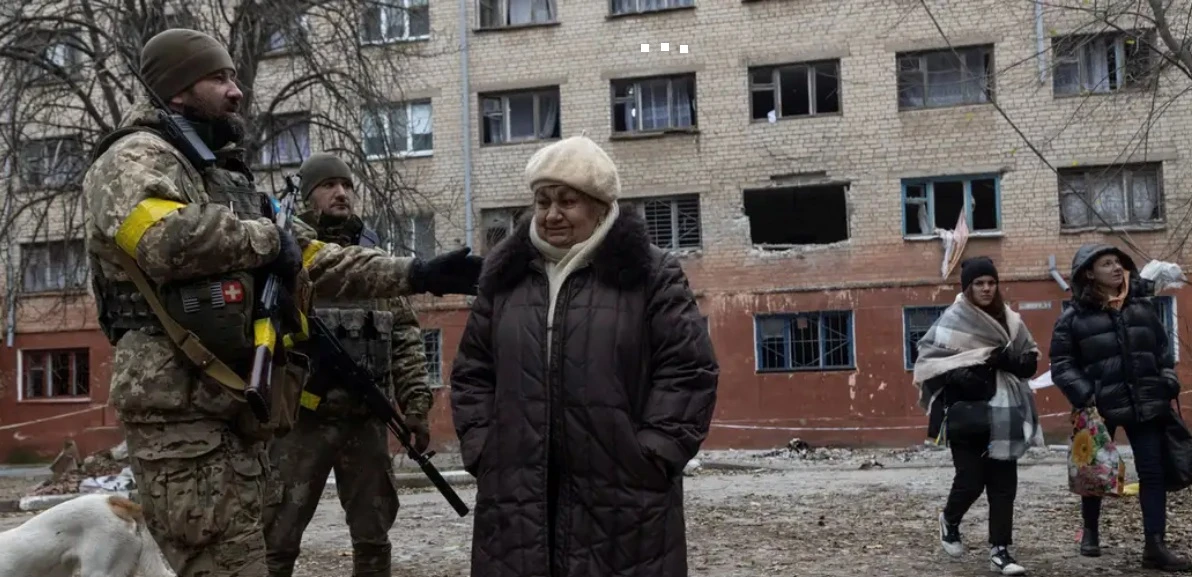
KHERSON REGION, Ukraine — Occupied Oleshky in southern Ukraine is facing a severe food crisis, with local officials warning that about 6,000 civilians remain trapped as evacuation efforts stall.
According to a DW report, the situation in the city, located on the Russian-occupied left bank of the Dnipro River in Kherson region, has deteriorated sharply after months without regular food deliveries, destroyed infrastructure, mined roads and repeated attacks. Local authorities say the remaining population includes around 180 children.
Food supplies have run out
Tetyana Hasanenko, head of the Oleshky city military administration, told DW that the last substantial food deliveries reached the area at the end of May. Since then, residents have survived by using old reserves, exchanging goods and searching abandoned homes and flooded basements for anything edible.
“The situation is critical. This cannot simply be called hunger; this is famine,” Hasanenko said, according to DW.
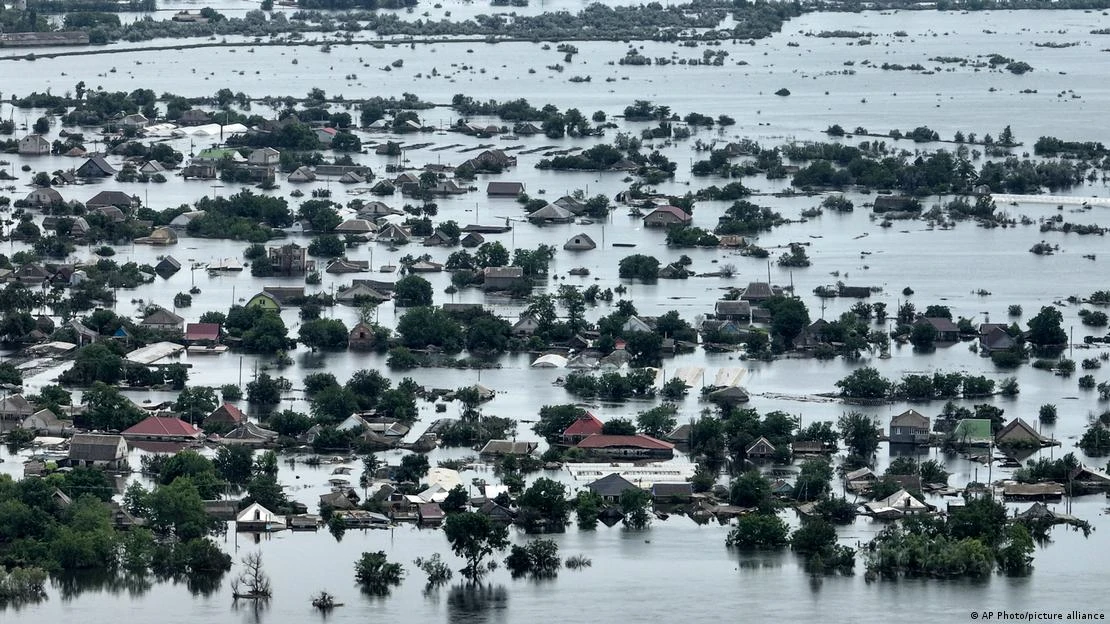
Oleshky has been under Russian occupation since the early phase of Moscow’s full-scale invasion of Ukraine. The city was also among the areas devastated after the destruction of the Kakhovka Dam in June 2023, which flooded large parts of the region and left many homes uninhabitable.


The crisis worsened further in December 2025, DW reported, when snow covered mines and unexploded ordnance, making movement even more dangerous. Explosions became more frequent, while food reserves that residents had managed to preserve after the flooding gradually disappeared.
Thousands remain trapped in the municipality
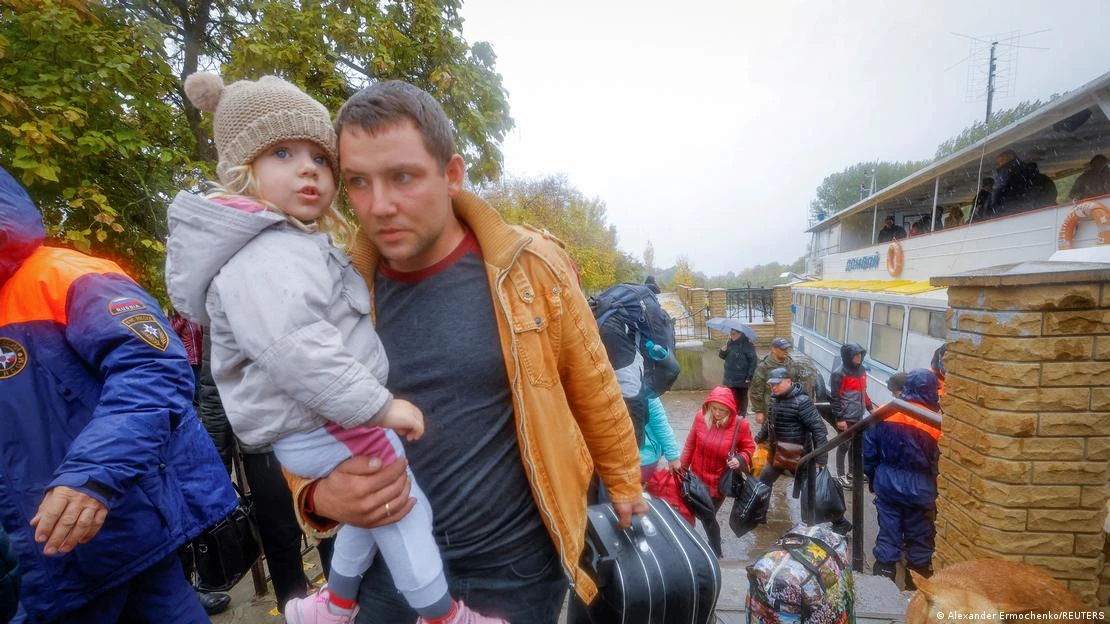
The Oleshky municipality includes 13 settlements. Ukrainian local officials estimate that around 6,000 people remain there, including elderly residents, families and about 180 children.


Hasanenko said many of those still in the area are people who could not evacuate earlier because of age, illness, destroyed documents, lack of transport or the collapse of local administration under occupation. Others stayed to care for relatives or because they had nowhere else to go.
Basic utilities have also largely disappeared. According to residents cited by DW, there is no electricity or gas, while water is mostly taken from wells. Winter has increased the pressure on families who lack proper shelter, fuel and reliable access to medicine.
One resident, identified by DW as Halina, said her home had been destroyed and that she now lives in an abandoned house. That building has also been damaged, with part of the roof hit and the floor remaining damp. She said the temperature inside had fallen to around 14 degrees Celsius.
Prices show the depth of the crisis
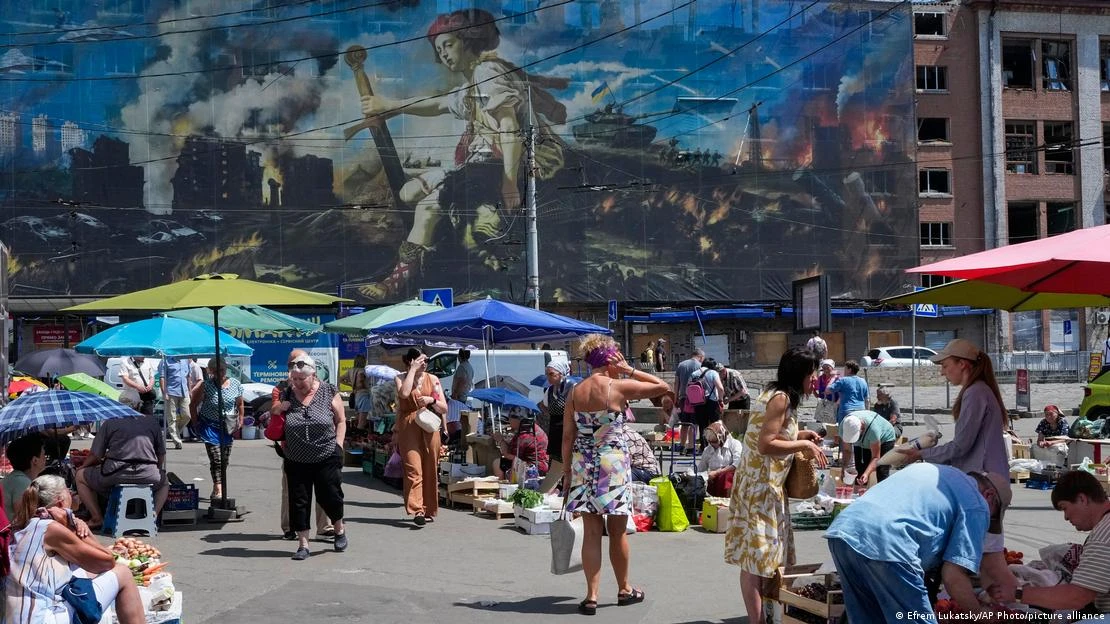
The collapse of transport and supply routes has turned ordinary food into a luxury. Residents told DW that a kilogram of pumpkin can cost 1,000 rubles, or around 10 euros. A large sack of flour was reportedly offered for 200,000 rubles, roughly 2,000 euros.
Halina described the best meal available to her as a simple flatbread made from water and flour, sometimes eaten with apple puree. She said she last ate meat around New Year.
Food from gardens is also limited. Some residents no longer have access to their homes or plots, while others cannot cultivate land because of shelling, mines or lack of seeds. Neighbors share what they can, but their own reserves are running out.
Eggs have become rare because there is little feed for poultry. DW reported that 20 kilograms of wheat can cost 21,000 rubles, about 200 euros. Some residents slaughtered young chickens because they could no longer feed them. Pigs have largely disappeared, and locals said only one cow remained in the city.
Evacuation routes are mined and dangerous
Before the situation became even more severe, minibuses reportedly travelled from Oleshky toward Skadovsk, Crimea and Russia, bringing food and other supplies back to the area. After drone attacks, those routes were replaced by two ambulances, but DW reported that this movement also stopped around a month and a half ago after one driver was killed.
Some residents now try to travel around 20 kilometers south to Radensk on foot or by bicycle to buy food. Those seeking evacuation face an even longer and more dangerous route toward Tarasivka and then Skadovsk. The roads are heavily mined, and residents say people risk death simply by trying to leave or bring back supplies.
“You set out on the road and you may die on the road,” one resident told DW.
According to local accounts cited in the report, two women died while trying to obtain food. Explosions and mine injuries are also frequent, but medical care is extremely limited.
Medical care has nearly collapsed
The health care situation in Oleshky is described as near collapse. Residents say there is one surgeon but no anesthesiologist and almost no medicine. Serious injuries, including mine and blast wounds, can quickly become fatal because evacuation to better-equipped hospitals is not available.
“If someone loses a leg, they are condemned to death,” one resident said, according to DW.
Hospital food has also been reduced to the bare minimum. Residents described meals consisting of one and a half spoons of semolina cooked in water, accompanied by cold tea.
The lack of medical staff, power, fuel and transport has made even ordinary health problems dangerous. For elderly residents, people with chronic illnesses and children, the absence of medicine is now one of the central risks of remaining in the area.
Documents, money and occupation barriers block escape
Evacuation is also complicated by bureaucracy and the loss of personal documents. Many residents no longer have valid Ukrainian or Russian-issued papers. Some documents were destroyed during flooding, fires or shelling.
Although social benefits may still be formally paid, residents say they cannot withdraw cash. There are no reliable banking services, and people cannot access their money. DW reported that residents also struggle to contact representatives of the occupation administration.
The absence of fuel is another growing threat. “Our firewood has already run out,” Halina said, according to the report. There is no gas, and residents lack fuel for generators.
Hasanenko said most of those who remain are elderly people and others in vulnerable conditions. In her view, the only workable solution is a humanitarian “green corridor.” She said occupation authorities should at least move civilians temporarily deeper into occupied territory if they do not allow evacuation to Ukrainian-controlled areas.
Talks on a humanitarian corridor remain stalled
Ukrainian officials have been trying to negotiate an evacuation from Oleshky since spring. Hasanenko said local authorities prepared lists of people in urgent need of evacuation through the office of Dmytro Lubinets, the Ukrainian Parliament Commissioner for Human Rights.
According to Lubinets, there had been preliminary agreement between Kyiv and Moscow on a humanitarian operation. Under the proposed arrangement, the Ukrainian military would ensure a ceasefire, while the International Committee of the Red Cross would take part in the evacuation.
However, Lubinets said Russia has not confirmed its readiness to participate in the operation.
Hasanenko said local authorities know of at least 358 residents in urgent need of evacuation. She added that people in Oleshky had hoped evacuation could begin at any moment, but officials can no longer give them such hope without confirmation from the Russian side.
“Since spring, nothing has changed. It has only become worse,” Halina told DW. “Winter is coming, and there is nothing to eat. In fact, we should not be here at all. I understand that. But we are here.”
WiseNewsPress.com
What's Your Reaction?
 Like
0
Like
0
 Dislike
0
Dislike
0
 Love
0
Love
0
 Funny
0
Funny
0
 Wow
0
Wow
0
 Sad
0
Sad
0
 Angry
0
Angry
0

Ahmet Taş is a journalist, editor and Turkey Office Manager of the Wise News Press Media Group. He works across news, digital media and international publishing, focusing on accurate, responsible and accessible journalism. He contributes to the development of media projects that bring important political, social and global developments to a wider international audience.

















Comments (0)