



Ottoman legacy abroad: Turkey’s historical responsibility under scrutiny
Debate over citizenship, education, archives and cultural heritage is reviving questions about Turkey’s responsibilities toward Ottoman-era communities abroad.


By Yusuf İnan | Wise News Press
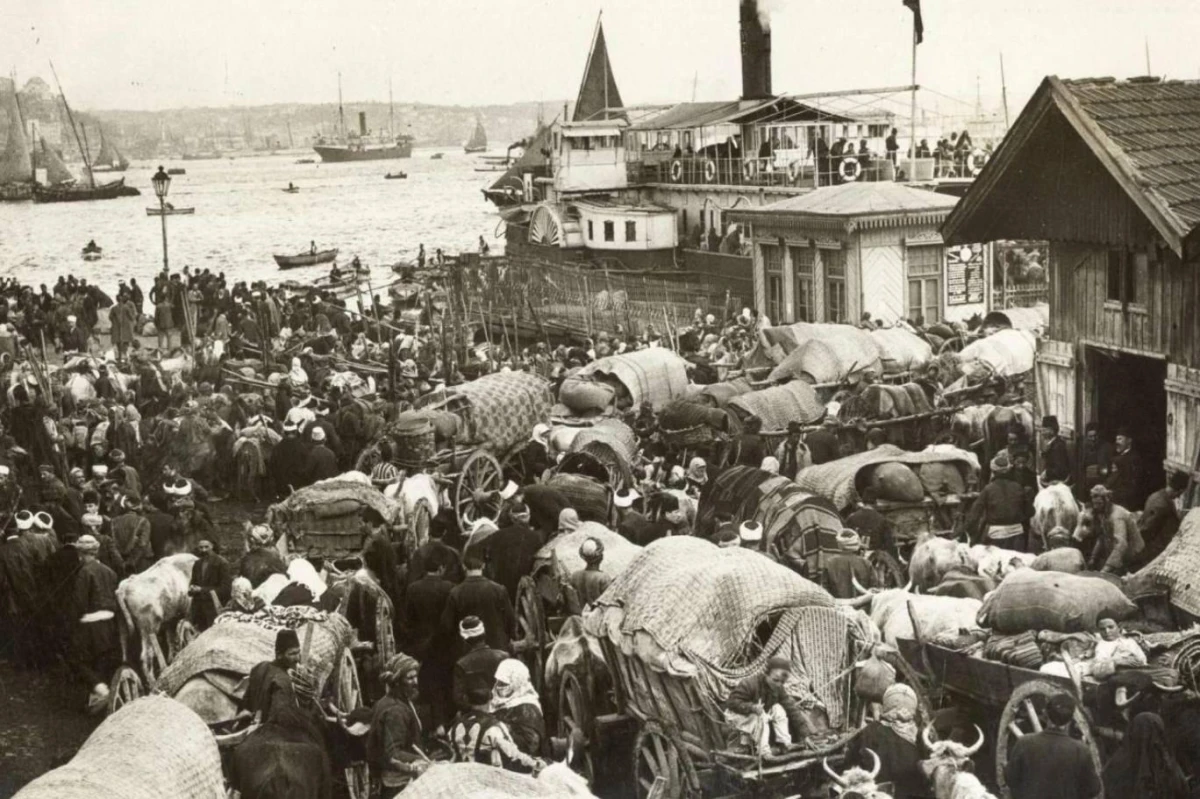
ANKARA, TURKEY — The fate of communities left outside Turkey’s borders after the Ottoman Empire’s territorial retreat is renewing debate over how Ankara should approach citizenship, education, religious institutions, archives and cultural heritage in former Ottoman lands.
Former Turkish Prime Ministry Deputy Undersecretary Ömer Kayır, writing for Independent Türkçe on Sept. 10, argued that the issue should not be viewed simply as a question of territory lost during the collapse of an empire. In his assessment, political withdrawal also left behind communities, schools, places of worship, foundations, cemeteries, property records and family ties whose long-term protection required institutional policies.
Kayır’s central argument is that Turkey should examine how other states maintained connections with populations or communities left beyond changing borders and consider whether its own mechanisms remain sufficient today. His essay identifies citizenship and travel rights, local settlement, language and education, religious organization, foundations and historic monuments, and access to archival records as interconnected elements of the debate.
The comparisons, however, require caution. Hungary, Germany, Spain, Britain, France and Russia developed very different legal systems in response to very different historical circumstances. Their policies cannot simply be transferred wholesale to Turkey.


Beyond lost territory: people, institutions and memory
The Ottoman Empire’s retreat from the Balkans, the Caucasus, North Africa and the Middle East did not automatically erase cultural, religious or family ties.
When new borders emerged, Turkish-speaking populations and Muslim communities that had lived under Ottoman rule became citizens of other states. In the Balkans alone, significant Turkish and Muslim communities remained in areas that later became parts of Bulgaria, Greece, North Macedonia, Kosovo and other countries.
Similar historical links existed in Iraq, Syria, Libya, Crimea and elsewhere.


Kayır argues that a state’s historical relationship with such communities should therefore be measured not only through diplomacy but through the survival of schools, religious institutions, foundations, cemeteries, property records and cultural memory.
His essay places particular emphasis on whether communities can remain securely in their own homelands rather than being encouraged to migrate, and whether language, education and religious institutions are strong enough to preserve identity over generations.
That distinction is important.
A modern policy toward former Ottoman territories cannot mean questioning internationally recognized borders or the sovereignty of neighboring states. Instead, it can focus on cultural preservation, minority rights, education and access to historical records within existing international law.
How other countries maintain links across borders
One of the central themes in Kayır’s article is a comparison with other states that experienced territorial losses or maintained strong links with populations beyond their borders.
He points to Hungary’s policies toward ethnic Hungarian communities in neighboring countries, Germany’s special legal provisions connected to German communities and historical displacement, and citizenship arrangements developed by Spain and Portugal for certain groups with historic ties.
Britain and France are presented as different examples, relying more heavily on post-imperial institutional and cultural networks. Russia, meanwhile, has used citizenship and passport policies extensively in what it considers its “near abroad.”
Yet these cases are not legally equivalent.
Some policies are based on ethnic kinship, others on exile or persecution, colonial history, language networks or specific constitutional provisions. Russia’s passport policies have also been deeply intertwined with geopolitical intervention and conflict, making them especially difficult to compare with conventional minority-protection mechanisms.
What the examples nevertheless demonstrate is that states often create legal or institutional tools to preserve connections with communities they regard as historically linked to them.
The policy question for Turkey is therefore less about copying another country and more about deciding what form such a relationship should take within democratic and international legal norms.
Turkey already has legal tools for people of Turkish origin
Turkey does not begin from a legal vacuum.
Kayır notes that people legally recognized as being of Turkish origin already benefit from a special framework that differs from the general rules applying to foreign nationals. He refers in particular to legislation governing employment, residence and, under certain circumstances, access to professions.
The debate is therefore partly about implementation rather than the complete absence of legislation.
According to the essay, practical difficulties can arise in proving Turkish origin, obtaining documentation, securing recognition of educational qualifications and coordinating procedures among different state institutions.
This creates a broader question: Should Turkey’s relationship with historically connected communities depend heavily on case-by-case administrative discretion, or should there be a clearer and more predictable system?
Kayır advocates a significantly broader model, including expanded citizenship opportunities, a special identity or “kinship card,” easier travel and stronger employment rights for certain communities.
Such proposals would require careful legal scrutiny.
Ethnicity-based citizenship or employment preferences can raise constitutional, diplomatic and equality questions. They could also affect relations with states in which the communities concerned are citizens.
A future policy would therefore have to balance historical affinity with individual rights, national security, immigration law and respect for other countries’ sovereignty.
Language and education may matter more than passports
Citizenship receives considerable political attention, but cultural continuity often depends on much more basic institutions.
Schools are among the most important.
When younger generations lose access to their mother tongue, historical connections can weaken rapidly. The same applies when communities lose locally rooted teachers, cultural organizations or religious institutions.
Kayır argues that Turkey was historically too cautious in supporting Turkish-language education and local religious institutions in some former Ottoman territories, partly because successive governments sought to avoid disputes with neighboring states.
The challenge today is more complex.
Not every Muslim community with an Ottoman past is ethnically Turkish. Bosniaks, Albanians, Pomaks and other groups have their own languages, identities and national experiences.
A modern cultural policy therefore cannot simply treat all Ottoman Muslim communities as extensions of Turkish identity.
Support for cultural heritage can instead be based on pluralism: Turkish-language schools where Turkish communities exist, scholarships for students, preservation of Bosnian and Albanian cultural institutions, restoration of mosques and historic sites, and partnerships with local universities and civil society.
Such an approach could preserve historical links without erasing local identities.
Turkey’s institutional approach changed after the 1990s
The argument that Turkey has entirely neglected its former Ottoman geography would also be incomplete.
Kayır himself acknowledges that Ankara’s approach changed significantly from the 1990s onward with the growing role of institutions including the Turkish Cooperation and Coordination Agency, the Presidency for Turks Abroad and Related Communities, the Yunus Emre Institute, the Directorate of Religious Affairs and the Directorate General of Foundations.
These institutions have expanded Turkey’s cultural, educational and humanitarian presence across the Balkans, Central Asia, the Middle East and Africa.
Restoration projects have become one of the most visible elements.
Ottoman-era mosques, bridges, fountains, tombs and other historic buildings have been restored in cooperation with local authorities. Scholarship programs have brought students to Turkish universities, while cultural centers have expanded Turkish-language education abroad.
This marks a significant departure from the more inward-looking policies of earlier decades.
The remaining question is whether these initiatives amount to a comprehensive strategy or remain a collection of projects managed by separate institutions.
A more integrated policy could link cultural heritage preservation with education, archival access, academic research and local community development.
Archives, cemeteries and foundations are becoming a new policy frontier
One of the most practical proposals in Kayır’s essay concerns archives.
Ottoman population registers, land records, court documents and foundation registers are not merely historical material for academics. They can also provide evidence concerning family history, the development of religious foundations, historic ownership and the location of lost cultural sites.
Kayır calls for easier access to Ottoman archival material for communities and institutions abroad and proposes mechanisms that would help authenticate documents for use outside Turkey.
Cemeteries present another challenge.
Across territories once governed by the Ottoman Empire, historic Muslim and Turkish cemeteries have disappeared because of urban development, war, neglect or political change.
Digital mapping could provide a relatively non-confrontational response. Historic cemeteries, gravestones, mosques, schools and foundation properties could be catalogued before physical traces disappear.
Kayır similarly proposes stronger international efforts to document and protect historic foundations and religious properties.
Still, historical records must be distinguished from modern legal ownership.
The existence of an Ottoman title deed or foundation record does not automatically create a present-day property right in another sovereign country. Modern ownership disputes are governed by current domestic law, international agreements and applicable limitation rules.
Archives are therefore most valuable first as evidence of history and cultural continuity, while any legal claim must be assessed separately.
From historical grievance to a sustainable strategy
The strongest part of the debate may ultimately be less about what Turkey failed to do a century ago and more about what it can realistically do now.
Kayır proposes a broad agenda ranging from citizenship and travel reform to educational support, protection of religious institutions, easier archival access and international registration of historic cemeteries and foundation properties.
Some measures would be comparatively straightforward.
Digitizing archives, creating multilingual databases of Ottoman heritage, expanding scholarships, funding cultural education, documenting cemeteries and cooperating on restoration projects could be pursued without challenging borders or sovereignty.
Others — particularly broad citizenship or passport rights based on ancestry — would require much deeper legal and diplomatic consideration.
The larger lesson is that the Ottoman Empire’s disappearance did not erase the human geography it created over centuries.
Borders changed, but families, languages, religious traditions, cemeteries, foundations and shared memories remained.
For modern Turkey, preserving that legacy does not have to mean attempting to recreate the political past. It can instead mean ensuring that surviving communities and historic sites are documented, respected and connected through law, education and cultural cooperation.
The issue, therefore, is not whether Turkey should reclaim former Ottoman lands.
It is whether a country that inherited much of the empire’s historical memory can develop a transparent, sustainable and internationally lawful policy toward the people, institutions and cultural heritage that remained beyond its modern borders.
WiseNewsPress.com
What's Your Reaction?
 Like
0
Like
0
 Dislike
0
Dislike
0
 Love
0
Love
0
 Funny
0
Funny
0
 Wow
0
Wow
0
 Sad
0
Sad
0
 Angry
0
Angry
0
Yusuf İnan is a journalist, columnist, strategic analyst and head of the Wise News Press Media Group. His work focuses on international affairs, geopolitics, security and major social issues. Through his journalism, he promotes peace, dialogue, mutual understanding and responsible reporting while contributing to the development of international media projects.
















Comments (0)