



Ukraine elections: four potential Zelensky rivals and latest polls
Zaluzhnyi, Budanov, Fedorov and Poroshenko feature in Ukraine election debate as polls show voter preferences and opposition to a wartime ballot.


By Yusuf İnan | Wise News Press
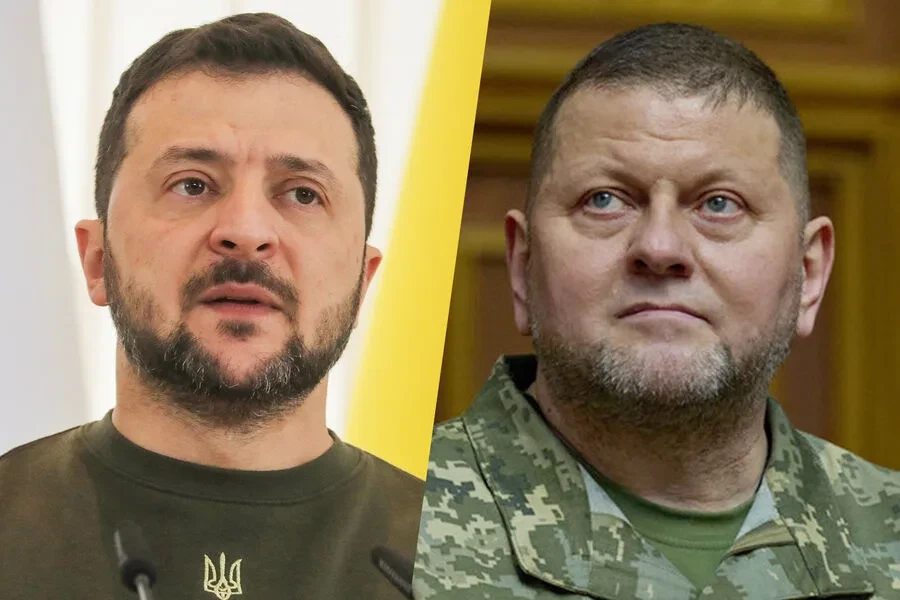
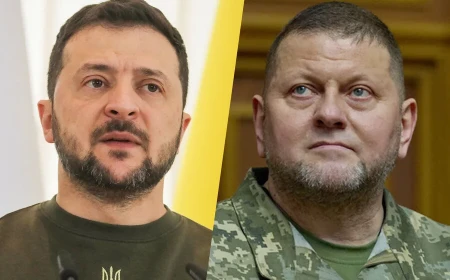
KYIV, UKRAINE — Former Ukrainian military commander Valerii ZALUZHNYI is President Volodymyr ZELENSKY’s closest potential election rival in Rating Group’s October survey, as renewed calls for a vote collide with wartime restrictions.
Zaluzhnyi, presidential office chief Kyrylo Budanov, former Defense Minister Mykhailo Fedorov and former President Petro Poroshenko feature in a Newsweek assessment reproduced by Ukrainian outlet Novosti-N. The discussion concerns potential contenders rather than a confirmed candidate list, with the conditions for holding an election still unresolved.
U.S. President Donald TRUMP renewed pressure on Kyiv on October 10, suggesting Ukrainians should choose a leader capable of reaching an agreement to end the war. According to Deutsche Welle, his remarks followed Zelensky’s criticism of a U.S.-Russian diesel arrangement and came alongside demands that Ukraine stop attacking Russian oil refineries.
Election debate centers on a ceasefire
Zelensky responded on October 11 by saying Ukraine could organize elections if Russia accepted a full 60-day ceasefire. Speaking to ABC News, he linked the possibility of voting to a sustained halt in fighting. His remarks outlined a condition for proceeding rather than announcing an election date.
The proposal, covered in Wise News Press’s report on Zelensky’s 60-day ceasefire condition for elections, drew a negative response from Moscow.


Kremlin spokesman Dmitry PESKOV said on October 12 that Russia would not agree to a two-month truce for that purpose. Deutsche Welle, citing Interfax, reported that Peskov instead offered the possibility of Russian forces refraining from strikes on election day itself.
Ukraine’s Central Election Commission says the country’s martial law legislation prohibits presidential elections while martial law remains in force. Article 108 of the Constitution also provides that a president exercises their powers until a newly elected successor takes office. Zelensky’s five-year elected term reaching its scheduled end in May 2024 therefore did not automatically terminate his presidential authority.
Valerii Zaluzhnyi: the closest challenger in polling
Zaluzhnyi, who led Ukraine’s armed forces during the first two years of Russia’s full-scale invasion, now serves as ambassador to the United Kingdom. His diplomatic position is confirmed by the Ukrainian Embassy’s official leadership page.


Rating Group put Zelensky at 22.9% and Zaluzhnyi at 20.2% in a hypothetical first round. On the separate question of public trust, Zaluzhnyi registered 64%, compared with Zelensky’s 53%.
In the Newsweek assessment reproduced by Novosti-N, Aberystwyth University international politics lecturer Jenny MATHERS argued that candidates’ wartime records could strongly influence voters. She identified Zaluzhnyi’s highly visible military leadership as a potential political advantage.
His standing in surveys does not establish that he will run. The assessment presents him as a possible contender, while his current public role remains diplomatic. His prospective appeal rests partly on his military record, but any eventual campaign would also require positions on civilian government and postwar priorities.
Kyrylo Budanov: intelligence profile and presidential role
Head of Ukraine’s Presidential Office Kyrylo BUDANOV became widely known through his leadership of military intelligence, commonly known by its Ukrainian abbreviation GUR. His current position is listed on the presidency’s official website.
Rating Group recorded trust in Budanov at 53%, while 6.7% of respondents selected him in its hypothetical first-round election question.
Mathers, in the assessment relayed by Novosti-N, described Budanov as a military professional who generally avoids expansive political declarations. His reputation is closely associated with intelligence operations and Ukraine’s wartime security apparatus.
His inclusion in election polling is distinct from an announcement that he intends to challenge Zelensky. Budanov holds a senior position within the incumbent president’s administration, making the distinction between his official responsibilities and speculation about future political ambitions particularly relevant.
Mykhailo Fedorov: attention after his departure
Former Ukrainian Defense Minister Mykhailo FEDOROV built his public profile through digital government initiatives and defense technology. He became defense minister in January 2026 before leaving the position in July.
Ukrainian news outlet NV reported demonstrations in Kyiv and other cities on July 16 opposing his removal. In the capital, protesters gathered near the Ivan Franko theater, criticizing changes in defense leadership and calling for Fedorov to remain.
NV’s reporting described participants who viewed the dispute as a question of reforms and management principles, alongside those expressing support for the outgoing minister personally. The demonstrations made his departure a broader public controversy.
Rating Group measured trust in Fedorov at 38% and hypothetical first-round voting support at 7.6%.
In the Newsweek assessment reproduced by Novosti-N, Mathers said his popularity around the dismissal could provide an opening, while questioning how voters would interpret his subsequent criticism of the administration. That remains an assessment of political prospects rather than evidence of a settled electoral outcome.
Petro Poroshenko: an established opposition figure
Ukraine’s fifth president, Petro POROSHENKO, governed from 2014 to 2019 before losing to Zelensky. He remains a prominent opposition politician associated with European integration and criticism of the incumbent administration.
The account published by Novosti-N highlights both his experience in office and the controversies surrounding his political career. These include treason allegations, which Poroshenko has rejected as politically motivated, and sanctions imposed against him in 2025. Allegations against him should be distinguished from findings established by a court.
Rating Group placed Poroshenko’s hypothetical first-round support at 7.6%, level with Fedorov. Trust stood at 24%, while 70% expressed distrust.
Those figures show that he retains electoral support despite substantial negative sentiment. They do not, however, determine how a future campaign or runoff would develop. Any eventual contest would depend on the candidates participating and the circumstances in which voting became possible.
Most respondents oppose an immediate election
A separate Kyiv International Institute of Sociology survey, published on October 5, found that 71% opposed holding elections immediately, while 24% wanted a vote now.
The same survey found that 53% believed Zelensky should limit himself to his current term, up from 46% in December 2025. Another 42% supported his participation in the next presidential election.
KIIS executive director Anton HRUSHETSKYI said public demand for political renewal could coexist with opposition to elections during the war. His interpretation was that dissatisfaction with government did not necessarily translate into support for an immediate ballot.
The findings concern different questions: when elections should happen and whether the incumbent should seek another term. They therefore provide context for the leadership debate without establishing a single preferred successor.
Survey limits and preparations for a future vote
Rating Group interviewed 1,000 people by telephone on October 3–5 and reported a maximum sampling margin of error of 3.1 percentage points.
KIIS interviewed 1,002 adults in government-controlled Ukraine on September 12–21. Its sample excluded people living in occupied territories and citizens who had left Ukraine after February 24, 2022.
Trust ratings and voting intentions measure different attitudes, while fieldwork dates and sampling restrictions affect comparisons between surveys.
The Central Election Commission announced on January 7 that it had approved legislative proposals for national elections after martial law ends or is lifted. Its preparations cover updating voter information, organizing participation abroad and addressing practical risks surrounding a future ballot.
For now, the four names describe the prospective political field. An actual contest would require a lawful electoral process, workable security arrangements and candidates formally entering the race.
What's Your Reaction?
 Like
0
Like
0
 Dislike
0
Dislike
0
 Love
0
Love
0
 Funny
0
Funny
0
 Wow
0
Wow
0
 Sad
0
Sad
0
 Angry
0
Angry
0
Yusuf İnan is a journalist, columnist, strategic analyst and head of the Wise News Press Media Group. His work focuses on international affairs, geopolitics, security and major social issues. Through his journalism, he promotes peace, dialogue, mutual understanding and responsible reporting while contributing to the development of international media projects.












Comments (0)