



FT: Zelenskyy did not back unofficial Ukraine peace plan on Crimea
The Financial Times says Zelenskyy did not back an informal peace proposal involving Crimea and security guarantees; the initiative never became an agreement.


By Ahmet Taş | Wise News Press
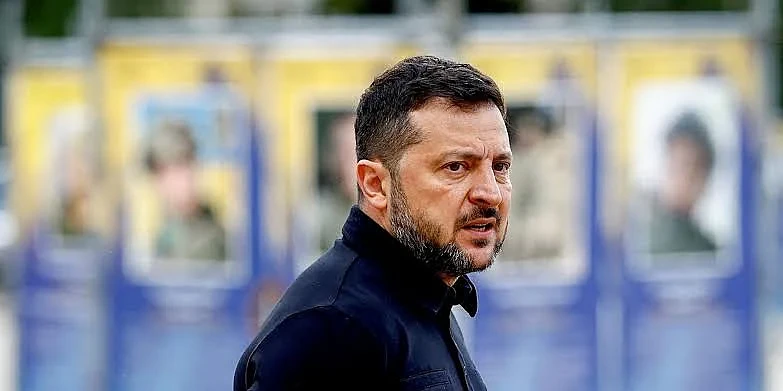
KYIV, UKRAINE — Ukrainian President Volodymyr Zelenskyy did not support an informal peace proposal involving recognition of Russian control over Crimea, according to the Financial Times; the intermediaries’ initiative produced no agreement.
The proposal was neither an agreed peace deal nor an official plan accepted by Ukraine, Russia and the United States. It was drafted by people attempting to establish a channel between the sides. In exchange for a Russian withdrawal from much of the territory occupied after the full-scale invasion, it envisaged territorial concessions from Ukraine and security guarantees for Kyiv. The account of how the leaders responded rests largely on what participants told the newspaper.
Who was involved in the informal initiative?
The Financial Times identified American lawyer Richard Conn, investment banker Bob Foresman, Matthias Warnig and Ukrainian film producer Alexander Rodnyansky as figures involved in the effort. Warnig had a longstanding relationship with Russian President Vladimir Putin, while Rodnyansky was seen as someone who could approach Ukraine’s leadership.
Their initial concern was the possibility that the war could escalate beyond the battlefield in Ukraine. The contacts took shape in the autumn of 2022, when fears of nuclear escalation were particularly acute. The group subsequently explored whether a broader settlement might be possible and began developing terms it hoped to put before Moscow and Kyiv.
The distinction between their contacts and formal diplomacy matters. Having access to people in government does not, by itself, confer authority to negotiate for a state. The Financial Times’ account does not establish that Washington adopted the group’s draft as United States policy. Nor did the intermediaries’ discussions amount to a negotiation in which Ukraine and Russia had accepted a common text.


What did the proposal say about Crimea and Donbas?
According to the Financial Times, the draft envisaged Russia withdrawing from much of the territory it had taken during the full-scale invasion and later declared annexed. The proposed territorial arrangement would broadly leave Moscow with the areas it controlled in Crimea and parts of Donbas before February 2022.
In return, Ukraine would recognize Russian control over Crimea and allow Russia free passage along a land route to the peninsula. The proposal also envisaged security guarantees for Ukraine from NATO countries to help sustain a ceasefire. Russia and the United States would separately discuss their own security arrangements.
Those elements should be read as proposals, not as agreed terms. Recognizing Russian control over Crimea was a concession sought in the draft; no signed document shows that Kyiv accepted it. Similarly, a provision for passage along a land route does not, on its own, establish that every part of that route would have been transferred to Russian sovereignty. The newspaper’s account describes an attempted compromise that never took effect.


The suggested guarantees raised another question: what protection would Ukraine receive if fighting resumed? The account identifies a proposed role for NATO countries, but it does not describe a binding security agreement that those countries had approved. The difference between a guarantee discussed by intermediaries and one accepted by the governments expected to provide it was substantial.
Putin’s reported response came through an intermediary
Warnig and Rodnyansky sought to take the draft to Moscow and Kyiv for the leaders’ consideration. Warnig later told the group that Putin had examined the document and was willing to discuss the proposed front line, the Financial Times reported. According to Warnig’s account, Putin opposed Ukraine joining NATO but was open to discussing European Union membership and another form of security arrangement.
That is Warnig’s account of Putin’s response. It does not mean the Kremlin formally accepted the proposal or agreed to all its conditions. No Russia-Ukraine agreement followed the reported exchange.
The Financial Times also described disagreement over how seriously Moscow was pursuing a settlement. Warnig believed his contact with Putin showed an opportunity for negotiation. Some former American officials interviewed by the newspaper were more doubtful that Putin intended to accept a compromise involving meaningful concessions. Those differing assessments limit what can be concluded about whether the initiative could have ended the war.
Why did Kyiv decline to support it?
Rodnyansky attempted to bring the proposal to Zelenskyy and Andriy Yermak, who was then head of Ukraine’s presidential office, according to the Financial Times. The newspaper reported that Ukraine’s leaders were unwilling to concede territory to Putin and believed they could pursue other parts of the proposed arrangement without giving up land.
This does not mean Zelenskyy turned down a completed, officially negotiated peace treaty. The document presented to Kyiv was a draft prepared through an informal channel. The Financial Times said the Ukrainian presidential office and Yermak did not respond to its requests for comment on the account.
Rodnyansky took a different view of the chances for compromise. He believed Washington needed to press Kyiv to accept a deal, the newspaper reported. That was the view of a participant in the initiative, not a policy shown to have been adopted by Ukraine or the United States.
Kyiv’s objection to territorial concessions was central to the disagreement. Under the suggested terms, Russian withdrawals from some occupied areas would have been linked to Ukrainian acceptance of continued Russian control elsewhere. Ukraine’s leaders did not support that exchange as it was presented to them.
Why was Crimea such a difficult condition?
Russia declared that it had annexed Crimea in 2014. Ukraine continues to regard the peninsula as part of its sovereign territory. Following the annexation, the United Nations General Assembly affirmed Ukraine’s territorial integrity within its internationally recognized borders and called on states not to recognize a change in Crimea’s status based on the referendum held there.
Against that background, a Ukrainian commitment to recognize Russian control over Crimea would have had consequences far beyond the wording of a ceasefire. It would have touched a position Kyiv has maintained since 2014 and one closely connected to how Ukraine defines its sovereignty and future security.
The proposed land passage and the future of parts of Donbas added further complexity. Each question concerned territory, civilian life and how any ceasefire would work in practice. The suggested security guarantees were intended to balance those concessions, but their scope and enforceability would have required agreement from the states expected to provide them.
These issues help explain why a short draft could identify possible terms without resolving the decisions behind them. The intermediaries could suggest an exchange. Only the governments involved could decide whether its conditions were acceptable and commit to carrying them out.
Why did the effort end without an agreement?
The Financial Times reported that the initiative had fallen apart by early 2023. Ukraine did not accept territorial concessions, Russia opposed NATO membership for Ukraine, and uncertainty remained over the informal channel’s standing with Washington. Developments on the battlefield also affected how participants judged the prospects for a deal.
The account offers a view of contacts that were not previously public. It cannot establish that the war would have ended had one side responded differently. The intermediaries disagreed with some former officials about Putin’s intentions, while the guarantees and territorial terms had not won the approval needed for an agreement.
No peace settlement emerged from the proposal. Crimea’s status, the future of Russian-occupied Ukrainian territory and the guarantees needed for any lasting ceasefire remain central questions in efforts to end the war.
WiseNewsPress.com
What's Your Reaction?
 Like
0
 Dislike
0
 Love
0
 Funny
0
 Wow
0
 Sad
0
 Angry
0

Ahmet Taş is a journalist, editor and Turkey Office Manager of the Wise News Press Media Group. He works across news, digital media and international publishing, focusing on accurate, responsible and accessible journalism. He contributes to the development of media projects that bring important political, social and global developments to a wider international audience.










Comments (0)