



Bill Clinton says Chelsea read the Quran at 15, condemns anti-Muslim bias
Former President Bill Clinton said his daughter Chelsea read the Quran at 15 as he condemned anti-Muslim prejudice at a Florida interfaith campaign event.


By Ahmet Taş | Wise News Press
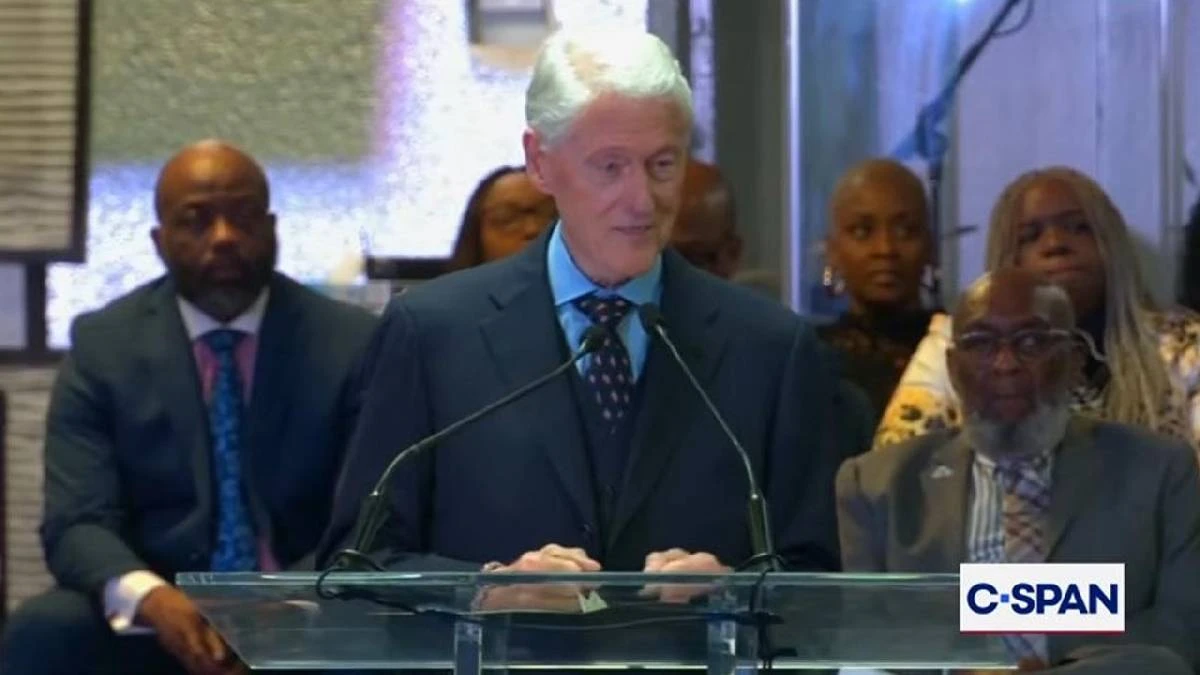
PEMBROKE PARK, FLORIDA — Former U.S. President Bill Clinton said his daughter Chelsea read the Quran from beginning to end at 15 as he condemned prejudice against Muslims during a Florida campaign gathering.
Clinton spoke on October 20 at the Koinonia Worship Center during “Many Faiths, One Florida,” an event supporting Democratic gubernatorial candidate David Jolly. Jewish, Muslim and Christian community representatives took part in the gathering ahead of Florida’s November 3 election.
Clinton condemns prejudice against Muslims
Clinton criticized the practice of judging an entire religious community by its identity. Speaking about political and cultural division, he said he was tired of Muslims being disparaged simply because they are Muslim.
“I’m tired of people denigrating Muslims for being Muslims.”
The remark formed part of a broader criticism of politics built around an “us versus them” divide. Clinton argued that encouraging fear and anger toward other groups makes it harder for people to address the concerns they share.


He also cautioned against treating the actions of individuals as a judgment on everyone who belongs to the same community. His appeal at the gathering was for people of different backgrounds to engage with one another rather than allow religious identity to become a reason for hostility.
Chelsea’s experience with the Quran
Clinton then recalled a conversation with his daughter, Chelsea Clinton. According to the former president, she had read the Quran from start to finish when she was 15 years old and drew his attention to a passage she wanted him to consider.
He recounted her invitation in a few words: “Dad, read this.” Clinton used that family memory to introduce his point about understanding people from different communities.


The account describes what Clinton said about Chelsea’s reading and their conversation. He did not say in this part of the speech that he himself had read the entire Quran. The distinction matters because his story centered on a passage his daughter had brought to him and the meaning he took from it.
The passage Clinton drew on
Clinton’s remarks referred to a message in verse 13 of Surah Al-Hujurat, chapter 49 of the Quran. The verse says that people were made into peoples and tribes so that they might know one another.
In his speech, Clinton expressed the thought in his own words. He said differences among people were meant to lead them toward knowing and learning from one another, rather than despising one another. That language conveyed his interpretation of the passage; it was not a word-for-word recitation of the verse.
By connecting the passage to his criticism of anti-Muslim prejudice, Clinton placed a personal story within the event’s wider theme of coexistence. He addressed an audience that included people from several faith communities and urged them to look beyond assumptions about those they do not know.
An interfaith gathering during an election campaign
“Many Faiths, One Florida” was held at Koinonia Worship Center in Broward County. Religious leaders from Jewish, Muslim and Christian communities participated, while Clinton appeared in support of Jolly’s campaign for governor.
The setting gave Clinton’s comments both a community and a political context. He spoke about respect across religious lines at an event intended to bring different groups together, but he was also campaigning for a candidate in a closely watched state election.
Jolly is the Democratic candidate for governor, while Byron Donalds is the Republican candidate. Florida voters are due to cast their ballots on November 3. Clinton’s appearance was therefore part of the campaign, even as his comments about Muslims and the Quran reached beyond a direct appeal for votes.
A wider argument against division
Clinton’s speech did not focus solely on religion. He also criticized a style of politics that, in his view, asks voters to identify an enemy before considering how leaders would improve their lives.
He contrasted that approach with the practical concerns facing households. His comments linked the treatment of religious minorities to a wider question: whether political leaders bring communities together around shared problems or gain support by sharpening divisions between them.
Toward the end of the remarks, Clinton acknowledged his frustration with religious and cultural conflicts while making clear that frustration had not ended his willingness to work for change. His story about Chelsea and the Quran was one part of that appeal for greater understanding.
WiseNewsPress.com
What's Your Reaction?
 Like
0
 Dislike
0
 Love
0
 Funny
0
 Wow
0
 Sad
0
 Angry
0

Ahmet Taş is a journalist, editor and Turkey Office Manager of the Wise News Press Media Group. He works across news, digital media and international publishing, focusing on accurate, responsible and accessible journalism. He contributes to the development of media projects that bring important political, social and global developments to a wider international audience.



















Comments (0)