



Food waste, Global hunger, Zero Waste, Emine Erdoğan, Food security, COP31
About 1.5 billion tonnes of food are lost or wasted yearly as hunger worsens in 44 countries, making Zero Waste a food security priority.


By Yusuf İnan | Wise News Press
Journalist, Author | Political and Strategic Analyst
ANKARA, TÜRKİYE — An estimated 1.5 billion tonnes of food are lost or wasted each year while hunger is worsening across dozens of countries, turning waste prevention into a global security priority.
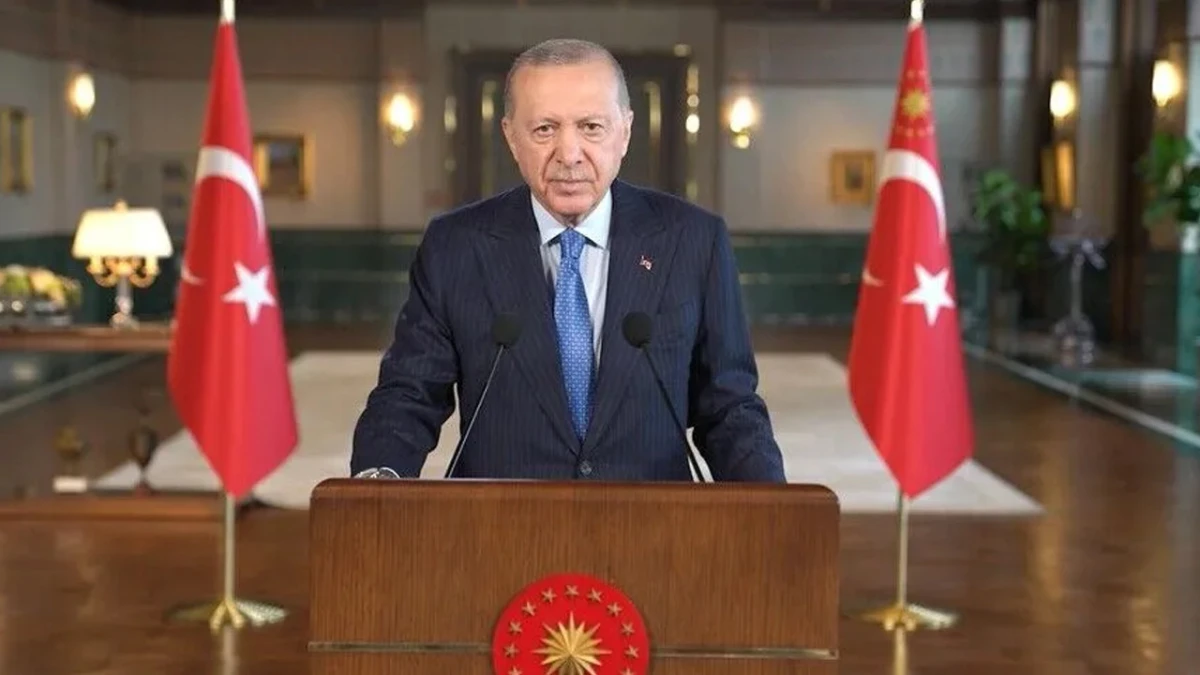
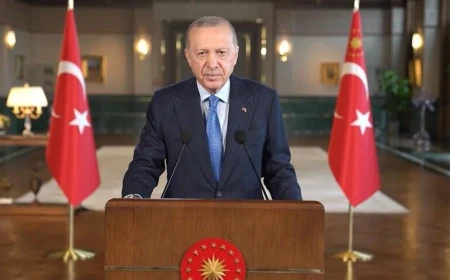
President Recep Tayyip Erdoğan’s message to the World Food Forum, the findings of the 2026 Global Hunger Index and the Zero Waste initiative led by Emine Erdoğan collectively highlight a stark imbalance in the global food system: enormous quantities of food never reach a plate even as millions of people struggle to meet their basic nutritional needs.
Erdoğan described access to safe food as a fundamental element of national security. Seen alongside the latest hunger data, that position suggests food waste can no longer be treated solely as an environmental or consumer-awareness issue. It is also connected to economic resilience, public health, climate policy and social stability.
Why do the figures of 1.5 billion and 1.05 billion tonnes differ?
President Erdoğan said approximately 1.5 billion tonnes of food are lost or wasted around the world every year. The United Nations Environment Programme, meanwhile, estimates that 1.05 billion tonnes of food waste were generated at the retail and consumer levels in 2022.


The figures measure different parts of the food system and should not be treated as direct alternatives.
“Food loss” generally refers to products lost between harvest and the retail stage because of inadequate storage, damaged crops, inefficient processing, poor transportation or weak cold-chain infrastructure. “Food waste” describes food discarded by retailers, restaurants, catering businesses and households.
According to UNEP’s consumer-level estimate, households were responsible for approximately 60% of food waste, while food services accounted for 28% and retailers for 12%. The household share shows that the problem cannot be solved through agricultural or industrial policies alone. Shopping habits, portion sizes, food storage, date-label confusion and meal planning also influence the amount discarded.


The consequences extend beyond the wasted food itself. Every discarded product also represents land, water, energy, fertilizer, fuel and human labor used without fulfilling their intended purpose. Food loss and waste are estimated to generate between 8% and 10% of annual global greenhouse gas emissions, placing the issue directly within the climate debate.
Global progress against hunger has gone into reverse
The global score in the 2026 Global Hunger Index stands at 18.1, classified as moderate. That is higher than the comparable 2018 score of 17.6 and marks an interruption in the long-term improvement recorded since 2000, when the global score was 28.2.
The report says hunger has worsened in 32 countries since 2018. It is classified as alarming in eight countries and serious in another 36. On the current trajectory, 57 countries are not expected to reach even the low-hunger category by 2030.
Among countries with calculable scores, Somalia recorded the most severe result at 47.0. It was followed by the Democratic Republic of the Congo at 39.5, Chad at 38.0 and Madagascar at 36.5. Burundi, South Sudan, Sudan and Yemen were provisionally placed in the alarming category because sufficient data were not available to calculate individual scores.
The heaviest burden remains concentrated in Africa south of the Sahara and South Asia. Conflict, displacement, extreme weather, disrupted supply chains, rising agricultural costs and declining humanitarian funding are among the principal forces driving the deterioration.
The index also warns that food insecurity and political insecurity can reinforce one another. Hunger may result from conflict and economic instability, but prolonged shortages, inequality and competition over limited resources can also deepen social tensions.
What Türkiye’s low hunger score does—and does not—mean
Türkiye is among 24 countries with a 2026 Global Hunger Index score below 5, placing it in the report’s lowest severity group. Its comparable historical score stood at 22.1 in 2000, fell to 11.6 in 2006 and reached 5.4 in 2012.
This represents a significant long-term improvement in the indicators used by the index. However, the scope of the measurement needs to be understood correctly.
The Global Hunger Index combines four components: the share of the population with insufficient calorie intake, wasting among children under five, stunting among children under five and mortality before the age of five.
It does not directly measure supermarket prices, food inflation, household purchasing power or the affordability of a healthy diet. Türkiye’s score below 5 therefore reflects relatively favorable national nutrition and child-health indicators, but it does not mean that every household has equal access to affordable and nutritious food.
Food inflation, regional inequality, income distribution and the cost of maintaining a balanced diet require separate economic and social indicators. National averages can also conceal disparities between regions and income groups.
How Zero Waste became a food security policy
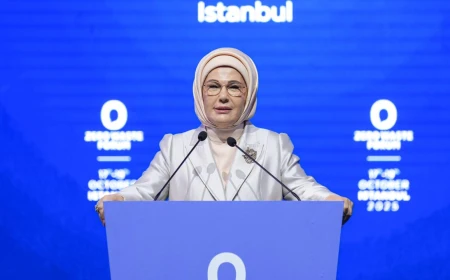
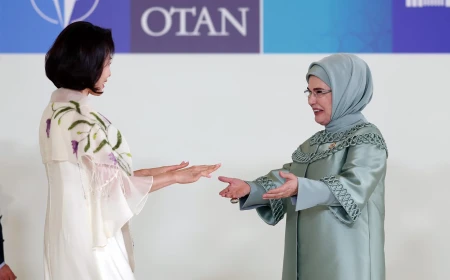
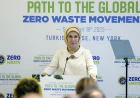
The Zero Waste initiative launched under the leadership of Emine Erdoğan in 2017 initially gained attention through waste separation, recycling and resource recovery. Its scope later expanded to include responsible consumption, circular production, climate action and the prevention of food waste.
A resolution introduced by Türkiye and supported by 105 other countries led the United Nations General Assembly to designate March 30 as the International Day of Zero Waste. This gave the initiative a global institutional dimension and linked it to the UN’s sustainable development agenda.
In food policy, a Zero Waste hierarchy should begin with prevention. Businesses and households should first avoid unnecessary production and excessive purchasing. Safe surplus food should then be redistributed through reliable donation networks. Material that is unsuitable for human consumption can, where appropriate, be directed to animal feed, composting or energy recovery.
Reducing waste, however, cannot solve world hunger on its own. Hunger is also driven by poverty, conflict, forced displacement, market disruption and the unequal distribution of resources. Surplus food in one country cannot automatically reach families facing famine elsewhere.
Zero Waste should therefore be viewed as a supporting pillar of food security rather than a substitute for humanitarian assistance, social protection, resilient agriculture and fair distribution systems.
Why the 18% reduction in bread waste matters
President Erdoğan said Türkiye’s Bread Waste Prevention Campaign reduced bread waste by 18%. He also highlighted the “Save Your Food, Protect Your Table” initiative, launched in 2020 to raise awareness and encourage action throughout the food supply chain.
The reduction in bread waste demonstrates that sustained public communication can change everyday behavior. Bread carries particular economic and cultural importance in Türkiye, making its waste both a financial loss and a highly visible symbol of unnecessary consumption.
Campaign-based progress must nevertheless be converted into permanent systems. Municipalities, supermarkets, hotels, restaurants and public institutions need comparable measurement standards and sector-specific targets.
Performance should not be assessed only by the monetary value of saved food. Reporting should also include the water, energy and agricultural land preserved, as well as the greenhouse gas emissions avoided. Transparent measurement would make it possible to distinguish lasting progress from short-term awareness.
A measurable food security agenda for COP31
Türkiye’s hosting of COP31 in Antalya from November 9 to 20 offers an opportunity to connect food security, waste prevention and climate commitments. Erdoğan said the proposed Turquoise Connection Initiative would seek to bring climate obligations and food security policies onto a shared platform.
For that ambition to produce measurable results, five priorities stand out:
-
Establishing a consistent national baseline for measuring food loss and waste;
-
Setting separate reduction targets for households, retailers, hotels, restaurants and public institutions;
-
Strengthening storage, transportation and cold-chain infrastructure;
-
Expanding safe food donation and redistribution networks;
-
Separating organic waste for composting, animal feed or controlled energy recovery.
Date labels also need clearer public communication. Consumers should understand the difference between quality-related “best before” dates and safety-related “use by” dates. Public procurement rules could require schools, hospitals and government facilities to measure leftovers and adjust purchasing and portion planning accordingly.
The scale of global hunger shows why this agenda matters. Producing more food will remain necessary in many regions, but production alone cannot secure the future if large quantities are lost before reaching markets or discarded without being consumed.
In a world where hunger is again worsening, protecting food is inseparable from protecting water, energy, livelihoods and social stability. The strategic value of Zero Waste will ultimately be measured not only by the amount diverted from landfills, but also by how much edible food is preserved and how many people benefit from a fairer, more resilient food system.
Yusuf İnan
WiseNewsPress.com
What's Your Reaction?
 Like
0
Like
0
 Dislike
0
Dislike
0
 Love
0
Love
0
 Funny
0
Funny
0
 Wow
0
Wow
0
 Sad
0
Sad
0
 Angry
0
Angry
0
Yusuf İnan is a journalist, columnist, strategic analyst and head of the Wise News Press Media Group. His work focuses on international affairs, geopolitics, security and major social issues. Through his journalism, he promotes peace, dialogue, mutual understanding and responsible reporting while contributing to the development of international media projects.















Comments (0)