



A forced political exit for Zelensky could strengthen Moscow’s hand
A forced political exit for Zelensky could weaken Kyiv’s negotiating position if Ukraine’s constitutional order and secure election conditions are bypassed.


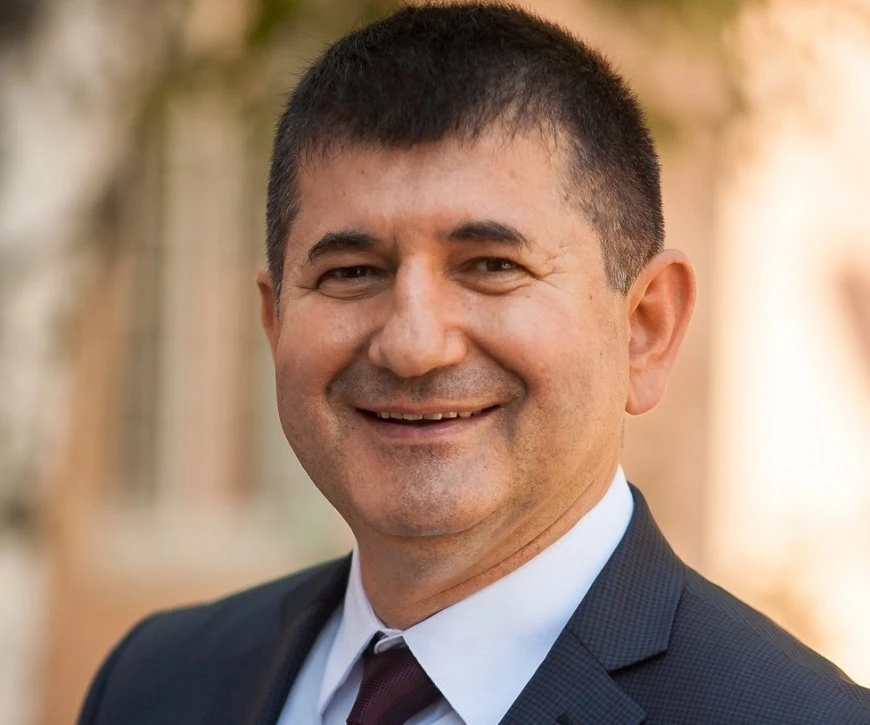
By Yusuf İnan | Wise News Press
Journalist, Author | Political and Strategic Analyst
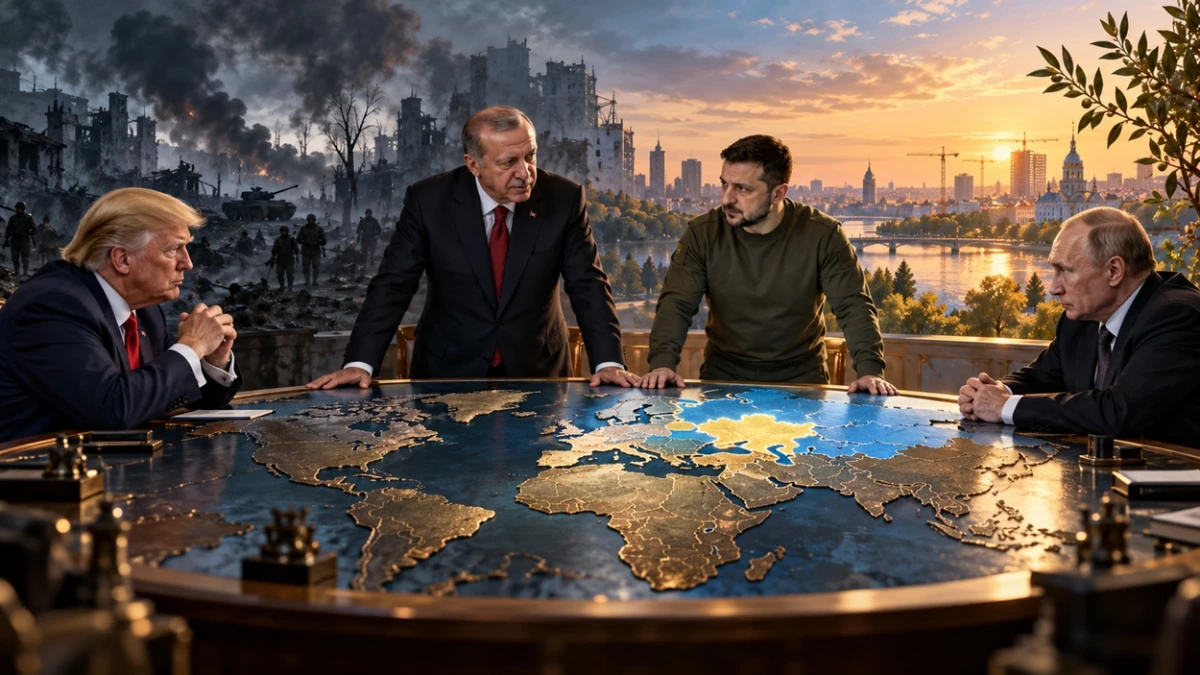
MYKOLAIV, Ukraine — A forced political exit for Volodymyr Zelensky under external pressure could weaken Kyiv’s negotiating position and give Moscow more room to pursue territorial concessions.
My journalist and politician friends in Türkiye, as well as Ukrainian journalists, politicians, bureaucrats and ordinary citizens, often ask me the same question: “What do you think about Zelensky?”
Those who know me in Turkish journalism and politics also know this: I do not hesitate to say what I believe to be true. My answer is clear. Zelensky can be criticized. His mistakes can be discussed. His wartime leadership can be questioned. But pushing him aside through external pressure, before Ukraine’s constitutional order and secure democratic conditions are protected, would not serve Ukraine’s interests.
The real question is not only about Zelensky’s personality. It is this: Which actors does Russia want weakened in order to gain more leverage at the peace table?


Zelensky became a symbol of Ukraine’s national resistance
When Russia launched its full-scale invasion in February 2022, Zelensky became more than a political leader. As president, he became a symbol of Ukraine’s national resistance.
In the first days of the war, many expected Kyiv to fall, the Ukrainian state to collapse and the government to leave the country. Zelensky’s decision to remain in Ukraine changed the psychological course of the war. The message was clear: the Ukrainian state was standing, the president was in his country, and the people were not alone.
This symbol should not be underestimated. Wars are not decided only by weapons, front lines and military tactics. Leadership, morale, public confidence and the ability to deliver the right message to the world are also decisive.


Zelensky’s communication skills helped Ukraine make its case to the world. He kept Western public opinion, European societies, international institutions and many world leaders focused on Ukraine’s struggle. That diplomatic achievement was as important as resistance on the battlefield.
Ukraine should not be forced to discover what losing that symbol would mean at the most fragile stage of the war.
Criticism is legitimate, but pressure is different
Defending Zelensky at this stage does not mean seeing him as flawless.
War fatigue is real. Strategic decisions at the front can be questioned. Corruption allegations must be taken seriously. The use of Western aid, the transparency of state institutions, and the soundness of military and diplomatic decisions must all remain open to scrutiny.
In a democratic state, leaders are questioned and governments are held accountable. Even during wartime, transparency, the rule of law and public morality must be protected as much as possible.
But legitimate democratic criticism and a forced political exit under external pressure are not the same thing.
When the war is still ongoing, when part of the country is under occupation, when millions of people have been displaced and when Russia wants to enter negotiations from a stronger position, a leadership crisis can directly affect the balance of power in peace negotiations.
That is why the issue cannot be reduced to whether “Zelensky should stay or go.” The central question is this: Would a change of leadership happen through Ukraine’s constitutional order and the free will of its people, or through pressure that damages the state’s negotiating continuity during war?
Ukraine’s election debate has a legal framework
The postponement of elections in Ukraine should not be presented as a simple personal choice by Zelensky.
Ukraine’s martial-law legislation bars national elections during martial law. Article 19 of Ukraine’s law on the legal regime of martial law prohibits presidential, parliamentary and local elections while martial law is in force. Ukraine’s constitution also provides that the president exercises powers until a newly elected president assumes office, while early termination is possible through resignation, inability to serve for health reasons, impeachment or death.
This legal context matters.
Of course, elections must eventually be held in Ukraine. No democratic leader should be beyond the people’s judgment. But elections under bombardment, with millions displaced, soldiers at the front and parts of the country under occupation, would raise serious questions of security, participation and legitimacy.
According to Reuters, Zelensky said on 11 October 2026 that Ukraine could organize elections if Russia agreed to a 60-day full ceasefire. That statement is important because it separates the political principle of elections from the legal and security conditions required to hold them.
A ceasefire would not automatically solve every problem. But it could open the door to a constitutional and credible political process if security, voter access and legal conditions are properly addressed.
Moscow wants a weaker Kyiv at the peace table
Russia’s goal is not only to advance on the battlefield. Moscow also wants leverage at the negotiating table.
If Ukraine is represented by a leadership committed to territorial integrity and unwilling to turn Crimea and the occupied regions into bargaining chips, Russia’s task becomes harder. Weakening such a leadership could become a diplomatic gain for Moscow.
The peace Russia wants may not be the same as the just peace Ukraine seeks. A just peace should be based on Ukraine’s free will, credible security guarantees and the principle that forced annexations must not be legally recognized. Moscow may prefer a formula in which de facto occupations are normalized, Ukraine’s aspirations for NATO and EU membership are limited, and territorial losses are presented as “reality.”
A ceasefire along the current front line and legal recognition of occupied territory are not the same thing. Temporary arrangements to stop bloodshed may be discussed. But turning occupation into accepted sovereignty would be a different matter entirely.
That is why Ukraine needs resilience not only on the battlefield, but also in politics and diplomacy.
Sidelining Zelensky under pressure could create the perception that a more accommodating negotiating partner may emerge. That is the psychological and diplomatic opening Moscow would welcome.
Türkiye’s Crimea position has regional weight
This issue also has a regional dimension. Türkiye’s position, and President Recep Tayyip Erdoğan’s stance within that position, matter.
Türkiye has not recognized the annexation of Crimea. The Turkish Foreign Ministry reiterated on 16 March 2026 that Türkiye does not recognize the de facto situation in Crimea and supports Ukraine’s independence, sovereignty and territorial integrity, according to its official statement.
This is both a position emphasized by Erdoğan and part of Türkiye’s institutional foreign policy line. That distinction is important. Türkiye’s Crimea policy should not be reduced only to one leader, but Erdoğan’s role in sustaining that principle during the war should not be ignored either.
Türkiye is an important actor in the Black Sea balance, grain corridor diplomacy, prisoner exchanges, energy security and the Crimean Tatar issue. Its support for Ukraine’s territorial integrity reinforces that principle in the Black Sea region.
For Moscow, weakening voices and institutions that resist territorial concessions would be useful. That does not mean every domestic debate in Türkiye or Ukraine is controlled from outside. But it does mean that domestic instability in key regional actors can affect the wider diplomatic balance.
Economic fragility can limit diplomatic leverage
Economic crises should be treated carefully. Without concrete evidence, documents and strong data, it would be wrong to present any financial crisis as an external operation.
A development benefiting an actor does not mean that actor caused it.
Still, economic fragility can limit diplomatic leverage. When market confidence is shaken, governments may have less room to maneuver. Domestic economic pressure can narrow foreign policy flexibility, especially during critical negotiations.
In a period when Russia seeks a settlement favorable to its territorial objectives, the economic and institutional resilience of Black Sea actors matters. Strong institutions, transparent markets and public trust are not only domestic issues; they also support diplomatic independence.
Trump should not build peace by weakening Ukraine
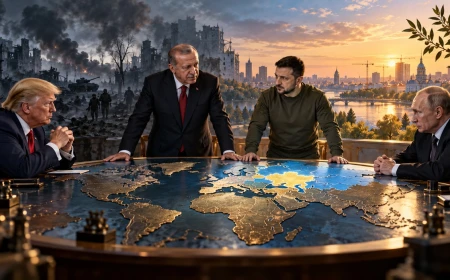
U.S. President Donald Trump has said he wants to end the war in Ukraine. That is a bold claim. But peace cannot be built by weakening Ukraine’s resistance or undermining its constitutional order.
A settlement imposed without Ukraine’s free consent risks entrenching the conflict rather than resolving it. A ceasefire must not be treated as legal recognition of annexations, and credible security guarantees are essential to a durable peace.
This distinction is crucial. A temporary ceasefire, a monitored pause in attacks or a security framework for elections may be legitimate subjects of negotiation. But forcing Ukraine to recognize territorial losses, accept political weakness or abandon its future under pressure would not produce a stable peace.
Trump’s task should not be to target Zelensky personally. It should be to force Putin into a real ceasefire and a fair negotiation process.
A secure political process does not necessarily have to wait for every detail of a final peace treaty. But it must be legal, safe and credible. Otherwise, even the language of “democracy” can become a tool of wartime pressure.
Poroshenko’s contribution should not be forgotten
Defending Zelensky does not mean ignoring other patriotic actors in Ukraine.
Petro Poroshenko’s contribution during this period should also be acknowledged. Although I have criticized him on many issues, Poroshenko has stood with Ukrainian soldiers and the Ukrainian people during the war. Interfax-Ukraine reported on 21 July 2026 that Poroshenko had delivered drones and other equipment to Ukrainian military units, citing his public account of the deliveries.
Ukraine today must think beyond the old political rivalry between Zelensky and Poroshenko. Statecraft requires this.
In wartime, national unity is more important than personal rivalry. What Ukraine needs is not destructive score-settling among leaders, but common ground on territorial integrity, independence and the continuity of the state.
The issue is not a cult of personality, but statecraft
The point here is not to sanctify Zelensky. Nor is it to present Erdoğan as beyond debate. It is certainly not to place individuals above the state.
The issue is statecraft, constitutional legitimacy and institutional continuity.
What Ukraine must do is transform the will of resistance represented by Zelensky during the war into strong institutions, the rule of law, clean governance and national unity. Individuals are temporary; institutions are permanent.
But if this transition is carried out at the most fragile stage of the war, under external pressure and on terms favorable to Moscow, Ukraine will not become stronger. It will be shaken.
Zelensky may leave office one day. Like every democratic leader, he is accountable to the people and to the constitution. But any transition of power must happen through Ukraine’s constitutional order, legal mechanisms and the safe, free will of the Ukrainian people.
The problem is not if Ukrainian voters, under secure and legal conditions, choose political change because of war fatigue, economic hardship or dissatisfaction with leadership. That would be democracy. The problem is if outside actors exploit those pressures to force a political outcome favorable to Moscow.
If Zelensky leaves after a credible ceasefire, under constitutional conditions and through a secure democratic process, that would be Ukraine’s decision. But if he is pushed into a forced political exit before such conditions exist, this could harm not only Ukraine, but also Europe and Black Sea security.
The question that must be asked today is this: Who benefits if Ukraine’s constitutional order is weakened, its negotiating continuity is disrupted and the actors defending its territorial integrity are pushed aside under pressure?
The answer leads us to the same place: such a scenario would risk strengthening Moscow’s hand.
Yusuf İnan
WiseNewsPress.com
What's Your Reaction?
 Like
0
Like
0
 Dislike
0
Dislike
0
 Love
0
Love
0
 Funny
0
Funny
0
 Wow
0
Wow
0
 Sad
0
Sad
0
 Angry
0
Angry
0
Yusuf İnan is a journalist, columnist, strategic analyst and head of the Wise News Press Media Group. His work focuses on international affairs, geopolitics, security and major social issues. Through his journalism, he promotes peace, dialogue, mutual understanding and responsible reporting while contributing to the development of international media projects.










Comments (0)