



Why Nordic languages lack one all-purpose word for ‘please’ in daily speech
Danish, Swedish, Norwegian, Icelandic and Finnish lack one all-purpose word for “please,” expressing politeness through tone, context and thanks.


By Ahmet Taş | Wise News Press
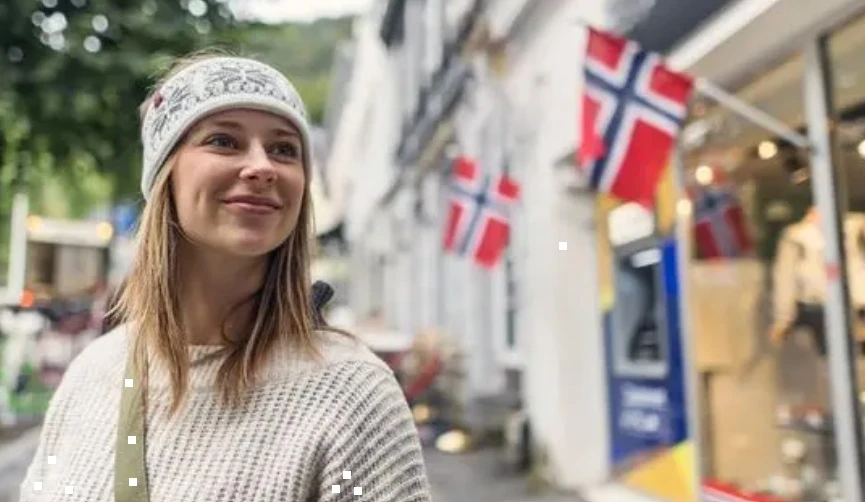
COPENHAGEN, Denmark — Danish, Swedish, Norwegian, Icelandic and Finnish have no single all-purpose equivalent of “please,” with speakers instead conveying politeness through sentence structure, tone, context, gratitude and body language.
The linguistic difference does not mean that people in Nordic countries are less courteous. Researchers say the region’s direct communication style and emphasis on social equality have produced different conventions for expressing consideration and respect.
Politeness does not depend on one word
Travelers often begin learning a new language with a short list of practical expressions: hello, goodbye, yes, no, please and thank you. In the Nordic region, however, translating “please” is not as straightforward as many visitors expect.
According to a BBC Turkish report by Laura Hall, Danish, Swedish, Norwegian, Icelandic and Finnish do not use one universal word that performs every function associated with the English “please.”
That does not mean these languages lack polite requests. Speakers adjust the construction of a sentence, their tone of voice, facial expressions and the context of the conversation. They may also use a form of “thank you” to make a request sound considerate.


Dr. James Puchowski, a linguist and researcher at Nynorsk Kultursentrum in Norway, said searching for a direct translation of “please” may be the wrong starting point.
The perceived politeness of a request, he explained, depends on how an idea is communicated rather than on whether a particular word appears in the sentence.
“Language is not only about words. It is also about how you communicate an idea,” Puchowski said.


The distinction is particularly important for travelers who may interpret short or direct exchanges as rude because they are applying the conventions of their own language to a different social setting.
Danish softens requests through sentence structure
In Denmark, a customer ordering at a bakery or café can make a request polite by framing it as a question rather than adding a direct equivalent of “please.”
A Danish speaker asking for a pastry might use the expression må jeg bede om, which can be translated as “may I ask for” or “could I have.” The grammatical structure softens the request without requiring a separate all-purpose politeness word.
The speaker may then add tak, meaning “thank you,” after receiving the item or at the end of the request. Politeness is therefore created through the complete interaction rather than through a single word placed before or after the order.
Danish language teacher Daniela Hummelgren said direct communication is a common feature of everyday life in Denmark. Efficiency is valued, and speakers often prefer clear requests over long, indirect formulations.
A short order at a café is not automatically interpreted as disrespectful. A calm voice, brief eye contact, a friendly expression and a simple acknowledgment may communicate all the courtesy required in that setting.
Excessively elaborate phrasing can sometimes sound unnatural because it does not match the ordinary rhythm of local conversation.
Direct communication is not necessarily rude
In some cultures, speakers demonstrate respect by making a request longer and more indirect. They may use formal titles, apologies or several politeness expressions before stating what they need.
Nordic communication often works differently. A request may be concise and explicit without carrying a hostile or dismissive meaning.
According to Hummelgren, clarity and efficiency are important features of communication in the region. If elaborate politeness slows down a routine exchange, it may be considered unnecessary rather than respectful.
Courtesy may instead be communicated through the volume and warmth of a person’s voice, a smile, respectful distance or a short expression of gratitude. In Norway, for example, a friendly gesture can perform part of the social function that “please” serves elsewhere.
Visitors who are unfamiliar with these conventions may initially find conversations unusually brief. Local speakers, however, may understand the same exchange as natural, efficient and equal.
The absence of a familiar word should therefore not be confused with the absence of respect. The social message remains present, but it is carried by different linguistic and nonverbal signals.
Social equality shapes everyday language
Puchowski linked these communication patterns to the Nordic region’s emphasis on equality. Differences in social rank are generally less visible in ordinary conversations, reducing the need for language that signals deference.
Formal forms of address such as Herr and Frue, meaning “Mr.” or “Sir” and “Mrs.” or “Madam,” have largely disappeared from everyday use in parts of the region.
People are more likely to address one another without repeatedly referring to professional titles, social class or institutional rank. This supports a conversational style in which both participants are treated as equals.
The tendency is often associated with the Scandinavian cultural concept known as the Law of Jante, which discourages individuals from presenting themselves as more important or exceptional than others.
In this setting, politeness is less about showing submission to someone of higher status and more about reciprocity, restraint and respect for the other person’s independence.
Finnish belongs to a different language family from Danish, Swedish, Norwegian and Icelandic. Nevertheless, Finland shares several of the region’s broader social conventions, including direct communication and relatively limited use of formal status markers.
‘Thank you’ can perform a similar social role
In Swedish, one of the simplest ways to make a request sound courteous is to add tack, meaning “thank you,” at the end of the sentence.
The expression does not function as a literal translation of “please” in every context. However, it can communicate appreciation and mutual respect while making a request sound less abrupt.
Related words are used across much of the region. Danish speakers say tak, while Norwegian and Icelandic speakers use takk. Finnish speakers commonly use kiitos to express thanks.
These words are not interchangeable with “please” in every grammatical situation. Their social function depends on timing, context and intonation. In a café or shop, however, a brief expression of thanks can perform much of the courtesy work expected from “please” in English.
Travelers also do not need to worry excessively about making a mistake. Ordering coffee without adding tak or tack does not automatically cause offense. Staff are more likely to consider the speaker’s general manner than the presence or absence of one word.
Excessive politeness can have the opposite effect
Experts advise visitors to observe how people around them communicate. The way customers place orders, address shop employees and conclude short exchanges can provide more useful guidance than a literal phrasebook translation.
Hummelgren said travelers should adjust to the local level of politeness. Long expressions of gratitude or unusually formal gestures may appear exaggerated when they do not fit the surrounding culture.
For example, sending a formal thank-you card after a routine job interview may be considered thoughtful in some countries. In a Nordic setting, the gesture could appear excessive or suggest that the sender expects special treatment.
The practical lesson is not that visitors should avoid being courteous. Instead, they should pay attention to the local forms courtesy takes.
A friendly tone, a brief thank-you, a smile and respect for personal space are usually sufficient. Travelers can also listen to the phrases local people use in cafés, restaurants and shops before attempting to imitate them.
Nordic speakers may not use a single all-purpose equivalent of “please,” but politeness remains central to everyday communication. It is expressed through sentence structure, tone, context, equality, restraint and mutual respect rather than through one indispensable word.
WiseNewsPress.com
What's Your Reaction?
 Like
0
 Dislike
0
 Love
0
 Funny
0
 Wow
0
 Sad
0
 Angry
0

Ahmet Taş is a journalist, editor and Turkey Office Manager of the Wise News Press Media Group. He works across news, digital media and international publishing, focusing on accurate, responsible and accessible journalism. He contributes to the development of media projects that bring important political, social and global developments to a wider international audience.


















Comments (0)