



How a Le Pen victory could reshape France’s Ukraine and EU policies
A Marine Le Pen victory could end French financial aid to Ukraine, cut France’s EU budget contribution and accelerate changes to climate and fiscal policy.


By Ahmet Taş | Wise News Press
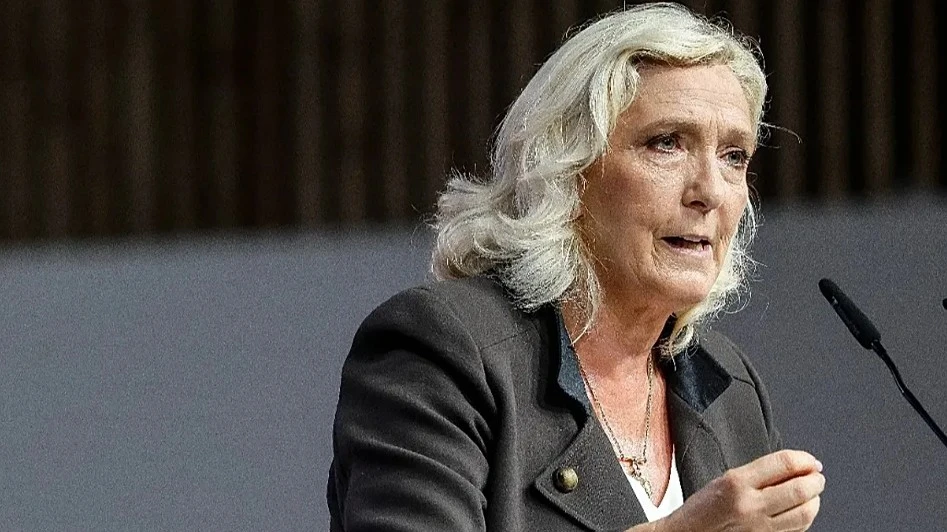
PARIS, FRANCE — A Marine Le Pen victory in France’s 2027 presidential election could end financial aid to Ukraine, reduce Paris’s EU budget contribution and trigger a broader confrontation with Brussels.
Le Pen, the leading figure of the far-right National Rally, is campaigning on pledges to end financial support for Kyiv, lift European sanctions on Russia, reduce France’s net contribution to the EU budget and halt key elements of the European Green Deal.
Financial support for Ukraine could end within six months
According to Euronews, Le Pen said that if elected president, she would be able to continue France’s financial support for Ukraine for only another six months.
She attributed the proposed cutoff to what she described as the dangerous condition of France’s public finances. Such a decision would mark a major departure from the policy followed by President Emmanuel Macron’s government.
France currently supports Ukraine through both bilateral assistance and European financing arrangements. Paris also plays a diplomatic and political role in maintaining long-term European backing for Kyiv.


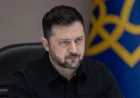
Ukrainian President Volodymyr Zelensky responded in an interview with the Financial Times, arguing that the financial cost of assistance could not be compared with the value of human life.
Zelensky also said Ukraine’s battlefield experience could strengthen European security. Kyiv has repeatedly argued that military and financial assistance should not be viewed solely as aid but as an investment in the wider defense of Europe.
Le Pen’s proposed policy would therefore affect more than bilateral relations between Paris and Kyiv. It could also influence the willingness of other European governments to maintain their own commitments.


Military assistance may not end entirely
Ending financial support would not necessarily mean the immediate termination of all French assistance to Ukraine.
Le Pen has said that France could continue training Ukrainian soldiers and supplying military equipment to Kyiv. Her position therefore distinguishes between direct financial support and certain forms of military cooperation.
However, Le Pen has also called for European Union sanctions against Russia to be lifted. Such a move could weaken the EU’s ability to maintain a common policy toward Moscow, particularly because major sanctions decisions require broad agreement among member states.
Le Pen’s approach has been compared with the harder line taken by US President Donald Trump toward continued financial assistance for Ukraine. A change in French policy, however, could have particularly wide consequences because of France’s political influence within the European Union.
Her stance also differs from that of Italian Prime Minister Giorgia Meloni, another right-wing European leader with whom Le Pen is frequently compared.
Meloni has defended continued support for Kyiv, arguing that helping Ukraine resist Russian aggression is necessary to achieve a sustainable and fair peace. Her government has also emphasized pressure on Russia and the importance of transatlantic unity.
Europe’s wider aid system could be placed at risk
Elie Tenenbaum, director of the Security Studies Center at the French Institute of International Relations, said France’s support for Ukraine extends beyond direct financial or military assistance.
France has played an important role in diplomatic and security initiatives, including the Coalition of the Willing launched with the United Kingdom. French political support also helps sustain European mechanisms designed to finance Ukraine over the longer term.
These mechanisms include a €90 billion Ukraine Support Loan whose implementation and payments depend on the continued backing of major European countries, including France.
Tenenbaum said a reduction in bilateral French aid would have a more limited impact than an active French campaign against EU-level financing programs.
If Paris were to halt its direct assistance, reduce its EU contribution and oppose joint financing mechanisms, the wider European structure supporting Ukraine could be placed under significant pressure.
Data from Germany’s Kiel Institute indicate that France has committed approximately €27 billion to Ukraine since Russia launched its full-scale invasion in February 2022.
About €7.9 billion of that amount was committed as direct assistance, while roughly €19 billion was provided through European mechanisms. Germany has committed more than €50 billion during the same period, making it Europe’s largest contributor in absolute terms.
National Rally seeks a €3 billion EU budget reduction
National Rally wants to reduce France’s annual net contribution to the European Union budget from about €8 billion to €5 billion.
The proposal would represent an annual reduction of approximately €3 billion. Le Pen has presented the plan as a way to protect French public finances and strengthen national control over government spending.
EU budget contributions, however, are not set solely by individual governments. Payments are calculated under common rules and agreed through negotiations involving the member states and European institutions.
Eulalia Rubio, a senior researcher at the Jacques Delors Institute, said France could not simply declare that it would pay no more than €5 billion every year. Contributions and expenditures fluctuate depending on economic data, budget priorities and previously agreed obligations.
If France overcame the legal barriers and reduced its contribution, other member states might have to cover the resulting shortfall. The dispute could be especially contentious because France is one of the largest beneficiaries of agricultural funding under the EU’s Common Agricultural Policy.
The French National Assembly has already rejected a National Rally proposal to unilaterally reduce the country’s contribution to the EU’s 2027 budget. Lawmakers instead supported the contribution level proposed by the government.
A confrontation between Paris and Brussels could intensify
A Le Pen presidency could transform France’s traditional position inside the European Union.
Paris and Berlin have long been regarded as the principal political forces shaping the direction of the bloc. Although their interests frequently differ, Franco-German cooperation remains central to many European initiatives.
Thierry Chopin, a lecturer in European studies at Sorbonne University, said a National Rally victory could represent a break with France’s traditional role as a driving force within the EU.
Such a shift could affect European cooperation on defense, trade, industrial policy, fiscal rules and strategic autonomy.
Le Pen also opposes efforts to reach an agreement by the end of 2026 on the EU’s long-term budget for 2028-2034. She has described the proposed timetable as anti-democratic because negotiations would move forward before elections in France, Spain, Italy and Poland.
Macron’s government supports reaching an agreement in 2026. A political transition in Paris could therefore create conflict with Brussels over both the size of the budget and the timing of negotiations.
Le Pen has also spoken of building new alliances with like-minded European parties to challenge what she describes as anti-growth policies within the EU.
Fiscal rules and the ECB could face political pressure
Le Pen wants the European Central Bank to give greater consideration to economic growth when making policy decisions.
The ECB is an independent institution whose primary mandate is to maintain price stability in the eurozone. France cannot unilaterally change its mandate, meaning any major reform would require extensive European negotiations.
Experts are also skeptical that EU governments would support another major revision of the bloc’s fiscal rules after the Stability and Growth Pact was substantially reformed in 2024.
Andreas Eisl, a senior researcher in European economic policy at the Jacques Delors Institute, said member states currently appear to have little appetite for another major reform.
Future changes may therefore come through reinterpretations of existing rules rather than a fundamental rewriting of their legal foundations.
Le Pen has repeatedly criticized EU regulations and standards, promising to reduce what she portrays as excessive bureaucracy. Supporters say deregulation would encourage economic growth, while critics warn that selective compliance by member states could weaken the EU’s common legal system.
The European Green Deal could be weakened further
Le Pen has also pledged to halt the European Green Deal, the bloc’s central program for reducing emissions and achieving climate neutrality by 2050.
She argues that climate regulations place excessive costs on businesses, consumers and industrial production. National Rally has also proposed abolishing certain EU advisory bodies, including institutions representing local and regional governments.
Phuc-Vinh Nguyen, head of the Jacques Delors Institute’s Energy Center, said the gradual weakening of the Green Deal was already underway. A Le Pen presidency, he suggested, could accelerate that process.
Winning the presidency would not automatically allow Le Pen to implement every campaign pledge. The composition of the French National Assembly, the position of the government, France’s obligations under EU law and negotiations with other member states would all shape the outcome.
Nevertheless, a Le Pen victory could move France significantly away from its current policies on Ukraine, Russia, the EU budget, fiscal regulation and climate action. It could also alter the political balance within the European Union at a time of growing security and economic pressure.
WiseNewsPress.com
What's Your Reaction?
 Like
0
Like
0
 Dislike
0
Dislike
0
 Love
0
Love
0
 Funny
0
Funny
0
 Wow
0
Wow
0
 Sad
0
Sad
0
 Angry
0
Angry
0

Ahmet Taş is a journalist, editor and Turkey Office Manager of the Wise News Press Media Group. He works across news, digital media and international publishing, focusing on accurate, responsible and accessible journalism. He contributes to the development of media projects that bring important political, social and global developments to a wider international audience.














Comments (0)