



Russia-Ukraine War Analysis: A Strategic Blunder or a Provoked Quagmire?
Was Russia's invasion of Ukraine a historic miscalculation or a calculated U.S. plan to trap Moscow in a quagmire? We analyze both theses with an in-depth 2025 perspective.


Yusuf İnan
Journalist | Opinion Writer
Wise News Press – Izmir, Türkiye
Russia-Ukraine War Analysis: A Strategic Blunder or a Provoked Quagmire?
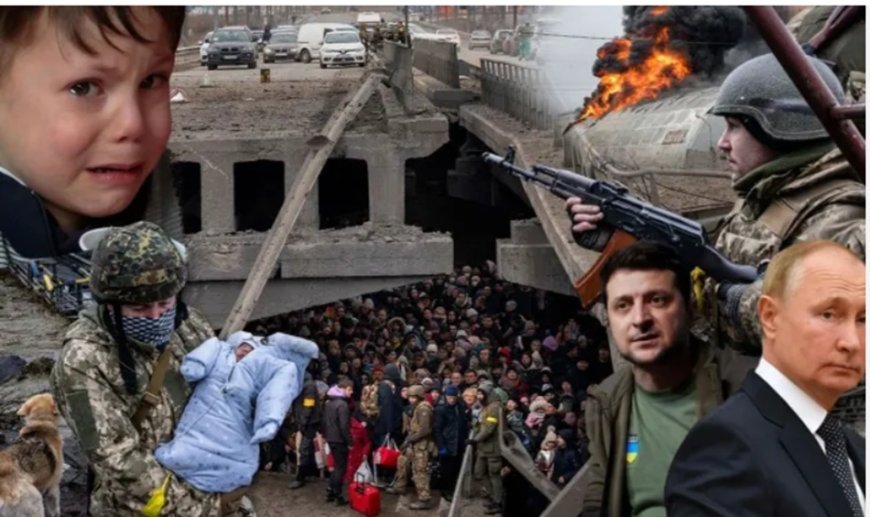
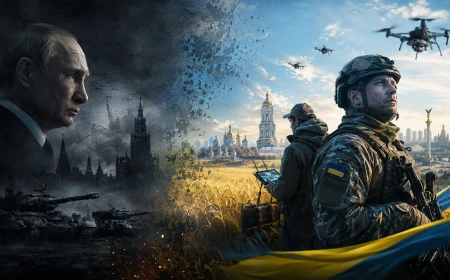
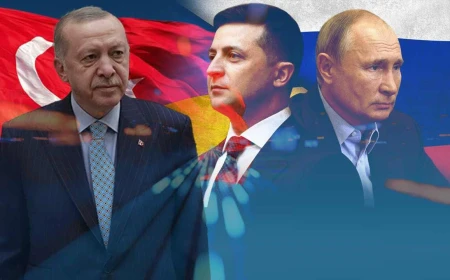
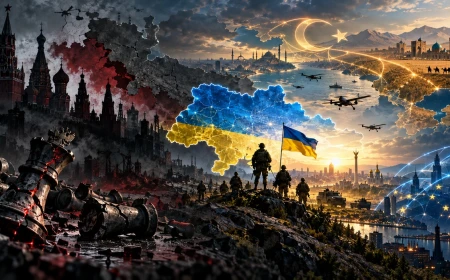
The Russia-Ukraine war, which began on February 24, 2022, and has now raged for over three and a half years, has gone down in history as the 21st century's most bloody and geopolitically transformative conflict. Since its outset, two fundamental and conflicting narratives have vied for dominance in the arena of international relations: the thesis that Russia made an unforgivable "strategic blunder," and the counter-thesis that the United States deliberately drew Russia into a "quagmire." To what extent do the evidence and the opinions of experts from different geographies support these two narratives?
Thesis 1: Russia's Historic Strategic Blunder
This argument forms the foundational belief of Western media, Ukrainian officials, and the Russian opposition. According to this thesis, Russia, under the leadership of Vladimir Putin, initiated a self-destructive process based on a series of fatal miscalculations.


-
Military Miscalculations: The invasion, which the Kremlin dubbed a "special military operation," was predicated on the assumption that Kyiv would fall within days, Ukrainian President Volodymyr Zelenskyy would be overthrown, and the Ukrainian people would welcome Russian soldiers as "liberators." As U.S. military analyst and retired general Ben Hodges has frequently stated, "Russia catastrophically underestimated Ukraine's will to fight and the West's resolve to provide support." At this point in the war, Russia has lost tens of thousands of soldiers, thousands of tanks, and its Black Sea Fleet flagship, the Moskva. It never achieved full air superiority. The Prigozhin and Wagner mutiny in 2023 exposed deep cracks and command failures within the army.
-
Geopolitical Suicide: One of Russia's primary goals was to halt NATO expansion and prevent Ukraine's integration with the West. The war produced the exact opposite results. In the words of the High Representative of the EU for Foreign Affairs and Security Policy, Josep Borrell, "Putin woke up those who had diagnosed NATO as brain-dead." Historically neutral Finland and Sweden joined NATO, more than doubling Russia's border with the alliance. Ukraine has become more united with the West than ever before, its national identity rebuilt upon anti-Russian sentiment.
-
Economic Collapse: The unprecedented sanctions imposed by the West have largely isolated the Russian economy from the global system. Although it initially stayed afloat thanks to high energy prices, the denial of access to technology, a significant brain drain, and the crushing burden of military spending on its GDP have weakened Russia in the long term. Analyses in publications like The Wall Street Journal and the Financial Times argue that Russia has become increasingly dependent on China, demoted from a global power to a regional actor.


The Ukrainian perspective is much clearer. As Ukrainian Foreign Minister Dmytro Kuleba often articulates, this is a "genocidal war of existence," and Russia's mistake was to disregard the Ukrainian nation's will for independence.
Thesis 2: The U.S. Provocation and the Plan to Drag Russia into a Quagmire
This narrative is championed primarily by Russia, as well as China, many nations in the "Global South," and some "realist" international relations experts in the West.
-
NATO Expansion: At the heart of this thesis is the post-Cold War expansion of NATO to include former members of the Warsaw Pact. As Russian President Vladimir Putin has repeatedly stated, this expansion was a violation of Russia's "red lines," and the country's legitimate security concerns were consistently ignored by the West.
-
Ukraine's Role: According to this argument, the U.S. provoked Russia by supporting the 2014 Maidan Revolution (a "coup" in Kremlin terminology), training and equipping the Ukrainian army after 2014, and effectively turning Ukraine into a "de facto NATO military base." University of Chicago Professor John Mearsheimer is the most well-known Western proponent of this thesis. According to Mearsheimer, "The West, which made Ukraine an existential threat to Russia, is the main responsible party for this crisis."
-
The "Afghanistan Model": This view posits that just as the United States dragged the Soviet Union into a quagmire in Afghanistan by supporting the mujahideen, it is applying the same strategy to Russia via Ukraine. It is argued that the U.S. has provided Ukraine with just "enough" weaponry not to win the war, but to sustain it and make Russia bleed. Commentaries on Russian state channels like RT and Sputnik refer to this as a "fight to the last Ukrainian" strategy—a deliberate plan to weaken Russia militarily, economically, and demographically over the long term.
Analysis and Synthesis: Are the Two Narratives Mutually Exclusive?
In reality, these two theses do not have to be mutually exclusive.
-
Provocation and Reaction: It is clear that the West's policies, particularly those of the U.S. regarding NATO expansion and the arming of Ukraine, were perceived as a provocation by Russia. However, in international law, a provocation does not constitute a legitimate justification for launching a full-scale invasion of another sovereign country. In other words, Russia may have been provoked, but its disproportionate and destructive response to that provocation was the result of its own strategic decision.
-
Dragged In or Jumped In? It is no secret that the U.S. desires a weakened Russia. However, whether Russia fell into this trap depended on its own analysis and decision-making. The Kremlin's miscalculation of Ukrainian resistance and Western unity is less akin to being "dragged into a quagmire" and more like "jumping into one blindfolded."
-
The Current Situation (August 2025): The conflict has devolved into a war of attrition with heavy losses on both sides and largely static front lines. While Russia holds parts of Ukrainian territory, it has achieved none of its initial objectives. Ukraine, on the other hand, has succeeded in defending its sovereignty, but its infrastructure and demography have been devastated. In its current state, the war has, by definition, become a "quagmire."
Conclusion:
From the perspective of its own stated goals (halting NATO, controlling Ukraine), Russia's invasion of Ukraine is a historic strategic blunder. However, it is also a strong argument that the conditions for this blunder were set by post-Cold War policies of the U.S. and NATO that disregarded Russia's security concerns.
Ultimately, while the policies of one country may create a pretext for another, the final responsibility for initiating an invasion that has led to the deaths of hundreds of thousands rests with those who gave the order. Regardless of who "wins" or "loses" in the end, the global order of the 21st century has been irrevocably reshaped by this conflict.
Yusuf İnan
Yusuf İnan is a journalist and writer.
He serves as Editor-in-Chief of WiseNewsPress.com, SehitlerOlmez.com, and YerelGundem.com.
He specializes in strategic and political analysis on Turkish and global affairs.
What's Your Reaction?
 Like
0
Like
0
 Dislike
0
Dislike
0
 Love
0
Love
0
 Funny
0
Funny
0
 Wow
0
Wow
0
 Sad
0
Sad
0
 Angry
0
Angry
0

Editor | Wise News Press — Delivering accurate, timely global news with integrity, insight, and editorial responsibility.














Comments (0)